
Anthropic's Public Debut Sets Up the Largest Safety-and-Profit Experiment Yet
The AI giant will become by far the biggest publicly traded public benefit corporation, a charter that legally forces its board to balance safety against shareholder returns.
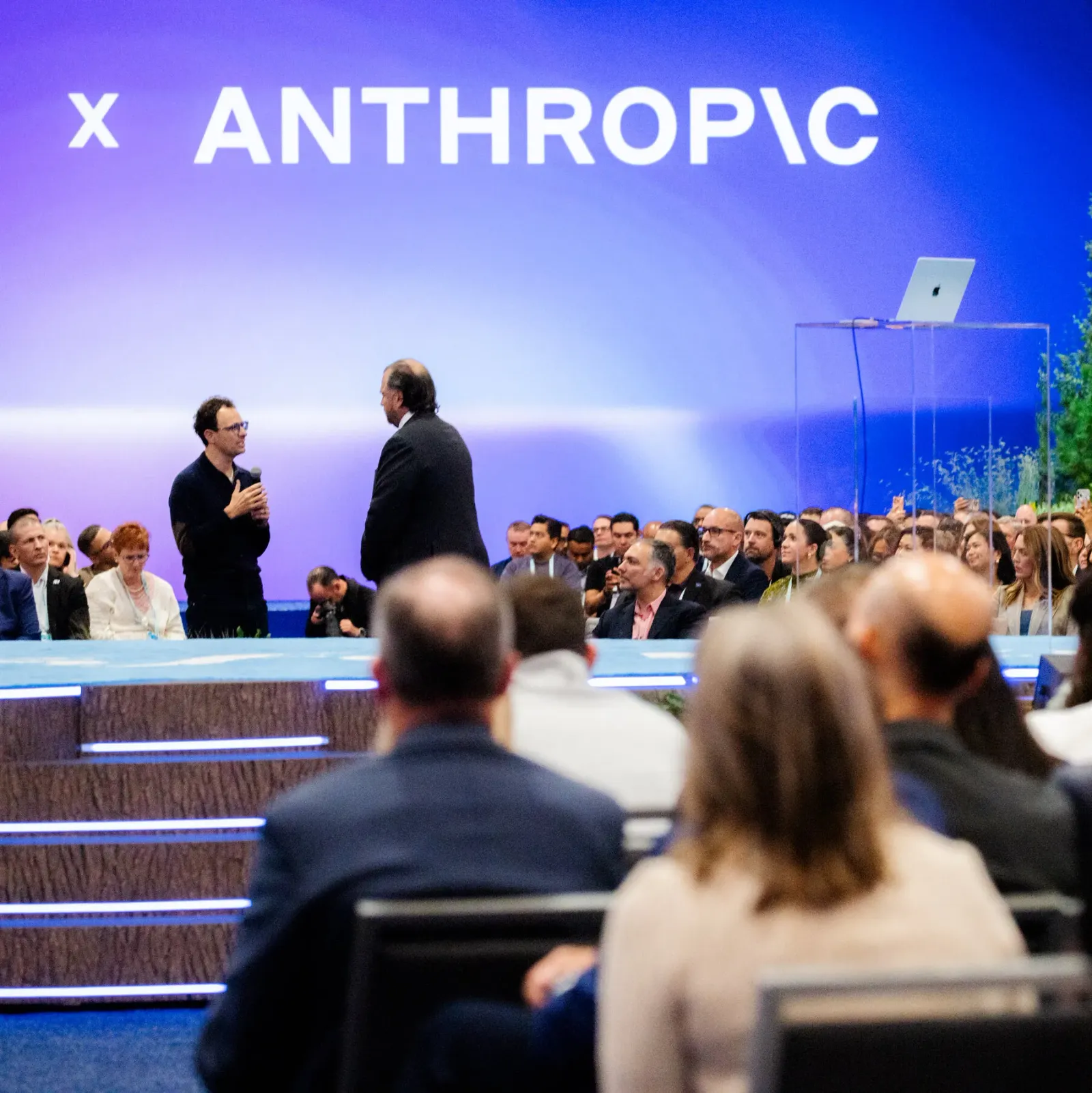
Anthropic is set to become by far the largest publicly traded public benefit corporation, a structure that mandates it balance safety and profit. For founders and boards, the debut is the first large-scale test of whether a mission-locked charter can survive contact with public-market pressure.
Anthropic is about to become the largest publicly traded public benefit corporation in existence, by a wide margin. That single fact is why the New York Times frames the AI company's public debut as an "experiment" in corporate power. A public benefit corporation, or PBC, is not a marketing label. It is a legal charter that requires directors to balance the company's stated public benefit, in this case safety, against shareholder returns, rather than treating profit as the only scoreboard. Anthropic will now run that charter inside the most unforgiving arena in capitalism: the public market.
Scale is what makes this different. PBCs have existed for roughly a decade, but they have mostly been small, mission-driven consumer brands in outdoor gear, food, and cosmetics, where the tension between purpose and profit was real but rarely existential. Anthropic flips the sample. The largest publicly traded PBC will now be a frontier AI lab, a company whose product decisions touch national security, labor markets, and the information layer of the economy. When the biggest test case is also the highest-stakes one, the structure stops being a niche legal curiosity and becomes a live question about who a company answers to.
For context, the PBC form grew out of the benefit corporation statutes that spread across US states starting around 2010, with Delaware, where most large companies incorporate, adding its own public benefit corporation option in 2013. The mechanics are straightforward: directors must weigh the interests of stakeholders beyond shareholders, must report periodically on their public benefit, and must balance mission and money when the two collide. What the structure does not do is guarantee an outcome. It changes the standard of conduct directors are measured against, which matters enormously in litigation and almost not at all during a quarterly earnings call.
That gap is where the experiment lives. Public markets impose a rhythm: quarterly results, analyst estimates, index inclusion, and activist investors who can buy a stake and demand a strategy shift. Every safety-motivated decision, whether that means delaying a model release, declining a customer, or spending heavily on evaluation and red-teaming, becomes a line item someone can question. The PBC charter gives Anthropic's board legal room to say no. It does not give the board a shield against a falling share price, a proxy fight, or the slow cultural drift that sets in when employees are paid in stock that trades every day.
There is a second-order effect that boards in every sector should study. Going public converts internal commitments into public statements, and public statements are governed by securities law. Safety claims, governance promises, and mission language that once lived in a blog post become disclosures that carry legal weight. That cuts both ways. It can harden a company's commitment, because walking a promise back is now a material event. It can also chill candor, because every internal debate about risk becomes something a plaintiff's lawyer can later read.
The real question the market will answer is whether investors price the mission as an asset or a drag. If Anthropic trades at a premium, the message to every founder weighing a mission-locked structure is that purpose is compatible with public capital. If it trades at a discount, the message is the opposite, and the next generation of founders will incorporate as plain vanilla Delaware corporations and keep their values in a memo instead of a charter. Either result becomes the reference point for the decade that follows.
For rival labs, the read is competitive as well as philosophical. Anthropic's structure is now part of its pitch to regulators, to enterprise buyers, and to the researchers it recruits. A public listing hands it a currency for acquisitions and a balance sheet that private competitors have to match with ever-larger private rounds. It also hands those competitors a new line of attack: every safety trade-off is now visible in filings, timestamped and comparable.
None of this is settled, and that is the point. Anthropic's debut will not prove that safety and profit can coexist, nor that they cannot. It will produce the first large-scale evidence either way, in public, with a share price attached. For executives and boards watching from the outside, the lesson is narrower and more useful: the legal structure you choose at incorporation determines what you are allowed to optimize for later, and once you are public, that choice is no longer yours to quietly revise.
This story's Key Insights and Take-aways are locked.
Create a free account to unlock Executive Actions for one credit.
Register to UnlockAlways free for Executives Club members. Join the Club
More in Business

S&P 500 Enters Correction, Down 10% From Its High on AI Worries
The index's slide past the 10 percent line is a symbolic verdict on investor mood, and the AI trade that powered the rally is now the thing testing it.

Dow and S&P 500 enter correction as Nasdaq logs worst week since 2020
All 11 S&P 500 sectors fell more than 1% in the same week for the first time since April 2025, a breadth signal that matters more than any single index level.

Chip stocks lose $2.3 trillion in a week, worst run in 25 years
A $2.3 trillion weekly wipeout in semiconductors is forcing every board with an AI story to ask whether it owns a thesis or just a crowded trade.