
Anthropic's record $81.3B IPO vaults seven co-founders to $24B each
The first frontier AI lab to list on Nasdaq raised $81.3 billion and closed at $97.17, turning roughly 96 per cent of its 5,300 employees into millionaires and handing early backers like Ashton Kutcher and Damac billions.
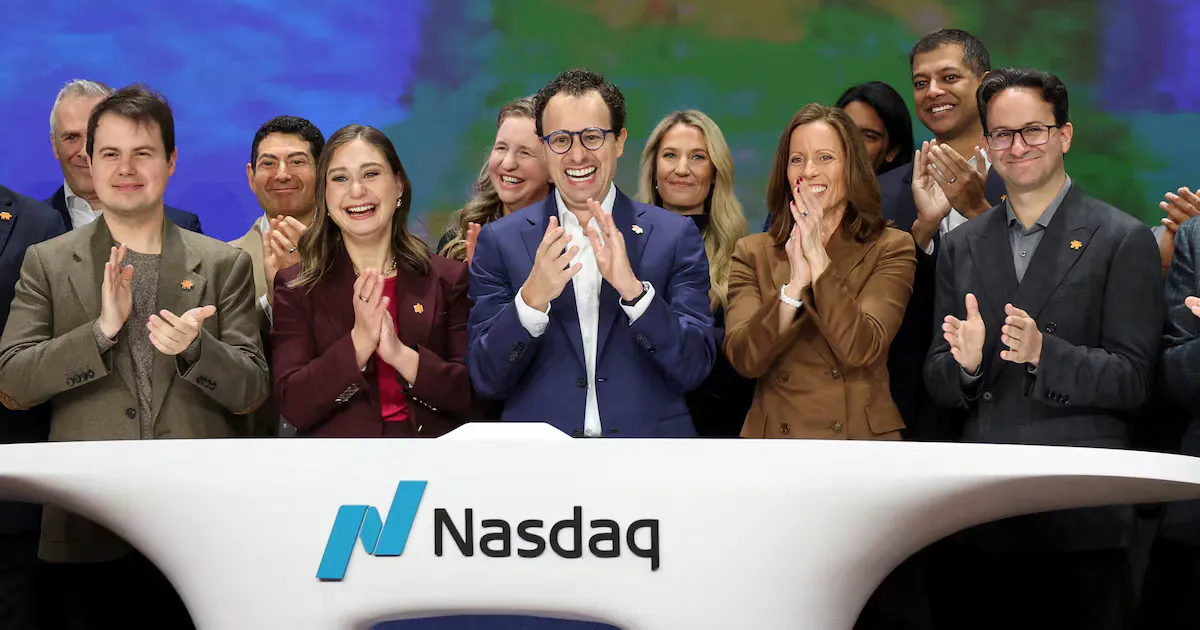
Anthropic raised $81.3 billion in its Nasdaq debut on Thursday, valuing the AI lab at $1.5 trillion at listing and briefly near $2 trillion intraday, with each of its seven co-founders holding roughly 1.4 per cent stakes worth about $24 billion at the close. The listing resets the benchmark for every private AI company weighing a float and creates a live test of what happens when thousands of engineers suddenly hold liquid seven-figure equity.
Anthropic raised $81.3 billion in its Nasdaq debut on Thursday, eclipsing the record-setting debut of Elon Musk's SpaceX in June, and the windfall did not stop at the company's own balance sheet. The San Francisco AI lab offered 980 million shares at $83 each, valuing it at $1.5 trillion at the time of listing. Then the stock did what no one had priced in: it closed at $97.17 after touching an intraday peak of $115.10, and at one stage traded at $111.50, 34 per cent above its opening price, briefly handing Anthropic a fully diluted valuation of about $2 trillion.
Seven people captured the biggest slice of that. Dario Amodei, Anthropic's chief executive and co-founder, is projected to amass more than $20 billion through his shareholding. Co-founders Tom Brown, Sam McCandlish, Christopher Olah, Jack Clark, Jared Kaplan and Daniela Amodei are each expected to earn roughly $20 billion from their equity stakes. "All seven co-founders each hold roughly 1.4 per cent of the company, according to Anthropic's IPO filing. At the IPO price of $83, each stake was worth approximately $20 billion," Noureldeen Al Hammoury, head of market insights and community engagement at Equiti, told The National. By Thursday's close, the founders' combined stake settled at about $166 billion, or $24 billion each. At the $115.10 intraday peak, each founder's stake reached roughly $33 billion, pushing the group's combined wealth to an estimated $231 billion, Mr Al Hammoury said.
None of that was true two years ago. "The group first became billionaires less than two years ago, and the IPO has now vaulted all seven into the top 300 of the Bloomberg Billionaires Index, wealthier than well-known finance figures such as Bill Ackman and Stan Druckenmiller," Mr Al Hammoury said. That single line is the cleanest measure of how fast AI equity has compounded: the same seven people were not billionaires in 2023 and now outrank two of Wall Street's most quoted investors, on the strength of one product cycle.
The paper wealth cascades well beyond the founding team. Private-share marketplace Hill.com estimates that about 5,100 of Anthropic's roughly 5,300 employees, or 96 per cent, held company stock worth more than $1 million when the AI company began trading on Thursday. "The IPO is expected to mint thousands of millionaires among Anthropic's employee base, with most staff holding equity that has now converted into real liquidity," Mr Al Hammoury said. The effects are already showing up in hard assets. "The wealth effect is already visible in real estate markets. Homes in San Francisco are drawing offers millions over asking, with AI workers using their newly liquid stakes to make all-cash bids in New York and Miami as well." Wall Street noticed early: Goldman Sachs, Bank of America, BNY Mellon, JPMorgan and Wells Fargo had been competing to manage the wealth expected to flow to Anthropic employees after the listing, he added.
Early backers are booking their own multibillion-dollar marks. Hollywood actor Ashton Kutcher invested through Sound Ventures, which put in $35 million initially and then another $400 million; it now holds a stake worth nearly $11 billion, according to Bloomberg. UAE-based Damac Properties made early investments and is raking in billions, according to its founder and chairman Hussain Sajwani. "What I have made in 30 years, I made in Anthropic in less than two years," Mr Sajwani said at the Bloomberg Invest event in Dubai last week. "Between only three companies, OpenAI, SpaceX and Anthropic, we're making a few billion dollars a month." Others on the cap table, as listed by Bloomberg, include Iconiq, Spark Capital, Menlo Ventures, Coatue Management and General Catalyst. The UAE technology investment company MGX participated in Anthropic's $65 billion series H funding round in May and its $30 billion series G round in February. Eric Schmidt, the former Google chief executive and one of Anthropic's first investors, is also expected to benefit.
The company behind all of this was co-founded in 2021, largely by defectors from OpenAI who were concerned about its approach to AI regulation and safety. Its Claude AI tool and other models gained popularity, particularly in corporate and government spheres, and the numbers followed. Anthropic reported $16.8 billion in third-quarter revenue ahead of the listing and achieved profitability on an adjusted basis in that quarter. "The IPO is notable not just for its scale but for what it represents: Anthropic is the first frontier AI lab to go public, having built its brand around AI safety and ethical AI development," Mr Al Hammoury said. Not everyone cheered. Coverage of the listing also carried the argument from petitioners that the IPO was not worth risking the lives of loved ones, a reminder that the safety brand cuts both ways once public shareholders are on the register.
For peers, the Anthropic listing resets the reference point in three places at once. It proves a frontier lab can clear public-market scrutiny and still price at a $1.5 trillion valuation, which changes the calculus for every private AI company and its backers weighing a float. It creates a live experiment in what happens when thousands of engineers hold liquid, seven-figure stakes: retention, compensation and housing costs in AI hubs all get repriced at the same time, which is why the banks are already circling. And it hands a new class of shareholders, from Sound Ventures to Damac to MGX, a public currency for gains that were, until Thursday, only on paper. The founders' own math tells the story best: roughly 1.4 per cent each, $20 billion apiece at the offer price, and a combined $166 billion by the closing bell.
This story's Key Insights and Take-aways are locked.
Create a free account to unlock Executive Actions for one credit.
Register to UnlockAlways free for Executives Club members. Join the Club
More in Business

S&P 500 Enters Correction, Down 10% From Its High on AI Worries
The index's slide past the 10 percent line is a symbolic verdict on investor mood, and the AI trade that powered the rally is now the thing testing it.

Dow and S&P 500 enter correction as Nasdaq logs worst week since 2020
All 11 S&P 500 sectors fell more than 1% in the same week for the first time since April 2025, a breadth signal that matters more than any single index level.

Chip stocks lose $2.3 trillion in a week, worst run in 25 years
A $2.3 trillion weekly wipeout in semiconductors is forcing every board with an AI story to ask whether it owns a thesis or just a crowded trade.