
Anthropic's record IPO gives back the pop: shares slide 11% to $86.10
Two days after a record-breaking listing, Anthropic trades near its $83 offer price, and the round trip is a warning for every board pricing an AI IPO.
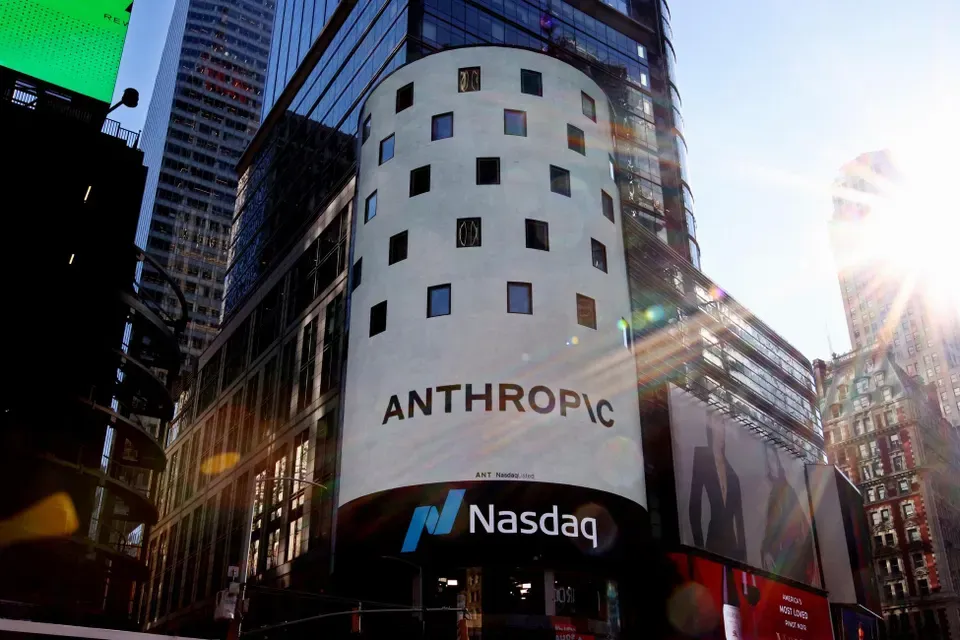
Anthropic's stock slid 11% on its second day of trading to $86.10, retreating toward the $83 offer price from its record-breaking IPO after opening 34% higher on Thursday. For executives and boards, the round trip is a live case study in how fast a first-day pop can evaporate and what that means for pricing the next AI listing.
Anthropic's stock was trading at $86.10 after the first hour of trading on its second day as a public company, an 11% slide that pulled the shares back toward the $83 price set at its record-breaking initial public offering. The drop came one session after the stock opened Thursday 34% above that offer price, a first-day surge that briefly made the listing look like one of the hottest debuts of the year. Two days in, the gap between the headline and the tape is the story.
The arithmetic is unforgiving. At $86.10, Anthropic sits roughly 3.7% above its $83 offer price, which means almost the entire 34% opening pop has been erased in about a day of trading. Anyone who bought at Thursday's open, near the top of that surge, is now underwater. Anyone who received shares at $83 is still marginally ahead, but the cushion is thin enough that one more weak session could wipe it out entirely.
This is how the IPO aftermarket typically works, and it is worth understanding before drawing conclusions about the company itself. Underwriters price a deal to clear, not to maximize the first print. A 34% first-day jump is usually read as money left on the table: the company sold shares at $83 that the market immediately valued at about $111. That gap is a transfer from the issuer and its early backers to the investors who received allocations. The second-day fade is the other half of the same mechanism. Once the initial demand imbalance clears, price discovery takes over and the stock drifts toward whatever the marginal buyer actually believes the business is worth.
The second session is also when the scaffolding comes down. Underwriters typically steady a new issue through a greenshoe, the over-allotment option that lets them buy shares in the open market. That support is finite and it is not built to hold a price up indefinitely. At the same time, the analyst quiet period means the banks that ran the deal cannot publish research for weeks, so the loudest institutional voices are silent exactly when retail trading is heaviest. Historically, that combination produces what Anthropic is showing: a violent first day, then a grind.
Context matters here. Anthropic is an AI company, and AI has been the dominant theme in both public markets and venture funding for several years. A record-breaking debut was always going to be read as a test of whether public investors would pay up for AI exposure at scale. A second-day slump does not settle that question, but it complicates the narrative. Public market investors are not venture investors. They mark to market daily, they answer to quarterly performance reviews, and they have far less patience for a story that has not yet shown up in the numbers.
Three things matter from here. First, whether $83 holds. The offer price is a psychological line for the underwriters, the company, and every employee holding equity, and a break below it tells a different story than a drift above it. Second, volume. A decline on heavy volume means real selling; a decline on light volume is often just first-day flippers heading for the exit. Third, the calendar. Lockup expirations typically arrive around six months after pricing, and they are the next scheduled supply shock. Anyone modeling the float should have that date circled.
For executives and boards weighing their own listings, the lesson is not that this IPO failed. It is that the first-day pop is a vanity metric with a real cost. A deal priced at $83 that trades at $111 at the open handed roughly a third of the value of the newly issued shares to the buyers who got allocations, not to the company. CFOs who optimize for a headline number are effectively choosing to leave money on the table in exchange for a press cycle. The better framing is to price for the investors you want holding your stock in month six, not the ones who show up for the first hour.
None of this is a verdict on Anthropic's business. Two days of trading is noise, and the stock is still above its offer price. But it is a reminder that the distance between a record-breaking IPO and a record-breaking company is measured in years, not hours. The market's first verdict was enthusiasm. Its second was arithmetic. The third, the one that actually matters, will not arrive until the company starts reporting numbers on someone else's schedule.
This story's Key Insights and Take-aways are locked.
Create a free account to unlock Executive Actions for one credit.
Register to UnlockAlways free for Executives Club members. Join the Club
More in Business

S&P 500 Enters Correction, Down 10% From Its High on AI Worries
The index's slide past the 10 percent line is a symbolic verdict on investor mood, and the AI trade that powered the rally is now the thing testing it.

Dow and S&P 500 enter correction as Nasdaq logs worst week since 2020
All 11 S&P 500 sectors fell more than 1% in the same week for the first time since April 2025, a breadth signal that matters more than any single index level.

Chip stocks lose $2.3 trillion in a week, worst run in 25 years
A $2.3 trillion weekly wipeout in semiconductors is forcing every board with an AI story to ask whether it owns a thesis or just a crowded trade.