
Anthropic's record IPO made seven founders $20B each. Amazon and Google made more.
Anthropic's $93.5 billion offering handed each of its seven cofounders about $20 billion on paper, but Amazon and Google's combined $316 billion stake is the bigger prize.
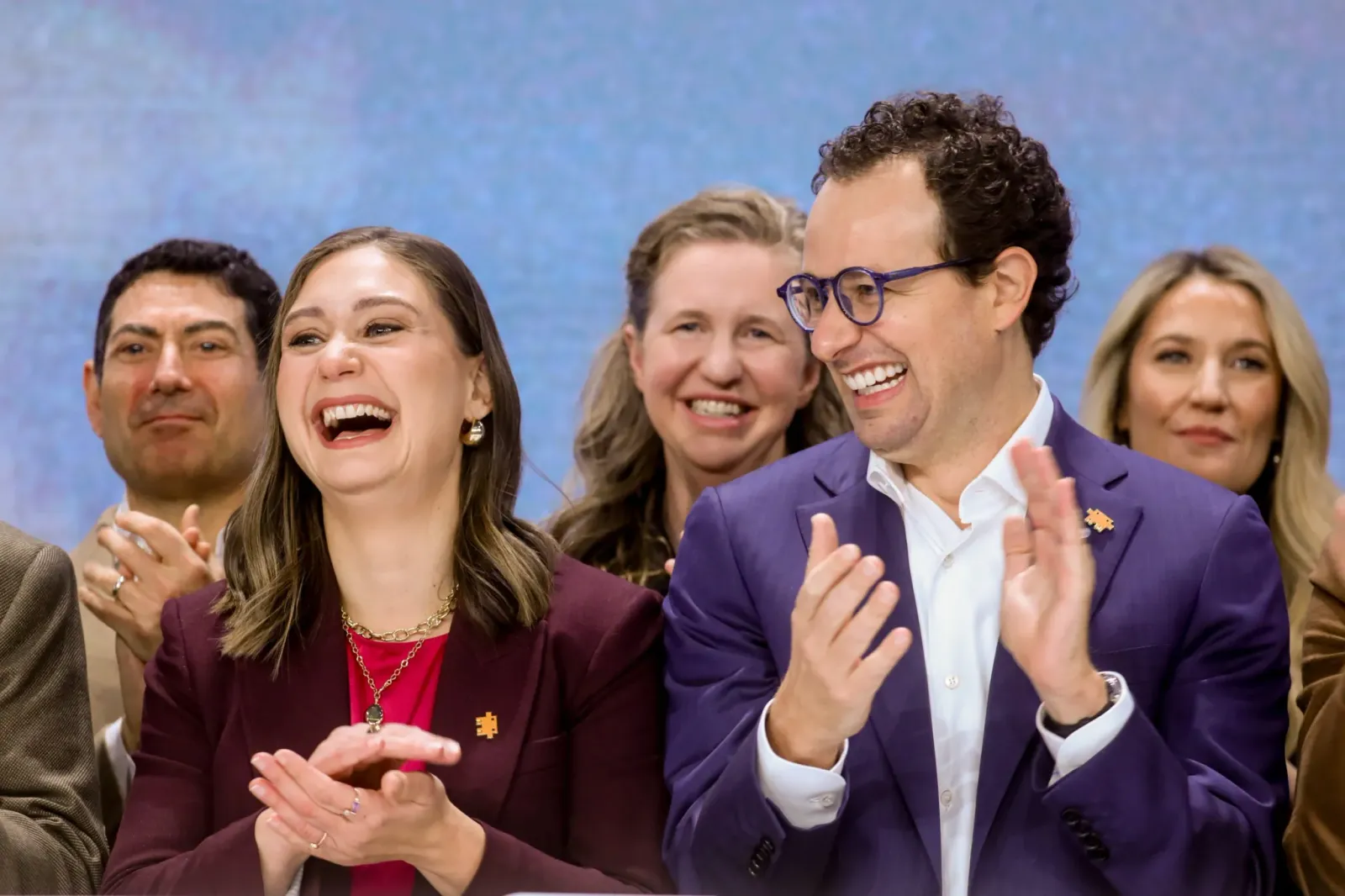
Anthropic's seven cofounders, led by CEO Dario Amodei and president Daniela Amodei, each hold roughly $20 billion in stock after the company's record $93.5 billion Nasdaq IPO. For decision-makers, the real signal is that Amazon and Google hold about $316 billion combined, meaning the AI lab's economics and cloud dependence now sit with two strategic giants.
Anthropic's seven cofounders are each worth roughly $20 billion on paper after the AI company's record-breaking Nasdaq debut on Thursday, and the offering kept getting bigger. The Claude maker initially raised $81.3 billion, topping the $75 billion SpaceX brought in over the summer, then said Friday that underwriters had purchased millions more shares, lifting the total to about $93.5 billion. Shares priced at $83 on Wednesday, opened sharply higher, and closed Thursday near $97. By Friday afternoon they had slipped to $85 amid a broader tech stock retreat, leaving Anthropic worth about $1.1 trillion, more than Walmart.
The founders are Dario Amodei, the CEO, and his sister Daniela Amodei, president and chair of the board, plus Tom Brown, Jack Clark, Jared Kaplan, Sam McCandlish, and Chris Olah. Each owns between 237 million and 241 million shares after the offering, which at Friday's roughly $85 price works out to about $20 billion apiece, putting each of them in the same league as Bridgewater founder Ray Dalio and his $21 billion net worth on the Bloomberg Billionaires Index. Each also sold about 3.38 million shares in the IPO, worth roughly $280 million at the offering price. All seven have pledged 80% of their personal Anthropic equity to philanthropic causes, though the filing notes those commitments are voluntary and not legally binding. And despite owning a minority of the equity, the cofounders control 50.1% of shareholder voting power, an unusually even split for a Silicon Valley startup.
The biggest winners are not people at all. Anthropic's IPO filing estimated Amazon would own 14.6% of outstanding shares and Google 13.4%. At Friday's price, Amazon's 1.94 billion shares are worth about $165 billion and Google's 1.77 billion shares about $151 billion, roughly $316 billion combined, more than twice the roughly $142 billion held by the seven cofounders. Amazon's position was built over years: an initial $1.25 billion commitment in 2023 as part of a deal to ultimately invest $4 billion, with Anthropic agreeing to make AWS its primary cloud provider for critical workloads and to make Claude available to AWS customers. Amazon went on to invest $8 billion in convertible notes between 2023 and 2025 and another $10 billion in preferred stock in 2026. Google put in $10 billion in a financing round earlier this year and another $10 billion in a private placement alongside the IPO.
Venture investors did fine too, just not as fine. Lightspeed Venture Partners, an early Snapchat backer, led a $3.5 billion round in March 2025 at a $61.5 billion valuation. It owns less than 2% of the company, according to Bloomberg, yet that stake is reportedly worth tens of billions of dollars. Menlo Ventures also holds less than 2%. Iconiq has invested more than $6 billion since 2025 and its stake is worth more than $26 billion. Anthropic counts more than 400 venture investors, according to PitchBook, and no single firm owns more than 5%. Sound Ventures, cofounded by Ashton Kutcher, put in about $435 million for roughly 0.5% of the company; Kutcher stepped down as general partner earlier this year, so how much he personally gained is unclear. Former Google CEO Eric Schmidt owns about 1%, a stake worth roughly $11 billion at Friday's price.
One early backer is watching from a prison cell. Sam Bankman-Fried, the FTX founder serving 25 years after being convicted on fraud and conspiracy charges and now appealing his sentence to the Supreme Court, saw his trading firm Alameda Research invest $500 million in Anthropic. FTX's bankruptcy estate sold most of that stake in 2024 to repay creditors. Among the buyers was Jane Street, Bankman-Fried's former employer, which stands to reap a multibillion-dollar windfall.
Employees are cashing in as well. Anthropic has roughly 5,300 employees, and many are getting rich on stock-based compensation. Sacra, a private-markets research firm, estimated that 2,800 current and former employees could hold at least $1 million in pretax vested equity at a $1.35 trillion valuation, At least 400 early hires could hold equity worth $100 million or more, according to CNBC. The exact distribution is unknowable from the outside: the IPO filing discloses aggregate equity awards, not who got what. Now that the company is public, non-founder employees can sell up to 10% of certain holdings, and up to another 35% after Anthropic's 2026 financial results are released.
Strip out the scoreboard and the structure is the story. Anthropic raised hyperscaler money in exchange for equity, cloud commitments, and distribution, and those two corporate stakes now dwarf the founder bloc that still controls the votes. That is a template other capital-hungry AI labs are already copying, and it comes with a catch: the same investors supplying compute also sit on the cap table, so Anthropic's infrastructure costs and its largest shareholders are the same two companies. The 50.1% voting control means public shareholders get the economics without the control, and the 80% philanthropy pledge, being voluntary, can be revisited once quarterly earnings and public scrutiny arrive. The staged employee selling schedule adds a second consideration: a large pool of insider stock unlocks in tranches, with the biggest slug tied to 2026 results. For executives and boards at other late-stage AI and infrastructure companies, the lesson is that the IPO is not the finish line. It is the moment your largest strategic partners, your employees, and your founders all start pricing your shares against each other, and the terms you set years earlier in a funding round are the ones that decide who actually wins.
This story's Key Insights and Take-aways are locked.
Create a free account to unlock Executive Actions for one credit.
Register to UnlockAlways free for Executives Club members. Join the Club
More in Business

S&P 500 Enters Correction, Down 10% From Its High on AI Worries
The index's slide past the 10 percent line is a symbolic verdict on investor mood, and the AI trade that powered the rally is now the thing testing it.

Dow and S&P 500 enter correction as Nasdaq logs worst week since 2020
All 11 S&P 500 sectors fell more than 1% in the same week for the first time since April 2025, a breadth signal that matters more than any single index level.

Chip stocks lose $2.3 trillion in a week, worst run in 25 years
A $2.3 trillion weekly wipeout in semiconductors is forcing every board with an AI story to ask whether it owns a thesis or just a crowded trade.