
Anthropic's record IPO pays Goldman and Morgan Stanley $113M apiece
The $81.3 billion listing minted a $550 million fee pool, the richest since Visa in 2008, and rewrote what a mega-IPO pays its bankers.
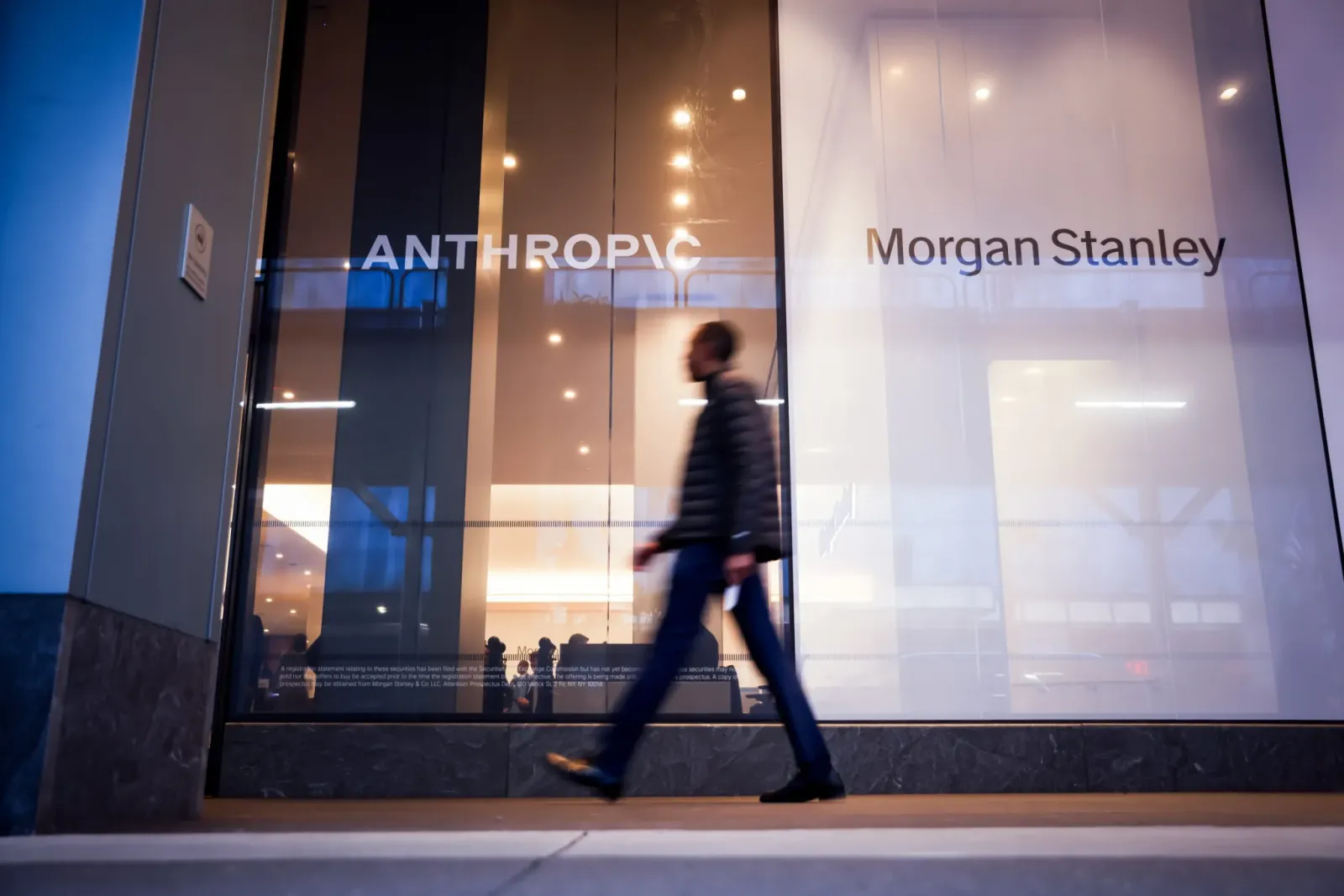
Goldman Sachs and Morgan Stanley each earned $113 million in underwriting fees from Anthropic's $81.3 billion IPO, the largest deal by size in history, as the listing's total fee pool topped $550 million. For CFOs and boards weighing a public listing, the numbers reset the benchmark for what a mega-IPO costs, and what it pays the banks that pull it off.
Goldman Sachs and Morgan Stanley each pocketed $113 million in fees from Anthropic's IPO on Thursday, according to the company's prospectus and confirmed by a source familiar with the matter. The two lead underwriters earned that sum because each took on underwriting commitments of 20.5% of the $81.3 billion offering, the largest IPO in history by deal size. Across the deal, the banks behind the listing raked in at least $550 million in fees, eclipsing the $500 million earned from Elon Musk-led SpaceX's debut in June.
The comparison to SpaceX is the sharpest one. Goldman and Morgan Stanley each took in roughly $100 million from the SpaceX deal over the summer, meaning Anthropic paid them more for a single listing than the year's other marquee debut did. The rest of the syndicate scaled down with its commitments: JPMorgan and Citigroup each agreed to underwrite 10% of the Claude maker's offering, putting their estimated fees at roughly $55 million apiece if allocated in proportion to their commitments, while Bank of America, at 3%, would receive an estimated $16.5 million. The last IPO to generate more in underwriting commissions was Visa's 2008 debut, which delivered a $550.2 million fee pool. Anthropic could surpass that figure if underwriters exercise the offering's over-allotment option, which allows banks to sell up to 15% more shares than initially planned.
The stock did its part. Anthropic shares, trading on the Nasdaq under the ticker ANT, surged 17% in their Thursday debut, giving the company a fully diluted market capitalization of $1.27 trillion at the close. That combination, a record deal size plus a double-digit first-day pop, is what turns a fee pool from respectable into historic. Underwriting fees are typically a percentage of proceeds, so the bigger the deal and the smoother the execution, the more the banks collect. Anthropic's listing generated roughly 30 to 40 times the commissions of a typical IPO owing to its massive size, according to Matt Kennedy, senior IPO market strategist at Renaissance Capital.
Kennedy's read on the year is worth sitting with. "By deal count, 2026 wasn't the blowout year many were hoping for," he said in a statement to Fortune. "So, mega IPOs like Anthropic have done a lot of the heavy lifting to make this a standout year for investment banks." That is the quiet story inside the headline number. A thin calendar of listings means the banks' year hinges on a handful of giants, and when one of them lands, the fee pool concentrates fast. Anthropic alone did more for the league tables than dozens of mid-cap debuts would have.
For context on how unusual this is: underwriting fees on a standard IPO are a rounding error next to the numbers here. A typical deal pays its syndicate a few percent of proceeds, and most listings raise a fraction of what Anthropic did. The $550 million pool is not just large in absolute terms, it is large relative to the entire market for IPO fees in a normal year. That is why the Visa comparison matters. It took 18 years for a debut to match what Visa's 2008 listing generated, and Anthropic may still beat it if the over-allotment option is exercised.
The second-order effects run in a few directions. For the banks, a payday this size funds the franchise, but it also raises the stakes on every future mega-listing: clients now know what the top of the market looks like, and they will negotiate against it. For Anthropic, the fee is a cost of capital, and a $1.27 trillion fully diluted valuation means the company raised an extraordinary amount of money relative to its fee bill. For peers watching from the private markets, the message is that the window for a landmark AI listing is open, and the banks have every incentive to keep it that way.
The strategic question for boards is not whether this was a good deal for the underwriters. It plainly was. The question is what it signals about the pipeline. When a single listing can generate 30 to 40 times the commissions of a typical IPO, the banks will compete hard for the next one, which means better terms, more research coverage, and more aggressive marketing for the companies that follow. Anthropic's debut did not just set a record. It reset the economics of going public at scale, and every CFO with a 2027 listing on the calendar is now pricing against it.
This story's Key Insights and Take-aways are locked.
Create a free account to unlock Executive Actions for one credit.
Register to UnlockAlways free for Executives Club members. Join the Club
More in Business

S&P 500 Enters Correction, Down 10% From Its High on AI Worries
The index's slide past the 10 percent line is a symbolic verdict on investor mood, and the AI trade that powered the rally is now the thing testing it.

Dow and S&P 500 enter correction as Nasdaq logs worst week since 2020
All 11 S&P 500 sectors fell more than 1% in the same week for the first time since April 2025, a breadth signal that matters more than any single index level.

Chip stocks lose $2.3 trillion in a week, worst run in 25 years
A $2.3 trillion weekly wipeout in semiconductors is forcing every board with an AI story to ask whether it owns a thesis or just a crowded trade.