
Apple is reportedly building an AI agent that runs your Mac
The iPhone maker is aiming at the same agentic turf as Meta Muse, Claude, and OpenAI Dots, and the prize is the layer between you and every app on your desktop.
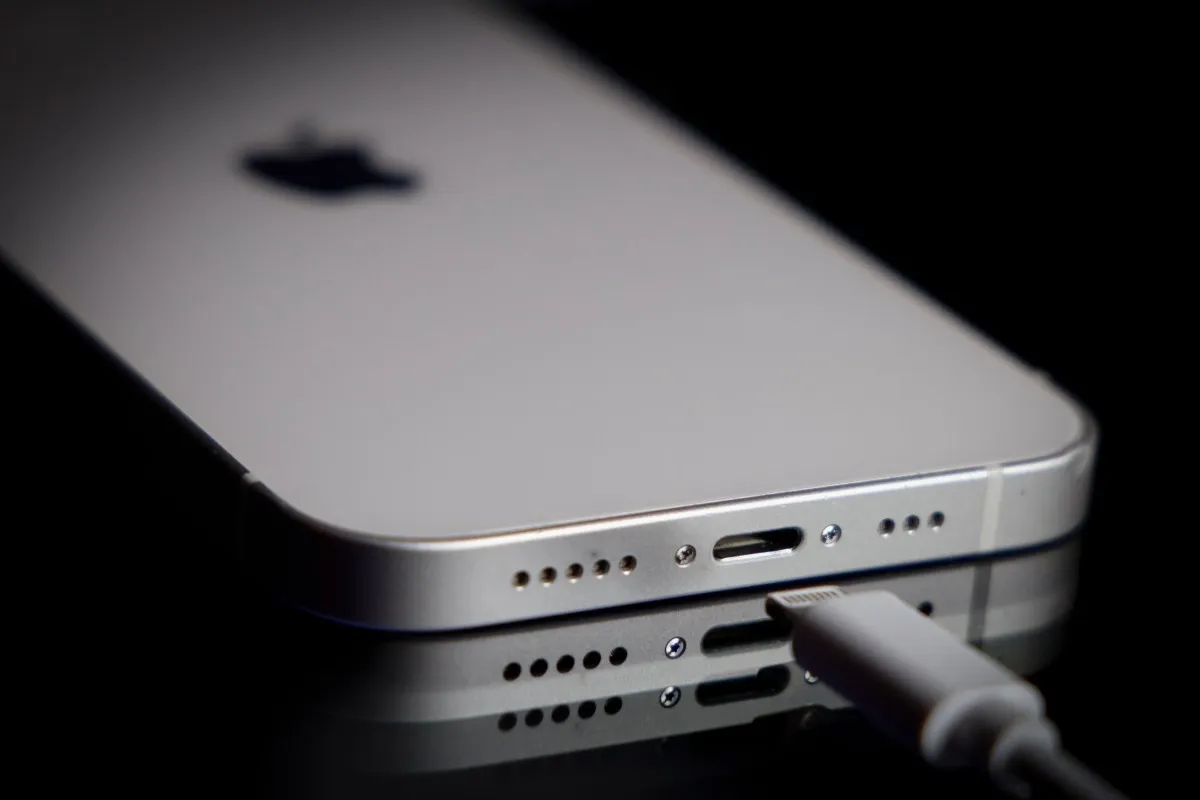
Apple is reportedly developing AI agents capable of operating a Mac, according to TechCrunch, putting the iPhone maker in the same arena as Meta Muse, Instinct, Claude, and OpenAI Dots. The consequence for decision-makers is platform risk: an OS-level agent would sit between users and every application, threatening standalone workflow tools and shifting where enterprise software value accrues.
Apple is reportedly building AI agents that can run your Mac, according to a TechCrunch report, and the competitive set it is being measured against tells you how big this is: Meta Muse, Instinct, Claude, and OpenAI Dots. Apple has not confirmed the work, and the sourcing language is deliberately soft. This is a sighting, not a launch. But the direction is not subtle. The company that has spent the last two years being told it fumbled the AI transition is now reportedly building the layer that sits between a user and every file, app, and task on a desktop. That is not a feature. That is a platform.
Start with what an agent actually is, because the word gets used loosely. A chatbot answers questions. An agent takes actions. It opens the document, pulls the numbers, moves them into the deck, books the room, sends the follow-up, and reports back. On a Mac, that means an assistant with hands on the operating system itself: the file system, the calendar, the browser, the apps you already pay for. The reason this matters more than another model release is distribution. Whoever owns the agent layer owns the default, and defaults are where software fortunes get made. Apple has more than two billion active devices to distribute into, a figure it has cited publicly. Its rivals do not.
Apple's AI record is the obvious objection, and it is fair. Siri arrived in 2011 as a genuine lead and then sat largely still while rivals rebuilt around large language models. Apple Intelligence, unveiled in 2024, leaned on a partnership with OpenAI for the hardest queries, an unusual look for a company that insists on controlling its own stack. The revamped Siri has slipped. So why take this seriously? Because Apple's historical pattern is to arrive late, absorb the category into the operating system, and win on integration and silicon. Its M-series chips were built for exactly this kind of on-device workload, and its privacy positioning gives it a story rivals cannot easily copy.
The rivals named in the report are not standing still. Meta, Anthropic, and OpenAI are all pushing agents that do work rather than chat. What none of them have is a desktop operating system with a captive install base and system-level permissions. That asymmetry cuts both ways. It is why an Apple agent is credible. It is also why agent startups may end up depending on Apple's APIs rather than competing with it. Watch for the pattern that has played out in music, maps, and password managers: a third-party category gets popular, Apple ships a version inside the OS, and the standalone market compresses.
That pattern has a name in the developer community, and it is not a compliment. Apple has repeatedly folded popular third-party functionality into its own software, and an OS-level agent is the most aggressive version of that move yet. The counterargument is that Apple usually opens hooks for developers once a platform ships. If it does, the agent layer becomes a new distribution channel, the way the App Store was in 2008. If it does not, every agent startup is building on rented land with a landlord who has already read the lease.
Regulators will have a view. Apple is already under scrutiny in Europe over how it handles defaults and self-preferencing under the Digital Markets Act, and it faces a US antitrust case filed in 2024 that centers on how it controls its ecosystem. An agent baked into macOS raises the same questions in sharper form: if Apple's assistant is the one holding system permissions, what does a rival agent get? Privacy is the other flank. Apple's pitch has been that processing happens on the device, and an agent that needs cloud models to be genuinely useful will test how much of that promise survives contact with reality.
Four things to watch. First, timing, and whether this ships alongside a rebuilt Siri or as a separate product. Second, architecture: on-device, cloud, or a hybrid, because that determines both the privacy claims and the cost per query. Third, whether third-party models get to plug in, which is the difference between an open platform and a walled garden. Fourth, developer APIs, because that is what turns an announcement into an economy.
For executives, the practical question is not whether Apple's agent is good. It is which layer of your stack it lands on. If your product is a workflow, a dashboard, or a subscription that exists because software is annoying to operate, an agent that operates software for free is a direct threat. If your product is the data or the system of record underneath, you may get a new front door. CIOs should assume that by the time this is announced, the procurement conversation has already changed. Founders should assume the platform will eventually eat the feature. Investors should assume the agent layer becomes the next default, and defaults are where the money pools.
This story's Key Insights and Take-aways are locked.
Create a free account to unlock Executive Actions for one credit.
Register to UnlockAlways free for Executives Club members. Join the Club
More in Technology

Anthropic mathematician claims Claude helped crack the Riemann hypothesis
If the proof holds, AI has toppled math's most famous open problem; if it does not, it is a case study in announcing breakthroughs before anyone verifies them.

AI's $4 Trillion Wipeout Erases Nasdaq's Gains for the Year
A brutal week took roughly $4 trillion off the AI sector and left the Nasdaq flat for the year, and the damage ran the full length of the supply chain.

Anthropic mathematician says AI proved the Riemann hypothesis. Verification will take time.
A single unverified claim from inside Anthropic now sits against more than 160 years of open mathematics, and the gap between asserting a proof and surviving peer review is the entire story.