
Apple's Siri Recap listens on your wrist. Amazon's Bee Frontier goes further.
Two wearables now ambiently record and summarize your conversations, and the split between Apple's privacy-first toggle and Amazon's maximalist capture is the product decision that matters.
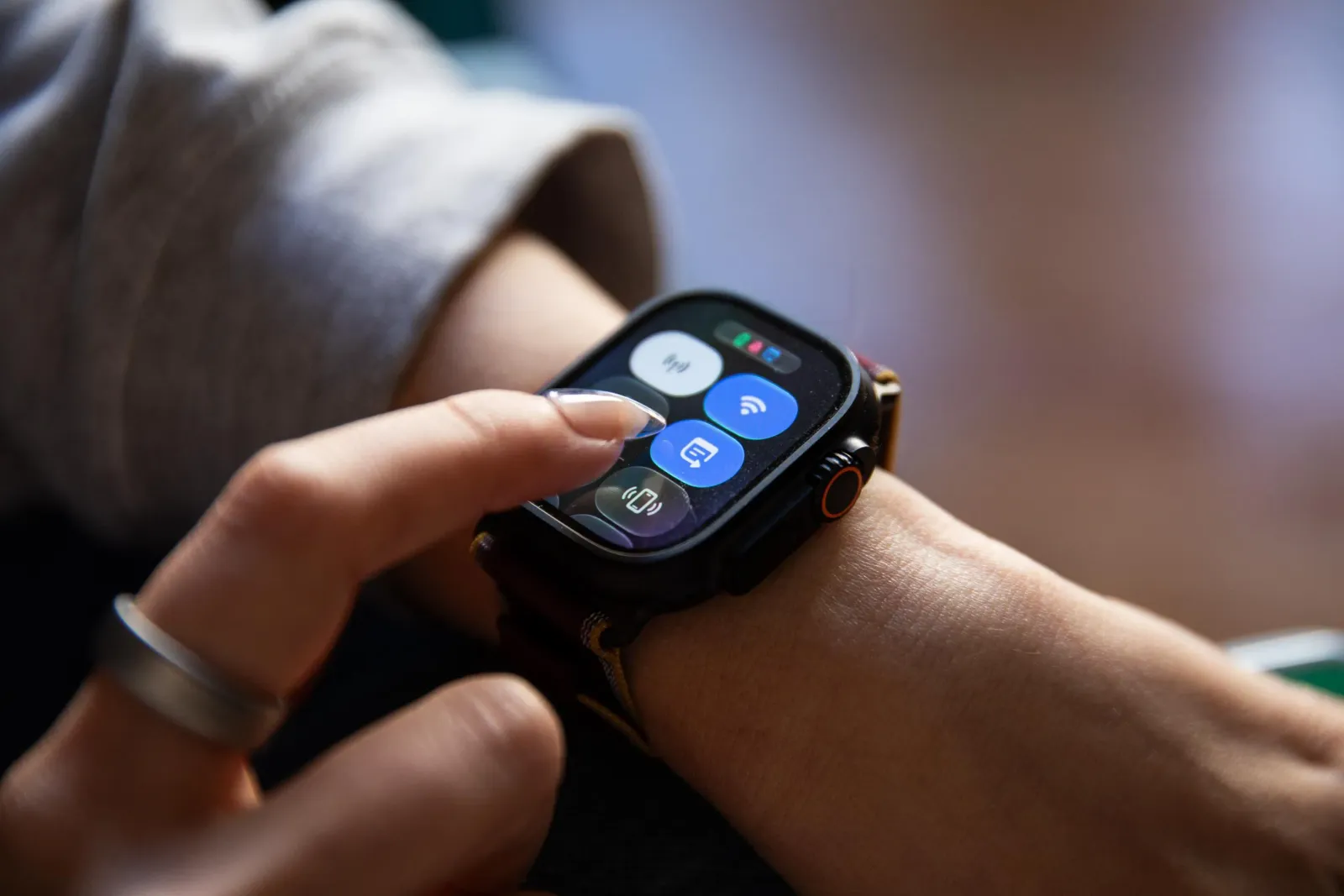
The Verge tested Siri Recap on the Apple Watch Ultra 4 and Amazon Bee Frontier for about a month, finding that both ambiently listen to conversations and summarize them with AI while requiring wearers to disclose recording to the people around them. The consequence for decision-makers is that consent, default settings, and meeting-recording policy have become product and governance questions, not privacy footnotes.
The Verge spent roughly a month wearing two devices that listen to everything: Siri Recap running on the Apple Watch Ultra 4, and the Amazon Bee Frontier. Both let a wearable ambiently capture your conversations and hand back AI-generated summaries. Both, per the review, require explicit disclosures to the people around you about recording what they say, and potentially follow-up explanations when someone asks what the thing on your wrist is actually doing. The biggest difference is not the hardware. It is philosophy.
Apple's Siri Recap can be turned on or off manually, from the wrist. That detail is the entire product thesis: the wearer stays the switch. Apple is going for a minimalist, privacy-first take. Amazon's Bee takes what The Verge calls a maximalist, and frankly reality-bending, approach. Same category, opposite instincts. One company is selling a feature you control. The other is selling a capability that pushes further than many people will be comfortable with.
The stated purpose of both is benign and, honestly, appealing: remember better and, hopefully, stay more present. That is the pitch behind a whole wave of ambient AI hardware. The promise is that you stop taking notes, stop half-listening while drafting a mental to-do list, and let software hold the thread. The cost is that the thread is held by a microphone, and the microphone does not know when a conversation was never meant to be a record.
Consent is the part that does not scale. The source is blunt: both devices require explicit disclosures to the people around you about recording what they say, and potentially follow-up explanations. That is a per-conversation tax paid by the wearer, and it lands hardest in exactly the rooms where a recap would be most useful: a client dinner, a hallway negotiation, a one-on-one. Historically, wearable recording has stumbled less on hardware than on social permission. For context, all-party consent rules in several jurisdictions mean a summary you found useful could be a legal problem for someone else in the room. The device does not ask. You have to.
The strategic split is where this gets interesting for anyone building products. Apple's privacy-first framing is not charity, it is positioning. A company whose wearable business depends on people trusting the object on their wrist has an incentive to make the off switch obvious and the processing story clean. Amazon's maximalist approach reflects a different set of incentives, where ambient context compounds in value when more of it flows into a larger system. Neither bet is obviously wrong. They are wagers on what customers will tolerate, and the two wagers cannot both be right at scale.
Watch the defaults. A recap feature that ships off and requires a wrist tap is a different product from one that ships on. The Verge's observation that Siri Recap can be turned on or off manually from the wrist is a reminder that the toggle is a design decision with regulatory and social consequences baked in. Regulators have spent years chasing data collection that happens invisibly; ambient wearables make collection visible, which is either a gift to compliance teams or a new front in the same fight. The companies that get the disclosure moment right will own the category narrative.
For executives, the practical exposure is closer than it looks. If your team already wears these devices, your meeting norms may be out of date. Most companies have policies for recording calls and almost none for a watch that summarizes a hallway conversation. The question for a board is not whether the technology works. It is who owns the transcript, how long it lives, who can query it, and what happens when a summary of a private conversation becomes discoverable. None of that is hypothetical once the hardware is already on wrists.
The Verge's reviewer never lands a clean verdict, and that is the honest answer. Was it worth it? The value is real and the friction is real, and the two companies have placed opposite bets on which one wins. What is already clear is that the always-listening wearable has moved from demo to daily habit, and the winners will be the ones that solve consent, not just capture.
This story's Key Insights and Take-aways are locked.
Create a free account to unlock Executive Actions for one credit.
Register to UnlockAlways free for Executives Club members. Join the Club
More in Technology

Anthropic mathematician claims Claude helped crack the Riemann hypothesis
If the proof holds, AI has toppled math's most famous open problem; if it does not, it is a case study in announcing breakthroughs before anyone verifies them.

AI's $4 Trillion Wipeout Erases Nasdaq's Gains for the Year
A brutal week took roughly $4 trillion off the AI sector and left the Nasdaq flat for the year, and the damage ran the full length of the supply chain.

Anthropic mathematician says AI proved the Riemann hypothesis. Verification will take time.
A single unverified claim from inside Anthropic now sits against more than 160 years of open mathematics, and the gap between asserting a proof and surviving peer review is the entire story.