
Ashton Kutcher's $435M Anthropic Bet Could Pay $7 Billion at IPO
The actor-turned-investor left Sound Ventures as a partner this year but stayed on as an adviser, leaving him exposed to an IPO he calls 'the manifestation of trust.'
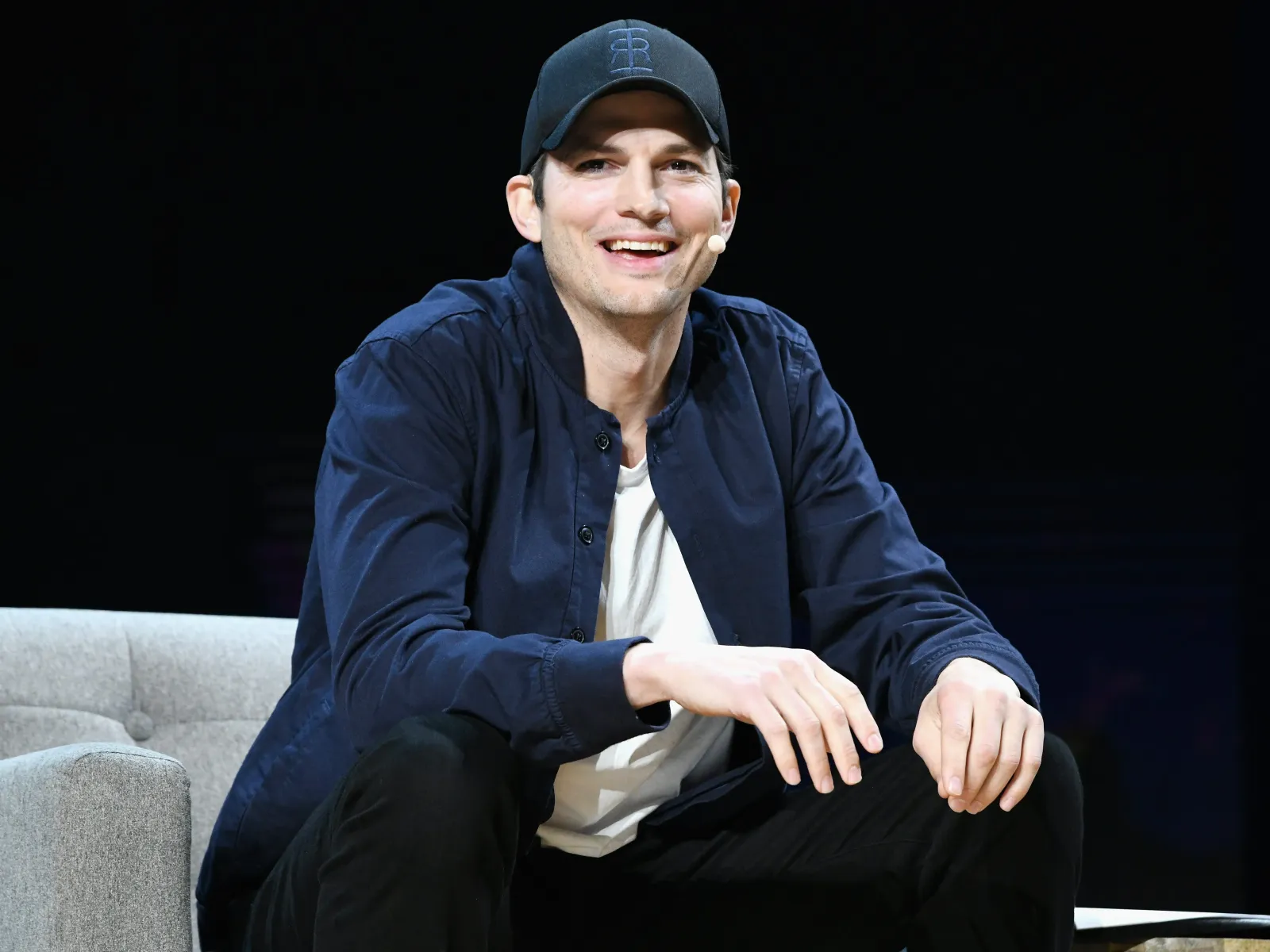
Sound Ventures, the firm Ashton Kutcher co-founded with Guy Oseary, has invested $435 million into Anthropic since 2023, a stake Bloomberg estimated could be worth about $7 billion before the company's November 19 IPO. Kutcher exited as a partner earlier this year but remains an adviser, a structure that keeps him exposed to one of the largest paper gains in celebrity-backed venture history and a template for how talent-driven funds scale.
Ashton Kutcher's Anthropic bet is now the biggest line on a résumé that already includes actor, producer, and entrepreneur. Sound Ventures, the firm Kutcher co-founded with talent manager Guy Oseary, has invested $435 million into Anthropic, the company behind the Claude AI models, since 2023. Before Anthropic's IPO on November 19, Bloomberg estimated that Sound's stake could be worth about $7 billion. Kutcher exited Sound Ventures as a partner earlier this year but remains in an advisory role, according to Inc., which means he could still stand to earn big. He called the IPO "kind of cool" in a statement on X, adding that it was "years of work, micro victories and failures stacked on top of one another" and "the manifestation of trust."
Do the arithmetic and the shape of the trade is clear: $435 million deployed against a stake Bloomberg estimated at roughly $7 billion before the listing, more than 15 times the capital in. That is a paper number until shares actually trade and any lockup expires, and pre-IPO estimates move with the market. But it is the kind of outcome that turns a celebrity investor into a power-law investor, where one position pays for an entire fund's worth of misses. Kutcher's own framing leaned into the doubters: "Thank you to those who didn't believe in us. You made us work harder," he wrote on X. Business Insider's Bani Sapra previously called him the most active celebrity investor and, arguably, Hollywood's most experienced tech investor. For a 48-year-old who started out mowing lawns in Iowa, the Anthropic stake is the clearest proof yet that his second career is not a hobby.
The money instincts showed up early. Raised in Iowa by a father who worked at a meatpacking plant and a mother who taught school, Kutcher juggled lawn mowing, janitorial work, and dishwashing. He told Grow, the blog of micro-investing app Acorns, in 2018 that he saved $1,400 for a snowmobile at 13: "I worked after school and on weekends for one and a half years, and put every cent into a savings account." He was studying biochemical engineering at the University of Iowa when he was scouted as a model, which led to acting. His investing on-ramp came through Katalyst, the production company he founded in 2000. He poached Katalyst's digital chief from TechCrunch, and that hire introduced him to Silicon Valley's big names. "I spent 90% of my time just listening," Kutcher told Forbes' Zack O'Malley Greenburg. In 2009, at the request of billionaire Marc Andreessen, he put $1 million into Skype, 18 months before Microsoft bought the company and quadrupled the value. His stated goal was to connect the "little man" with new companies offering easy solutions to everyday problems.
Mentorship changed the trajectory. Kutcher reached out to angel investor Ron Conway, whom he called "one of the godfathers of angel investing" in a 2015 interview with his website, A Plus. "He completely opened up his investment portfolio to me and really started explaining to me how things worked and what his strategy was. He has probably been my biggest mentor." With Oseary and businessman Ron Burkle, Kutcher co-founded A-Grade Investments. Within six years he turned a $30 million fund into $250 million, Forbes reported. Kutcher and Oseary each put in $1 million of their own money; Burkle contributed $8 million. Salesforce CEO Marc Benioff, former Google CEO Eric Schmidt, and businessman Mark Cuban backed the fund. A-Grade's filter, per O'Malley Greenburg: founders the firm wanted to work with, a problem-solving mission statement that would make the most of time, and a business model it could grow. The hits included $500,000 into Uber, $2.5 million into Airbnb, $3 million into Spotify, $300,000 into Warby Parker, and $1.5 million into Houzz. All five became multibillion-dollar companies. There were misses too, including BlackJet and Fab.com.
In 2015, Kutcher and Oseary formalized the approach, co-founding Sound Ventures with $100 million from Liberty Media. Investing other people's money, TechCrunch noted, let them write bigger checks, move into later-stage startups, and put more into companies raising follow-on rounds. By 2017 Sound was managing more than $100 million, the Journal reported; it is reportedly managing around $2 billion now. An AI-focused fund the firm started in 2023 began with $240 million in capital, per Yahoo Finance, and the portfolio has included Neighborly, OpenGov, and OpenAI. Kutcher and Oseary told O'Malley Greenburg in 2016 they took a "typical carry" from Sound, likely 2% of cash invested and 20% of profits, plus performance bonuses. The year before, Mark Cuban convinced Kutcher to audition for "Shark Tank," where he guest-judged.
The Anthropic position is what makes the structure interesting. Kutcher stepping back from the partner role while staying on as an adviser keeps him attached to the franchise without running it day to day, and it is the kind of arrangement that preserves upside in a fund's best-performing asset. He is not standing still: in June he announced he was teaming up with Morgan Beller, a former partner at NFX, to start a new firm focused on AI, That is a second bite at the same theme, this time with a dedicated vehicle rather than a stake sitting inside a broader fund.
For peers watching from board seats, the playbook is legible. Kutcher started with his own checks, learned the craft from an operator-investor, converted access into a fund, and let other people's capital scale the bets. His stated thesis has stayed consistent: he told Grow he invests because he spends time thinking about simpler ways to do things but lacks time to execute, "so I found people who were executing on them and invested in their success." In 2013 he told The Telegraph that "the companies that will ultimately do well are the companies that chase happiness." The Anthropic IPO will test whether that thesis, and the paper math behind it, holds up in public markets.
This story's Key Insights and Take-aways are locked.
Create a free account to unlock Executive Actions for one credit.
Register to UnlockAlways free for Executives Club members. Join the Club
More in Business

S&P 500 Enters Correction, Down 10% From Its High on AI Worries
The index's slide past the 10 percent line is a symbolic verdict on investor mood, and the AI trade that powered the rally is now the thing testing it.

Dow and S&P 500 enter correction as Nasdaq logs worst week since 2020
All 11 S&P 500 sectors fell more than 1% in the same week for the first time since April 2025, a breadth signal that matters more than any single index level.

Chip stocks lose $2.3 trillion in a week, worst run in 25 years
A $2.3 trillion weekly wipeout in semiconductors is forcing every board with an AI story to ask whether it owns a thesis or just a crowded trade.