

Baltimore's mayor torches Ravens star Marlon Humphrey over 'criminals' podcast jab
One word on a player-owned podcast just turned a cornerback's side project into a civic flashpoint, and the mayor's public rebuke shows how fast athlete media becomes a reputational liability.
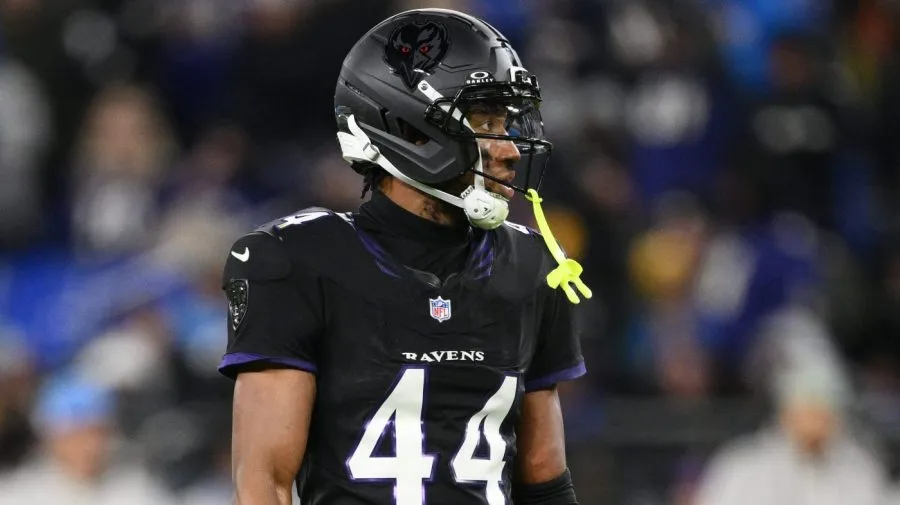
Baltimore's mayor publicly blasted Ravens cornerback Marlon Humphrey after the defensive back answered a podcast question about what the city is 'the best at making' with one word: 'Criminals.' The episode is a case study in how player-owned media strips out the PR buffer that once contained a bad quote, turning a throwaway joke into a civic and commercial problem for the team, the player, and the city's brand.
Baltimore's mayor went straight at Ravens cornerback Marlon Humphrey this week over a single word the defensive back used to describe his own city. Humphrey, appearing on a recent episode of his podcast, was asked what Baltimore "is the best at making." His answer: "Criminals." Then he burst out laughing. The mayor's public rebuke followed, and it turned a throwaway podcast exchange into a national story about a football team, a city's reputation, and who gets to joke about either.
The mechanics of the clip matter as much as the word. This was not a hot mic in a locker room or a line pulled from a press conference. It was Humphrey's own show, a format he controls, published this week, with no editor standing between the question and the audience. The question itself was built as a setup, the kind of prompt that invites a punchline. Humphrey took it, and the laughter is what made it land as a jab rather than a slip. The Hill reported the comment was met with widespread backlash, and the mayor's response put the weight of the city's top elected office behind that reaction.
Why a mayor would spend capital on a podcast line: a city's reputation is an economic asset, and Baltimore's has been fought over for decades. Cities compete for residents, employers, and outside investment on perception as much as on tax rates, and a clip that reduces a major American city to one word travels further than any promotional campaign a tourism board could buy. For an elected official, the calculus is simple. Responding is cheap, it aligns the mayor with residents who live with the reality behind the stereotype, and it puts a hometown star on notice that the microphone runs both ways.
The bigger shift here is structural. Athletes now own distribution. Historically, a controversial quote moved through a team's communications staff, a beat reporter, and a league office before it reached a national audience, and each of those steps was a chance to sand down an edge. That chain is gone. A player with a podcast has a direct line to fans, which is exactly why the format works: it is unpolished, it is funny, and it sounds like a conversation rather than a press release. The trade is that there is no buffer. Authenticity and zero latency come as a package, and the same rawness that makes a show worth listening to is what makes a single answer unrecallable.
For the Ravens, the complication is that an NFL franchise is a civic institution before it is a business. Teams in cities like Baltimore are among the most visible organizations in town, and players are the faces of that institution in a way that front-office executives are not. When a player disparages the city, the damage does not stop at the player. It lands on an organization that depends on local government, local fans, and local goodwill, and that has to keep working with City Hall on everything from stadium matters to community programs long after the clip stops circulating. That is an awkward position for a team that would rather stay out of a fight between its cornerback and its mayor.
For Humphrey, the exposure is more personal and more durable than it looks. NFL careers are short, and the earning window for a cornerback is shorter still. Local endorsements, community relationships, and the general benefit of the doubt a city gives its own are part of the economics of being a professional athlete, and they are priced on reputation. One clip does not end a career or void a contract. But it does create a file, and the people who weigh reputational risk for sponsors read those files carefully when they decide where a marketing budget goes.
What to watch now is the follow-through. Whether Humphrey addresses the comment directly, whether the Ravens issue a statement of their own, and whether the mayor keeps the story alive all determine how long this runs. The half-life of a sports controversy is short, but search results are permanent, and the version of this that lives online will be the one-word answer, not whatever comes next.
The lesson for anyone with a microphone and a brand is that the two are now the same asset. A player's side project is a media property with an audience, a sponsor read, and no editor. That is a genuine advantage over the old model, and it is also an unhedged position. The people who manage talent, whether they run a team, a fund, or a company, should assume that anything said on a personal show is already public, because it is, and that the only real defense is knowing what a format invites before the question gets asked.
This story's Key Insights and Take-aways are locked.
Create a free account to unlock Executive Actions for one credit.
Register to UnlockAlways free for Executives Club members. Join the Club
More in Politics

Fifth Circuit Kills Pregnant Workers' Law Over Pandemic Proxy Votes
A procedural ruling, not a policy one, has blocked a federal pregnancy-accommodation law and put every pandemic-era statute in the crosshairs ahead of an expected Supreme Court appeal.

Measles kills a Virginia child under 5, the state's first death of 2026
Virginia's health department confirmed the death but withheld the child's vaccination status, leaving schools, clinics and employers to plan around the one detail that would explain the most.

Former Brazilian President Bolsonaro Hospitalized with Intestinal Obstruction
The health status of the former far-right leader raises immediate questions about political stability and the trajectory of Brazil's conservative movement.