

Banks, airlines, the NSA and Apple went down at once
Four pillars of the economy stumbled in the same news cycle, and that is the real warning: the same thin layer of rented infrastructure now carries all of them.
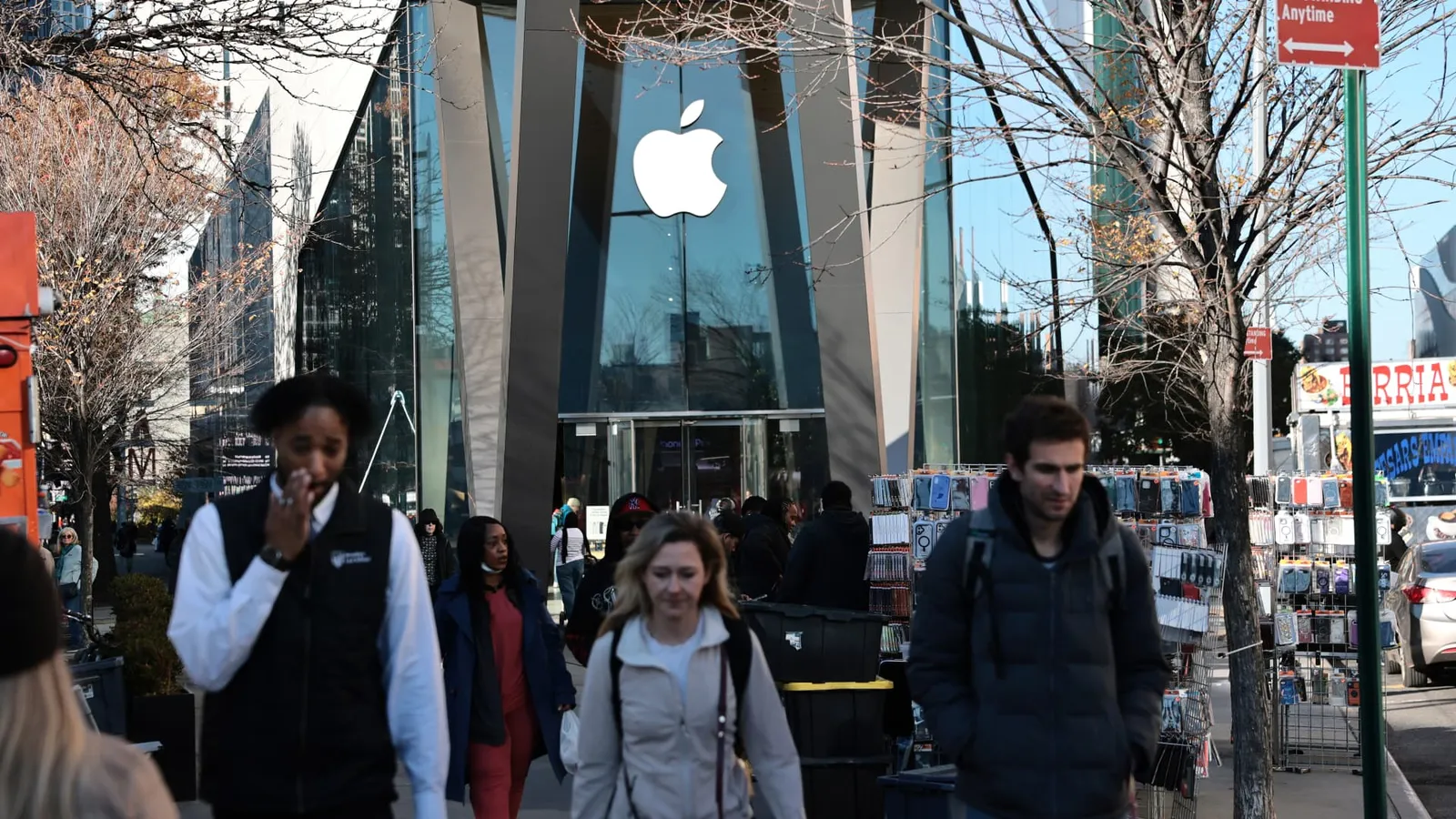
Widespread outages hit banks, air travel, the National Security Agency and Apple, disrupting services across finance, aviation, government and consumer technology simultaneously. For decision-makers, the episode is a live stress test of how much operational risk now sits in shared cloud, network and identity vendors that no single company controls.
The outages did not stay in one lane. Banks, air travel, the National Security Agency and Apple were all hit, and the disruption spread across what CNBC described as seemingly everything. Sit with that list for a second. A payments system, a flight schedule, a classified government network and a consumer hardware giant share almost nothing in common: different regulators, different customers, different threat models. Yet they stumbled in the same news cycle. That is the story inside the story. This was not a sector event. It was an infrastructure event, and the infrastructure is shared.
CNBC's framing is blunt: major outages showcase the risks of interconnected tech in the age of AI. The load-bearing word there is not outage. It is interconnected. Almost no modern company runs its own plumbing end to end. It rents compute from a handful of cloud regions, resolves names through a handful of DNS providers, pushes content through a handful of content delivery networks, authenticates staff through one identity provider, and monitors all of it with agents from one or two security vendors. Each choice is rational on its own. Stacked together, they create a system where a single bad update, a single routing change or a single expired certificate can travel further and faster than any incident response plan was designed for.
This is not hypothetical. In July 2024, a faulty update from CrowdStrike grounded flights, froze hospital systems and took down retail terminals worldwide within hours. In 2021, a routing withdrawal at Facebook erased the company's own services and knocked out apps that depended on its login. Cloud regions have repeatedly gone dark and dragged a long tail of unrelated businesses with them. None of those events is the cause of the outages described here, which the source does not attribute. But they are the pattern, and the pattern is the point: correlated failure is close to the default state of a concentrated stack, not an edge case.
Now add AI to the stack, which is exactly where CNBC puts the emphasis. AI raises the stakes in three ways. First, concentration: frontier models and the GPU capacity to serve them sit with a small number of providers, so one provider's bad day becomes thousands of companies' bad day. Second, velocity: AI-assisted engineering ships code faster, and faster shipping historically means more change, and more change means more chances for a bad deploy. Third, dependency: AI is being wired into customer service, fraud detection, trading, scheduling and security operations, which means the fallback when a model endpoint stalls is often a human with a spreadsheet and a growing queue.
Regulators have already moved in this direction. European financial rules on digital operational resilience now explicitly reach critical third-party providers, the UK has built a regime for designating critical third parties, and US banking supervisors have spent years pushing institutions to understand vendor concentration. Securities regulators in the US require prompt public disclosure of material cyber incidents. The practical consequence for a public company is that an outage is no longer just an IT ticket. It is a governance event, a disclosure question and, increasingly, a board agenda item with a clock attached.
The second-order effects are where this gets expensive. Cyber and business interruption insurance policies are typically written for isolated events, and insurers have grown wary of systemic, correlated losses. Service level agreements promise credits, not continuity, and rarely contemplate the scenario where the vendor, the cloud region and the identity provider all fail together. Customers, meanwhile, remember. Switching costs that looked prohibitive during procurement look much smaller after a week of downtime.
So what separates the operators who survive this from the ones who do not? Dependency mapping that reaches the fourth party, not just the vendor on the invoice. Manual fallbacks that are rehearsed on a schedule, because a recovery plan that exists only on paper fails the first time it is tested for real. Contract terms that ask hard questions about concentration and correlated failure. Board reporting that treats resilience as a risk appetite question rather than a technical one. And pre-drafted disclosure language, so the legal and communications work happens before the incident, not during it.
The uncomfortable truth in a wave of outages that touches banks, airlines, the NSA and Apple is that no single company can fully control its own uptime anymore. What a company can control is how quickly it knows what broke, how fast it can route around it, and how honestly it can tell customers, regulators and its own board what happened. In an economy where everything is connected to everything, the winners will not be the firms with the fewest dependencies. They will be the ones that can answer one question in under an hour: if this breaks, what breaks with it?
This story's Key Insights and Take-aways are locked.
Create a free account to unlock Executive Actions for one credit.
Register to UnlockAlways free for Executives Club members. Join the Club
More in Technology

Anthropic mathematician claims Claude helped crack the Riemann hypothesis
If the proof holds, AI has toppled math's most famous open problem; if it does not, it is a case study in announcing breakthroughs before anyone verifies them.

AI's $4 Trillion Wipeout Erases Nasdaq's Gains for the Year
A brutal week took roughly $4 trillion off the AI sector and left the Nasdaq flat for the year, and the damage ran the full length of the supply chain.

Anthropic mathematician says AI proved the Riemann hypothesis. Verification will take time.
A single unverified claim from inside Anthropic now sits against more than 160 years of open mathematics, and the gap between asserting a proof and surviving peer review is the entire story.