
Bayesian crew unaware of risks before Mike Lynch's yacht sank, investigators say
Investigators say the crew did not see the danger coming, a finding that shifts the inquiry toward what was known on board, and when.
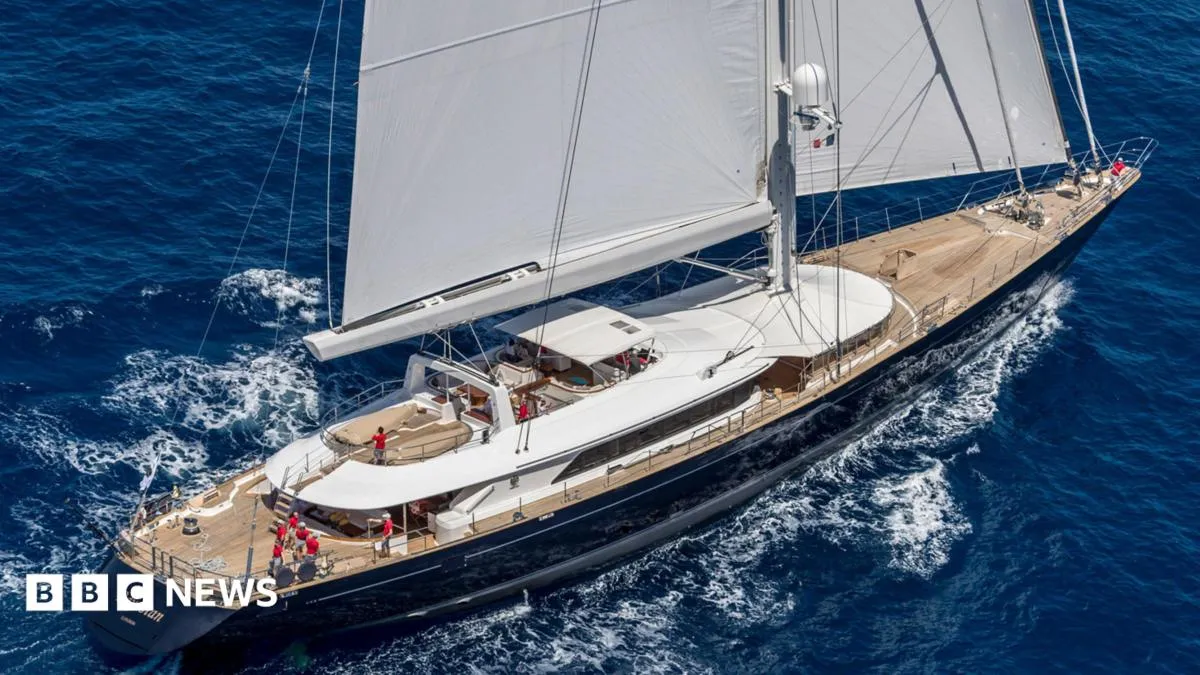
Investigators say the crew of the Bayesian, the yacht that sank off northern Sicily and killed seven people including British tech tycoon Mike Lynch, were unaware of the risks before the vessel went down. For executives, the finding moves the question from bad luck to the information chain that is supposed to turn forecasts into decisions, with direct consequences for insurance, regulation and how companies manage travel risk.
Investigators have concluded that the crew of the Bayesian did not know the risks they were facing before the yacht went down off the coast of northern Sicily, a finding that reframes one of the most closely watched maritime disasters in years. Seven people died in the sinking, among them Mike Lynch, the British tech tycoon whose presence on board turned a yachting accident into an international story. The headline fact is blunt: the people responsible for the vessel's safety were, according to investigators, not aware of the danger in front of them.
That single sentence does a lot of work. It moves the inquiry away from the simplest explanation, that an overwhelming event hit a well-run boat, and toward a harder set of questions about information, judgement and timing. If the crew did not perceive the risk, the next questions are what they were told, what they were watching, and what the vessel's systems told them. Those are questions about process, not luck, and process is where regulators, insurers and courts tend to focus their attention.
The Bayesian sank off northern Sicily, and seven people died. Lynch was a British tech tycoon, and his death, alongside six others, gave the sinking a profile that most maritime accidents never get. That profile matters practically. High-profile casualties tend to accelerate scrutiny, and scrutiny tends to produce recommendations, which is why the pace and tone of this investigation will be watched well beyond the marine industry.
Marine accident investigations are slow by design. Coastal states and flag states typically run parallel inquiries, and criminal authorities often open their own file, which means evidence has to be gathered in a way that can survive a courtroom. Preliminary findings can surface within months, but final reports on complex sinkings routinely take a year or more. The practical consequence for anyone watching is that the first finding is rarely the last word, but it usually sets the direction of travel.
Large yachts of this class are typically run less like hobby boats and more like small commercial ships. That means stability documentation, weather routing, watchkeeping rotas, drills and a safety management system that is supposed to convert forecast data into decisions. When investigators say a crew was unaware of the risks, they are usually pointing at a break somewhere in that chain: a forecast that was not acted on, an alarm that was not understood, a decision to stay put that looked reasonable at the time. None of that is automatically a finding of blame. It is a finding about what was knowable, and when.
Insurance is where findings like this turn into money. Hull policies, protection and indemnity cover, and the liability arrangements that sit behind a yacht and its crew all hinge on questions of seaworthiness, negligence and foreseeability. A conclusion that the crew did not appreciate the risk can cut in more than one direction: it may support an argument that the danger was not reasonably foreseeable, or it may support an argument that the operator's systems failed to make it foreseeable. Either way, the eventual report will be read closely by underwriters who price this class of risk.
The wider market context is that the large-yacht sector has grown quickly, and with it the number of vessels operating in waters where summer conditions can change fast. Charter and private ownership both put pressure on crews to keep schedules, and schedule pressure is a classic contributor to risk in aviation and shipping alike. Regulators and class societies have historically responded to accidents by tightening documentation and training requirements rather than banning activity outright, and there is little reason to expect a different pattern here.
For executives, the second-order lesson is about the risk chain. Founders, board members and senior operators travel constantly, often on vessels and aircraft they do not own and do not inspect. The Bayesian case is a reminder that the safety of a trip depends on a sequence of people and systems, and that the weakest link is usually information that never reached a decision-maker. Companies that treat travel risk as a checkbox tend to discover the gap only after something goes wrong. What to watch next: the full investigative report, any parallel criminal proceedings, and whether regulators tighten requirements around weather monitoring and crew training for large private vessels. Mike Lynch's death, and the six others who died with him, happened on a boat that was supposed to be safe. Investigators now say the people running it did not see the danger coming. That is the kind of finding that changes how an industry documents, trains and insures, and it is why this story will keep running long after the headlines move on.
This story's Key Insights and Take-aways are locked.
Create a free account to unlock Executive Actions for one credit.
Register to UnlockAlways free for Executives Club members. Join the Club
More in Business

S&P 500 Enters Correction, Down 10% From Its High on AI Worries
The index's slide past the 10 percent line is a symbolic verdict on investor mood, and the AI trade that powered the rally is now the thing testing it.

Dow and S&P 500 enter correction as Nasdaq logs worst week since 2020
All 11 S&P 500 sectors fell more than 1% in the same week for the first time since April 2025, a breadth signal that matters more than any single index level.

Chip stocks lose $2.3 trillion in a week, worst run in 25 years
A $2.3 trillion weekly wipeout in semiconductors is forcing every board with an AI story to ask whether it owns a thesis or just a crowded trade.