
BBC put 4 AI models to the Black Friday test. Your wallet is next
The BBC's four-model experiment on a single TV purchase is a live stress test of whether AI can beat retail pricing games, and it lands on every shopper, retailer, and builder betting on AI agents.
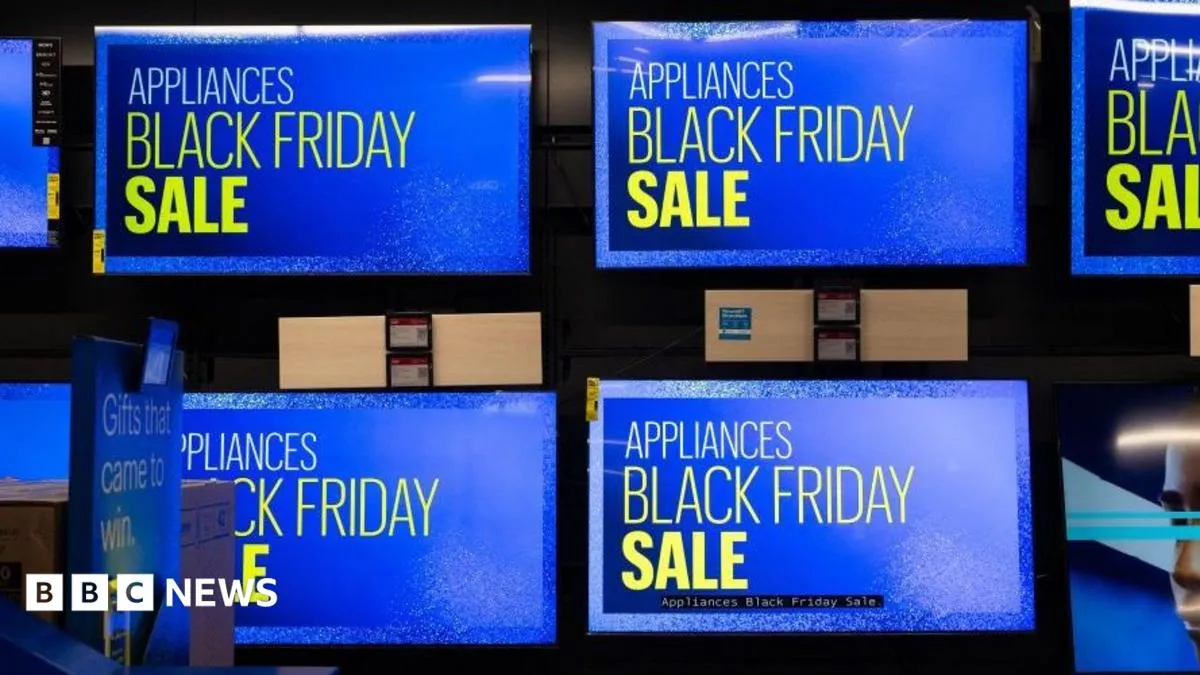
BBC News put four AI models to a single Black Friday test: could any of them save money on a new TV? The result matters far beyond one television, because it probes whether AI shopping assistants can be trusted with the pricing decisions consumers, retailers, and investors are about to hand them.
BBC News put four AI models to one test this Black Friday: could any of them save money on a new TV? That is the whole premise, and it is a sharper question than it looks. The BBC's technology desk set four models loose on the same purchase and asked whether they could beat the deal on offer. No benchmark suite, no vendor demo, just the most ordinary high-stakes shopping decision a household makes all year. The framing is a question rather than a verdict, and that framing is itself the story: the BBC is testing whether AI can do the thing consumers have already started assuming it can do.
Why a television? Because TVs are the archetypal Black Friday battleground. They are the product retailers historically use to pull crowds through doors, which makes them the product where pricing gets most creative. Retailers typically run special model numbers built for the holiday window, so a shopper comparing two 55-inch sets is often comparing two SKUs that exist only for that weekend. Add in bundle pricing, member-only rates, and limited-quantity doorbusters, and you have a category engineered to be hard to compare. That is exactly the fog an AI assistant is supposed to cut through, and exactly the fog that can make an AI assistant confidently wrong.
Here is the mechanic, and it is less magical than the marketing. A modern AI assistant with web access does not have a live price feed. It reads pages, the same pages you would read, then summarizes them. Its answer is only as fresh as the last crawl, and Black Friday pricing moves by the hour. Historically, the price-comparison industry has been gamed through feed manipulation, sponsored placements, and reference prices that were never really charged. A model reading the open web inherits every one of those traps, plus a new one: it can generate a plausible discount that no retailer ever offered. Fluent, specific, and wrong is the worst possible combination in a checkout decision.
For retailers, the stakes are structural. If AI agents become the default first stop for shoppers, the promotional playbook that retailers have spent decades and enormous budgets refining starts to lose its grip. Countdown timers, urgency banners, the pre-dawn email blast: these are built to work on humans under time pressure. They work less well on a model that is asked one question and returns one answer. The obvious counter-move is to make sure the machine-readable version of your price is the one the model sees, and to make sure your own assistant is the one doing the recommending. That is a distribution fight dressed up as a pricing fight, and it will be decided in data feeds, not in TV ads.
For shoppers, the appeal is leverage. The promise is that you stop opening twelve tabs and let something tireless do the comparison for you. The risk is that a confident answer feels like a verified answer. A model that says "this is the best price" without a citation is not a price check, it is a guess with good grammar. The BBC's test is useful precisely because it treats that promise as falsifiable. Four models, one product, one weekend: either the savings are real and repeatable, or the whole category is a demo that has not met a real receipt yet.
For anyone building or funding AI commerce, the bottleneck is trust, not capability. Consumer regulators in several markets have spent years chasing dark patterns, drip pricing, and fake urgency in online retail. An AI layer that summarizes those pages does not remove the problem, it relocates it. If an assistant recommends a bad deal, who is accountable: the model, the retailer, or the shopper who trusted it? That question is unresolved, and it will set the adoption speed for agentic shopping far more than any benchmark score. The companies that win will be the ones that make an answer verifiable, timestamped, and traceable to a source a human can check in one click.
The BBC's experiment is small: four models, one TV, one holiday weekend. The signal is not small. Every retailer is now optimizing for two audiences at once, the human scrolling on a phone and the model summarizing on their behalf, and those two audiences respond to completely different stimuli. Every consumer is being invited to outsource the one task where being wrong costs real money. And every founder in the space is on notice that the first public test of AI shopping was run by a newsroom, not a lab. Until someone makes the answer checkable, the honest response to "can AI spot a Black Friday deal?" is the same as the honest response to most AI products: sometimes, and you had better verify it yourself.
This story's Key Insights and Take-aways are locked.
Create a free account to unlock Executive Actions for one credit.
Register to UnlockAlways free for Executives Club members. Join the Club
More in Technology

Anthropic mathematician claims Claude helped crack the Riemann hypothesis
If the proof holds, AI has toppled math's most famous open problem; if it does not, it is a case study in announcing breakthroughs before anyone verifies them.

AI's $4 Trillion Wipeout Erases Nasdaq's Gains for the Year
A brutal week took roughly $4 trillion off the AI sector and left the Nasdaq flat for the year, and the damage ran the full length of the supply chain.

Anthropic mathematician says AI proved the Riemann hypothesis. Verification will take time.
A single unverified claim from inside Anthropic now sits against more than 160 years of open mathematics, and the gap between asserting a proof and surviving peer review is the entire story.