
BepiColombo parks at Mercury after 8 years, 6 flybys and a solar panel scare
Europe and Japan just pulled off the hardest orbital insertion in the inner solar system, but the mission's real payoff, and its science, doesn't start until April 2027.
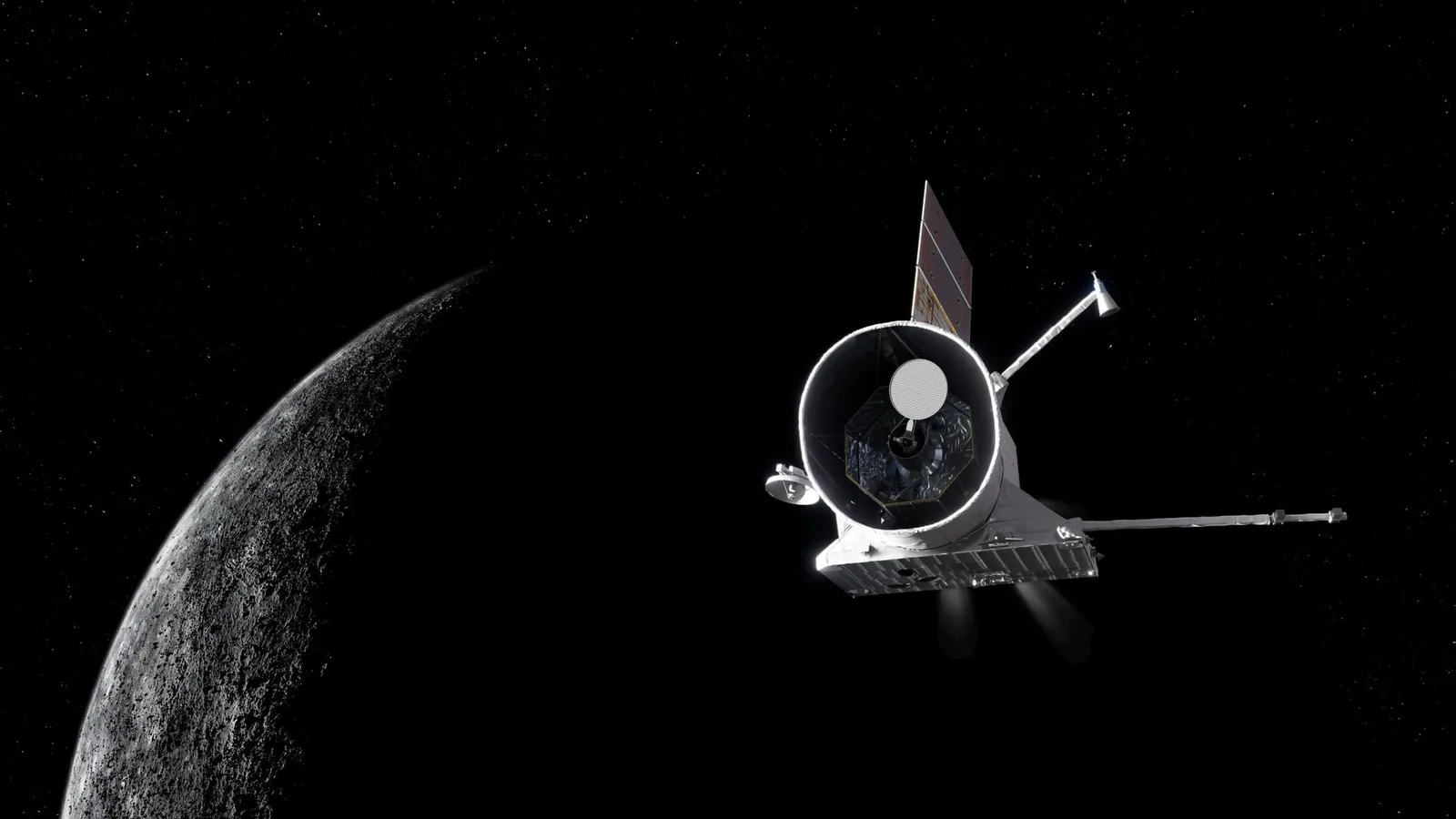
The European Space Agency and Japan's JAXA brought the BepiColombo probe into orbit around Mercury today, executing a 37-minute insertion burn more than eight years after its October 2018 launch. The milestone caps a trajectory built on nine planetary flybys and a year-long delay from a solar-array fault, with spacecraft separation in December and science operations not beginning until 2027.
At 1:24 p.m. EST today, BepiColombo began a 37-minute orbit-insertion burn, the maneuver that determines whether eight years of travel end in orbit around Mercury or in silence. The spacecraft is a joint effort between the European Space Agency and the Japanese Aerospace Exploration Agency, and it has been in transit since October 2018, when it launched aboard an Ariane 5 rocket from French Guiana. More than eight years after leaving home, it is now at the solar system's innermost planet. The moment is the hardest part of a mission that has repeatedly made the simple act of arrival look expensive.
Mercury is brutally difficult to reach, and not for the reason most people assume. It is close to the sun, and that is exactly the problem. Spacecraft falling inward are accelerated to high velocities by the star's immense gravitational pull, and to be captured by Mercury's much weaker tug they have to shed a great deal of that kinetic energy. Braking that much mass with fuel alone is impractical, so the BepiColombo team designed a trajectory of gravitational assists instead: one flyby of Earth, two of Venus and six of Mercury, spread across roughly seven years. Each pass borrowed a little momentum from a planet and gave back a little velocity to the void. It is orbital mechanics as accounting, and every line item has to balance.
Then the accounting got worse. The mission suffered an issue with its solar panels that reduced the power available to the electric thrusters on the Mercury Transfer Module, the propulsion element that carries the two orbiters. The result was a one-year slip in flight time, a reminder that deep-space schedules are hostage to hardware long before they are hostage to budgets. BepiColombo is not a single spacecraft but a stack: ESA's Mercury Planetary Orbiter, known as MPO, JAXA's Mercury Magnetospheric Orbiter, known as Mio, and the transfer module that has done the pushing. The arrival phase officially opened on Sept. 3, when the transfer module released MPO and Mio. The two orbiters are still connected today and are expected to separate around Dec. 9.
The sequence from here is deliberate and slow. Shortly after separation, Mio settles into its final orbit, a highly elliptical path that will carry it over Mercury's poles. MPO is also bound for a polar orbit, though a far less elliptical one, and will conduct a series of engine burns before reaching its destination on March 10, 2027. Science work does not begin until April 6, 2027. In other words, the arrival phase takes roughly six months in total, and the interesting data is still well over a year away. Anyone treating today as the finish line is misreading the mission timeline badly.
The payoff, when it comes, is meant to be comprehensive. "The mission will study all aspects of Mercury, from the structure and dynamics of its magnetosphere and how it interacts with the solar wind, to its internal structure with its large iron core, and the origin of the planet's magnetic field," ESA officials wrote in a BepiColombo mission description. They added that "the data will enable scientists to understand more about the origin and evolution of a planet located close to its parent star, and a better understanding of the overall evolution of our solar system." That second clause is the one worth underlining. Mercury is a natural laboratory for the class of planet that appears most often in the galaxy: small, rocky, and hugging its star. Learning how it formed and how its magnetic field survived is a proxy for reading worlds we will never visit.
The two orbiters are built to split the work. MPO and Mio will gather complementary data from different vantage points, which is why the polar orbits and the difference in ellipticity matter. Mio's long looping path puts it deep into the magnetosphere and the solar wind interaction. MPO's tighter orbit is better suited to the surface and the interior. Neither spacecraft alone could produce the full picture; the design assumes the value is in the overlap.
For the space industry, the more instructive story is the engineering margin. Electric propulsion is efficient but power-hungry, and near the sun a spacecraft's arrays are both the source of that power and its most thermally stressed component. A single array fault converted into a full year of lost schedule and a recalculated trajectory. That is the lesson boards should take from flagship science missions: the schedule risk is not in the launch, it is in the anomaly that shows up in year three and quietly re-prices everything downstream. ESA and JAXA have now absorbed that cost and are still on target for arrival.
The dates to watch are concrete. Separation of MPO and Mio around Dec. 9. Mio's entry into its final polar ellipse shortly after. MPO's arrival on March 10, 2027. First science on April 6, 2027. Today's burn is the milestone that makes all of those possible, but it is a milestone, not a result. The data that justifies the last eight years is still ahead, and the mission's real verdict will be written by what the two spacecraft see once they stop flying in formation and start looking down.
This story's Key Insights and Take-aways are locked.
Create a free account to unlock Executive Actions for one credit.
Register to UnlockAlways free for Executives Club members. Join the Club
More in Science

Anthropic's I.P.O. Made Rank-and-File Researchers Worth Tens of Millions
Researchers who joined just a few years ago are now worth tens of millions, and the windfall resets the pay benchmark for every private A.I. lab still paying in paper.
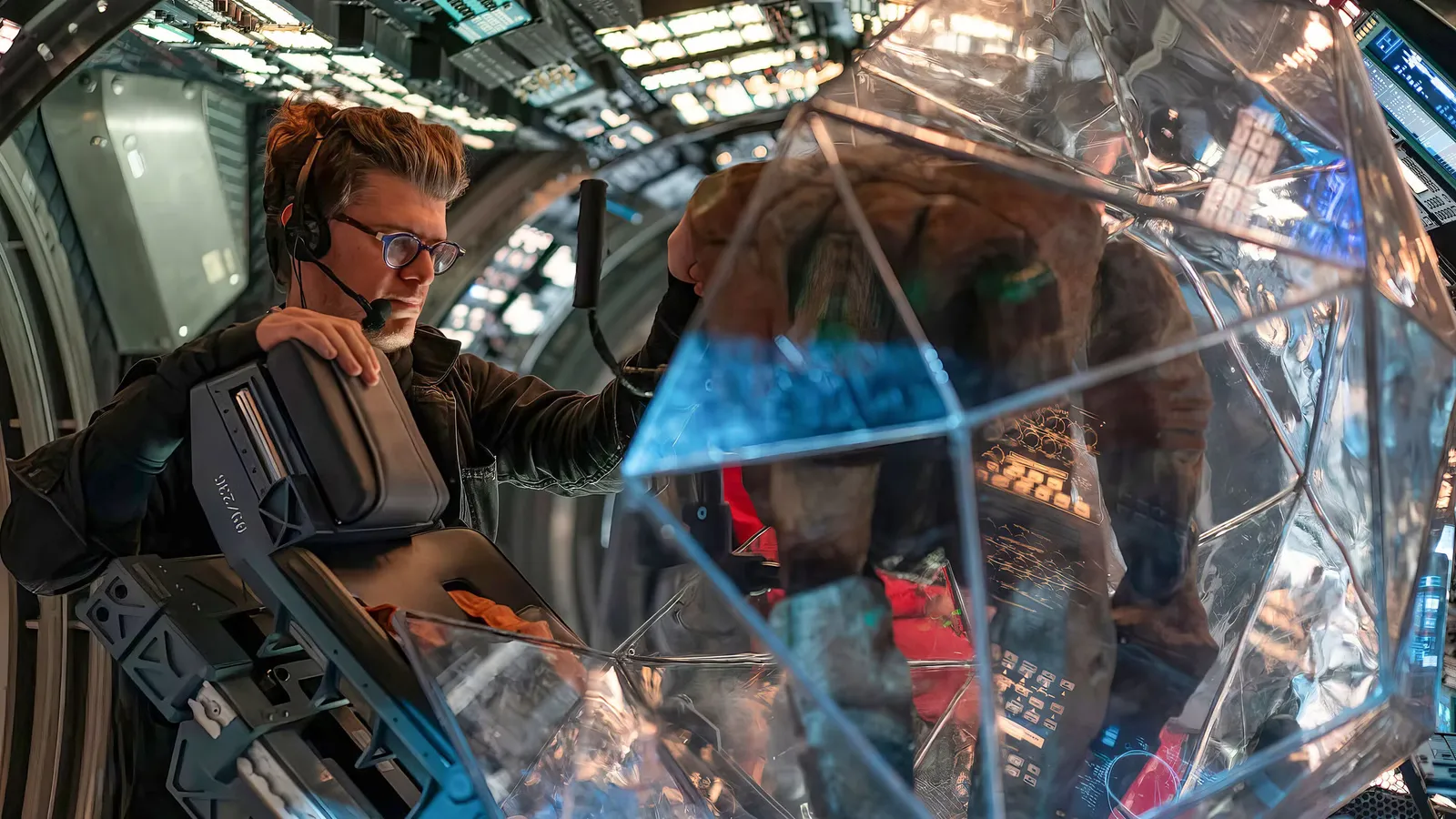
A Puppeteer Is Now Oscar-Eligible for Playing Rocky Opposite Ryan Gosling
James Ortiz's Best Supporting Actor eligibility at the 99th Academy Awards turns puppetry into an awards-season argument about credit, contracts, and who counts as talent.

Climate Models Assume 92% Carbon Capture Success. Only 12 Projects Have Ever Been Built.
A ProPublica and Drilled investigation finds the world's three most influential climate models baked in unproven carbon capture assumptions, turning net-zero pledges into unpriced risk for boards and lenders.