

Bettors Have Staked $3 Billion on 2028 - More Than the 2026 Midterms
Trading volume on a presidential race nobody has officially entered has already eclipsed every bet on the election that will reset Congress, and the gap says more about attention than it does about probability.
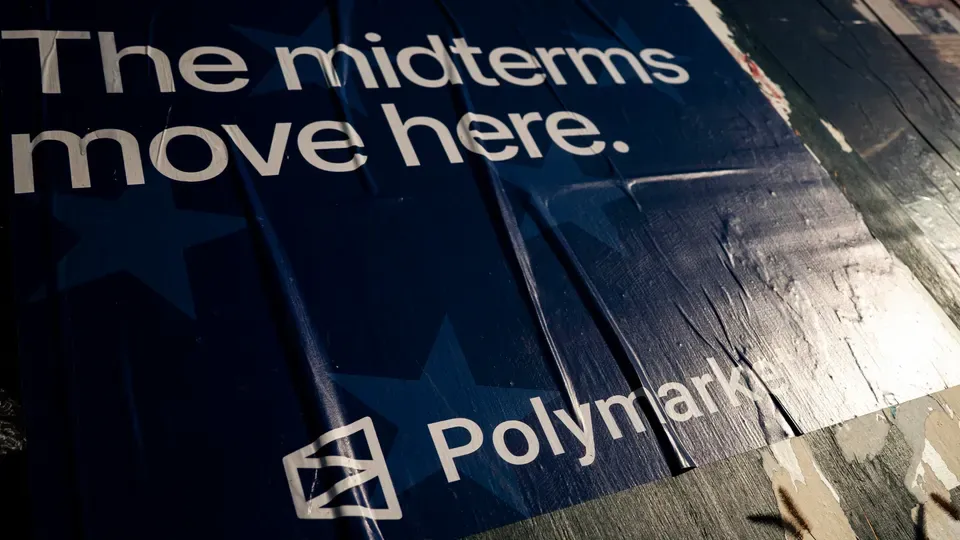
Bettors have pushed $3 billion of trading volume through 2028 presidential election markets, according to Forbes, already exceeding all wagering on the 2026 midterms. For anyone whose business touches media, political risk, or event-driven products, that mismatch is a live signal that capital and attention are pricing the distant, narrative-rich race over the near-term one that actually moves policy.
Three billion dollars is already riding on the 2028 presidential election, and not a single vote has been cast. Forbes reports that trading volume on the 2028 race has already surpassed all betting on the 2026 midterms combined. Sit with how strange that ordering is. The midterms are the nearer event, the one that will actually reset the balance of power in Washington inside the current cycle, the one with real committee chairs and real legislative consequences on the line. And they are losing the money race to a presidential contest whose field is not settled, whose nominees do not exist, and whose first ballot is years away. Bettors did not wait for the calendar to fill in. They started pricing the argument everyone is already having.
That reversal is a preference, not a rounding error. Prediction markets are not polls, and the distinction matters. A poll asks people what they think; a market asks people what they will pay to be right. A contract typically pays a fixed amount if an outcome occurs and nothing if it does not, and it trades in between, so the price reads as an implied probability and the volume reads as conviction multiplied by liquidity multiplied by attention. Attention is doing enormous work in this number. Presidential cycles are the Super Bowl of political coverage: they have personalities, grudges, dynasties, and a single winner-take-all payout that is easy to narrate and easy to trade. Midterms are a thousand local referenda wearing a national trench coat. Hand a bettor a choice between the two and the answer writes itself.
For context on the mechanics, election markets have historically been a niche instrument, watched by political junkies and used by a small set of traders, researchers, and journalists as a live read on sentiment. What has changed is that they have become liquid enough and mainstream enough to accumulate nine-figure and now ten-figure totals, which turns them from a curiosity into a pricing mechanism that other people have to reckon with. Volume begets volume: deeper books attract market makers, tighter spreads attract bigger traders, and bigger traders attract coverage. That flywheel is why a figure like $3 billion is self-reinforcing rather than a one-off curiosity.
The regulatory backdrop is the part most people skip, and it is the part that decides whether this number is a floor or a ceiling. In the United States, event contracts sit inside the Commodity Futures Trading Commission's jurisdiction, and election-linked contracts specifically have been one of the most contested corners of that turf, drawing court challenges and pushback from state gaming regulators who see them as sportsbooks in a trench coat. The legal footing is not fully settled, and that is not a footnote. A venue that can offer election contracts today can be restricted tomorrow. Anyone building a product, a content strategy, or a risk model on top of this liquidity is implicitly underwriting a legal outcome they do not control.
There is also an epistemic warning worth wiring into how you read these numbers. Long-dated markets are thin markets. When the resolution date is years away, small trades can move prices, spreads are wide, and the signal-to-noise ratio degrades exactly when the stakes feel highest. A $3 billion total is impressive and it is also spread across years of contracts, many of which will be repriced a hundred times before anything is decided. Treat the volume as a measure of engagement, and treat the price as a hypothesis with error bars, not a forecast with a confidence interval.
What this actually tells you, then, is less about who wins in 2028 and more about where political attention has already migrated. Media buyers, brand strategists, campaign operatives, and anyone selling into the news cycle should note the direction of travel: the presidential race is setting the agenda before the midterms have finished setting the field. That has practical consequences for planning cycles. Budgets that assume attention arrives on a traditional calendar, with midterms dominating the current window and the presidential race warming up later, are budgeting against the market's actual behavior.
The second-order effects are where the interesting money sits. Political risk desks now have a live, tick-by-tick sentiment feed that updates faster than any polling average and reprices on news within minutes. That is genuinely useful, provided you know what you are looking at. Data and API businesses get a new high-frequency input. Prediction-market operators get a proof point that election contracts scale. Regulators get a fresh argument about retail protection at a scale they can no longer call marginal. And political operators get an uncomfortable mirror: the public is pricing your race before you have announced it.
For peers in adjacent seats, the strategic stakes are straightforward. If you run a media property, a trading desk, a data product, or a campaign, the $3 billion tells you that narrative-driven markets will keep outrunning the events that matter most on paper, at least until an outcome forces the two back together. The thing to watch next is not the price of any single contract. It is whether volume keeps compounding into the midterms, and whether regulators let the machine keep running long enough to find out.
This story's Key Insights and Take-aways are locked.
Create a free account to unlock Executive Actions for one credit.
Register to UnlockAlways free for Executives Club members. Join the Club
More in Politics

Fifth Circuit Kills Pregnant Workers' Law Over Pandemic Proxy Votes
A procedural ruling, not a policy one, has blocked a federal pregnancy-accommodation law and put every pandemic-era statute in the crosshairs ahead of an expected Supreme Court appeal.

Measles kills a Virginia child under 5, the state's first death of 2026
Virginia's health department confirmed the death but withheld the child's vaccination status, leaving schools, clinics and employers to plan around the one detail that would explain the most.

Former Brazilian President Bolsonaro Hospitalized with Intestinal Obstruction
The health status of the former far-right leader raises immediate questions about political stability and the trajectory of Brazil's conservative movement.