
Blade's First Director Quit Marvel Because There Was No Script
Bassam Tariq says casting actors against pages that did not exist was burning his credibility, and 'life's too short to make s**t films.'
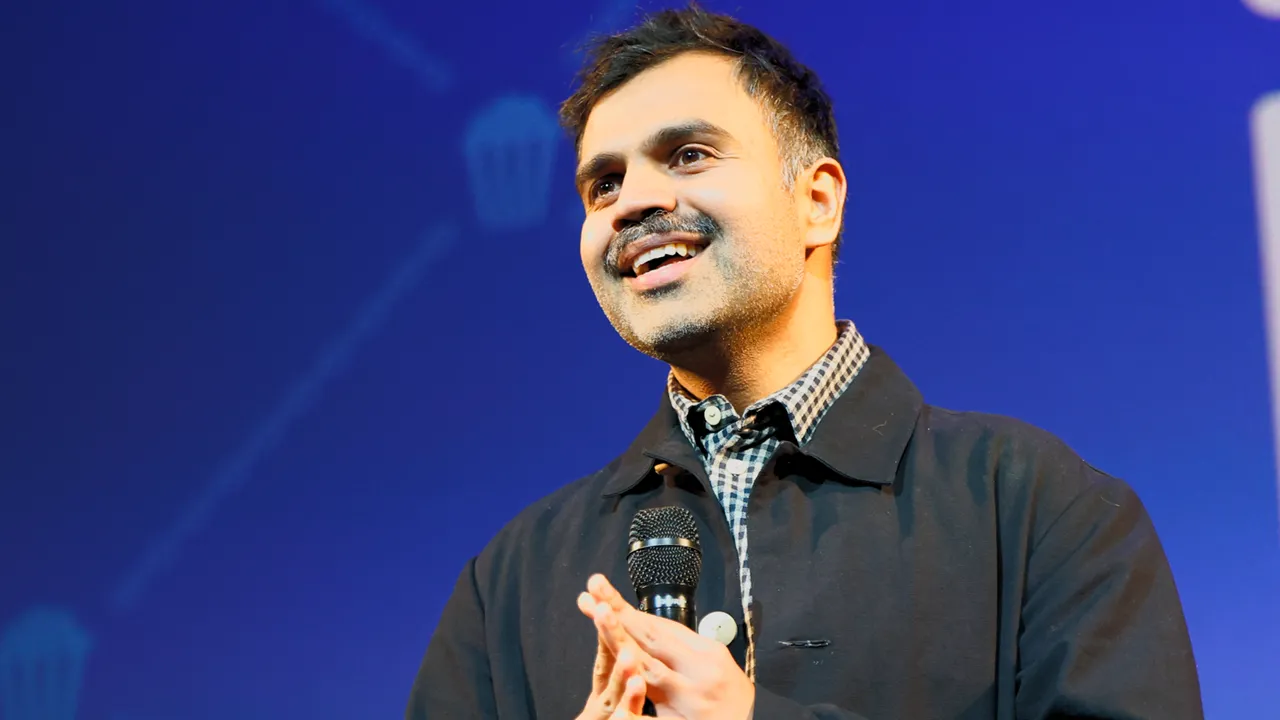
Director Bassam Tariq has explained that he walked away from Marvel's Blade in 2022 because he was casting and building the film without a finished script, a process he says cost him credibility with his actors. The now-officially-canceled project, which Marvel's Kevin Feige has called a personal failure, is a case study in what happens when a studio announces, casts, and schedules ahead of the underlying product.
Bassam Tariq did not leave Marvel's Blade over a schedule. He left because there was no script. The director, hired in 2021 to launch Mahershala Ali's long-promised vampire reboot, has now explained his 2022 exit in an interview with The New Arab, and the reasoning is blunter than any studio statement: he was casting and building a film that did not yet exist on paper, and it was torching his credibility with actors. His one-line summary of the lesson: "Life's too short to make s**t films."
Marvel's official explanation at the time, given to The Hollywood Reporter, blamed "shifts in our production schedule." Tariq's account is about what happens in the room long before a schedule matters. "It was funny and strange to start casting and building without a proper script," he said. "You're sitting there and explaining to actors what their role will be, and they just have to believe you." Then the part every development executive should sit with: "That's also very dangerous because if the text comes and it doesn't add up to what you were saying, your credibility gets completely shot. All I have is my integrity, and I've been thinking about that a lot."
The timeline is now a full case study. Marvel Studios announced an Ali-led Blade in 2019 and picked Tariq to direct in 2021. A little more than a year later he was gone. Since then: a new director, multiple frustrated Ali updates, and finally an official cancellation. Marvel Cinematic Universe orchestrator Kevin Feige said the process made him feel like a "gigantic loser and failure," an assessment Ali agreed with. That is a remarkable admission from the executive who runs the most commercially dominant franchise machine in film, and it lands on the exact fault line Tariq describes: committing to release dates, logos, and casting announcements before the underlying product exists.
Tariq's complaint is structural, not personal. Being "the bearer of bad news to your actors" while a corporate entity makes all the major decisions in the background is "not a great way to be a director," he told The New Arab. "I know some people can take that and run with it, but I learned I was losing credibility with my actors, and it wasn't a healthy way to operate as a filmmaker." For context, franchise filmmaking typically runs on a central creative committee and a fixed release calendar, which hands directors a role that is part evangelist, part middle manager. Most sign up anyway. Few say out loud what the arrangement costs them.
For context, most projects that stall in Hollywood do so in development, quietly, before anyone is cast or a date is stamped on a calendar. Blade was unusual because the build happened in public: a 2019 announcement with Ali attached, a director hired two years later, and a casting process running ahead of pages. Every one of those steps raised the cost of admitting the script was not working. That is how a creative problem becomes a scheduling problem becomes a cancellation, with a director's credibility spent somewhere in the middle.
What Tariq took away is a governance rule dressed up as an artistic one. "I have to have full control over my script," he said. "If we disagree, it's between them and me. It's quite sad because we had such high hopes for what we wanted to build." Strip out the Hollywood vocabulary and it is the oldest argument in any organization: the person who has to sell the plan to the people doing the work needs authority over the plan. When the pitch and the product diverge, the messenger absorbs the damage while the institution keeps its calendar.
Notably, Tariq is not torching the boss on the way out. He defended Feige, calling him a "good dude," which makes the story more useful than a grudge match: this is a systems problem between people who get along, not a villain story. There is even salvage value in the wreckage. Ali thanked Marvel for the free year of physical training, which he said helped him through the more intense scenes in Tariq's film Your Mother Your Mother Your Mother. Costumes built for Blade were reused in Ryan Coogler's Sinners. Canceled projects rarely vanish entirely; they get written off, repurposed, or quietly absorbed into something that ships.
The strategic picture now: Avengers: Doomsday arrives next month, and there is no sign of a live-action Blade anywhere in the Marvel Cinematic Universe. The takeaway for anyone running a portfolio of long-dated, expensive bets is uncomfortable and simple. Announcements are cheap in a press release and expensive in the room where talent gets recruited, because every unfilled promise is borrowed against somebody's credibility. Tariq paid his share and walked. Feige called himself a failure on the record. The script, meanwhile, was the thing everyone was waiting for.
This story's Key Insights and Take-aways are locked.
Create a free account to unlock Executive Actions for one credit.
Register to UnlockAlways free for Executives Club members. Join the Club
More in Entertainment

GTA 6 banks $3.8bn in one day, torching every launch record
One game just out-earned every video game launch and every single-day film box office haul in history, and the fallout lands on every media CEO's forecast.

GTA VI Racked Up $3.79 Billion in a Single Day, Topping Every Film Ever
A 13-year wait produced a $3.79 billion day, more than any movie has made in its entire run, and it resets the launch math for every studio, streamer, and brand chasing the same attention.

GTA 6 sells 32.5M pre-sales and $3.79B day one, torches 13-year record
Rockstar's sequel didn't just beat Grand Theft Auto V's 13-year-old benchmark; it reset what a launch can be, with 32.5 million pre-sale copies and $3.79 billion in a single day.