
Bolton: Trump-Putin-Xi summit has 'no substance to it, whatever'
Trump's former national security adviser says the three-leader meeting produced nothing of consequence, and the yardstick he is applying is the same one markets use.
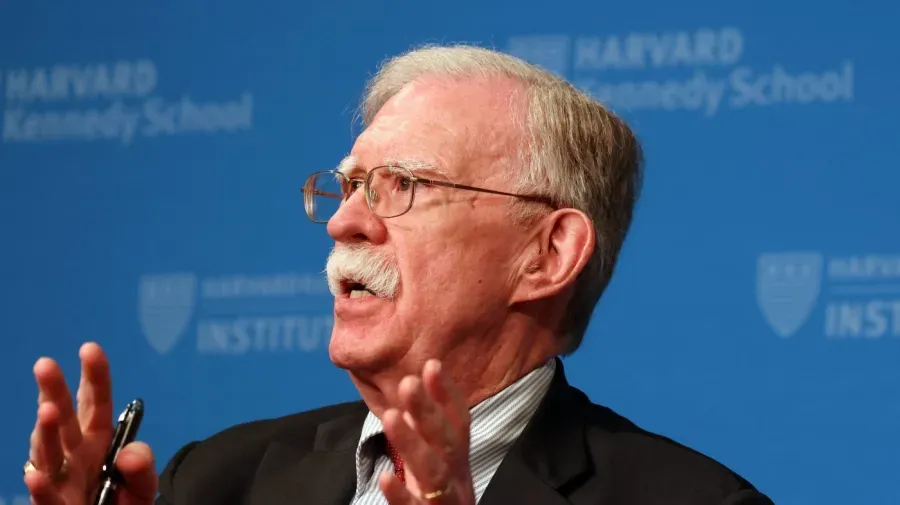
John Bolton, the former White House national security adviser, said this week's trilateral meeting between President Trump, Russian President Vladimir Putin and Chinese President Xi Jinping had "no substance to it, whatever." For executives, the telling detail is the standard behind the critique: without a signed text, a scheduled follow-up, or a policy change, a leader-level summit does not alter the sanctions, tariff and export-control baseline that corporate plans are built on.
John Bolton, the former White House national security adviser, handed this week's Trump-Putin-Xi trilateral meeting a flat verdict: there was nothing there. "I think from what we can tell of the trilateral meeting with Putin and Xi, there is no substance to it, whatever," Bolton said, according to The Hill. That is a remarkable sentence to attach to a gathering that placed the presidents of the United States, Russia and China in the same conversation. In Bolton's telling, the staging outran the outcome.
Bolton is not a random heckler. He spent decades in Republican foreign policy and served as Trump's national security adviser, a role that puts a principal inside exactly this kind of leader-level diplomacy, before his tenure ended in 2019. He is also one of Washington's most consistent hawks on Russia and China and a longtime skeptic of the idea that personal rapport between heads of state can substitute for hard, verifiable agreements. So when he says a three-way meeting had no substance, the useful question is not whether he is being partisan. It is what standard he is applying.
That standard is worth spelling out, because it is the same one investors and corporate strategists tend to apply to any high-level summit. Substance, in this framework, means deliverables: a signed framework, sanctions relief or tightening, a tariff pause, a military hotline, a prisoner exchange, or a joint statement with specific commitments and dates attached. Summits that produce those things get repriced into markets within hours. Summits that produce photographs and warm words typically do not move anything beyond the news cycle. Bolton's critique lands because he is measuring the meeting against the first category and filing it under the second.
The format is what makes the meeting notable in the first place. Russia and China have deepened their alignment in recent years, and any US president sitting down with both leaders at once is signaling something about how Washington intends to manage two of its most consequential relationships simultaneously. Historically, trilateral formats get used to either lock in a joint position or to test whether one party can be pried away from the other. Both goals require follow-through. A meeting without an agreed outcome leaves the underlying dynamics exactly where they were, and leaves each side free to describe the room differently afterward.
For anyone reading the tea leaves, the markers to watch in the days after a summit are unglamorous and specific. Does a joint statement appear, and does it name any issue at all? Do follow-on talks get scheduled, and at what level? Do sanctions, export controls or tariff schedules shift in either direction? Does either government brief its own press with a materially different account of what was agreed? Absent those signals, the default assumption should be diplomatic theater, which is precisely the read Bolton is offering.
That read matters far beyond Washington. Multinationals with exposure to Russia and China build planning assumptions around whether the policy environment is loosening or tightening, and leader-level summits are one of the few visible tells available before decisions get formalized. Energy firms, chipmakers, automakers and agricultural exporters have all had their outlooks rewritten in recent years by sanctions and trade policy that moved faster than any corporate planning cycle. A summit that produces no substance means no change to the baseline: the tariffs, the export controls and the sanctions regimes stay where they sit until something concrete moves them.
There is a domestic political layer too. Bolton left the administration in 2019 and has since been one of its sharpest outside critics on foreign policy, which means his assessment will be read by supporters as vindication and by the White House as noise. Both reactions can be true at once, and neither settles the question. The test is not who said it; it is whether anything contradicts it. If the administration produces a document, a deal or a scheduled follow-up, Bolton's critique ages badly and fast. If it produces none of those, his critique is simply the first draft of the conventional wisdom.
For executives and boards, the practical takeaway is discipline about what counts as news. A leader-level meeting among Washington, Moscow and Beijing is a genuine event and deserves attention. But attention is not the same as a changed operating environment. Until something is signed, scheduled or reversed, the right posture is to note the meeting, discount the atmospherics and leave planning assumptions where they were. Bolton's verdict, stripped to its core, is a reminder that proximity between powerful people is not the same thing as progress.
This story's Key Insights and Take-aways are locked.
Create a free account to unlock Executive Actions for one credit.
Register to UnlockAlways free for Executives Club members. Join the Club
More in Politics

Fifth Circuit Kills Pregnant Workers' Law Over Pandemic Proxy Votes
A procedural ruling, not a policy one, has blocked a federal pregnancy-accommodation law and put every pandemic-era statute in the crosshairs ahead of an expected Supreme Court appeal.

Measles kills a Virginia child under 5, the state's first death of 2026
Virginia's health department confirmed the death but withheld the child's vaccination status, leaving schools, clinics and employers to plan around the one detail that would explain the most.

Former Brazilian President Bolsonaro Hospitalized with Intestinal Obstruction
The health status of the former far-right leader raises immediate questions about political stability and the trajectory of Brazil's conservative movement.