
Bradford Moor councillor Ibrar Ali stabbed; police make attempted murder arrest
The Bradford Moor councillor is in hospital with serious injuries and a suspect is in custody on suspicion of attempted murder, raising the question Britain keeps deferring: who protects the people who run local government?
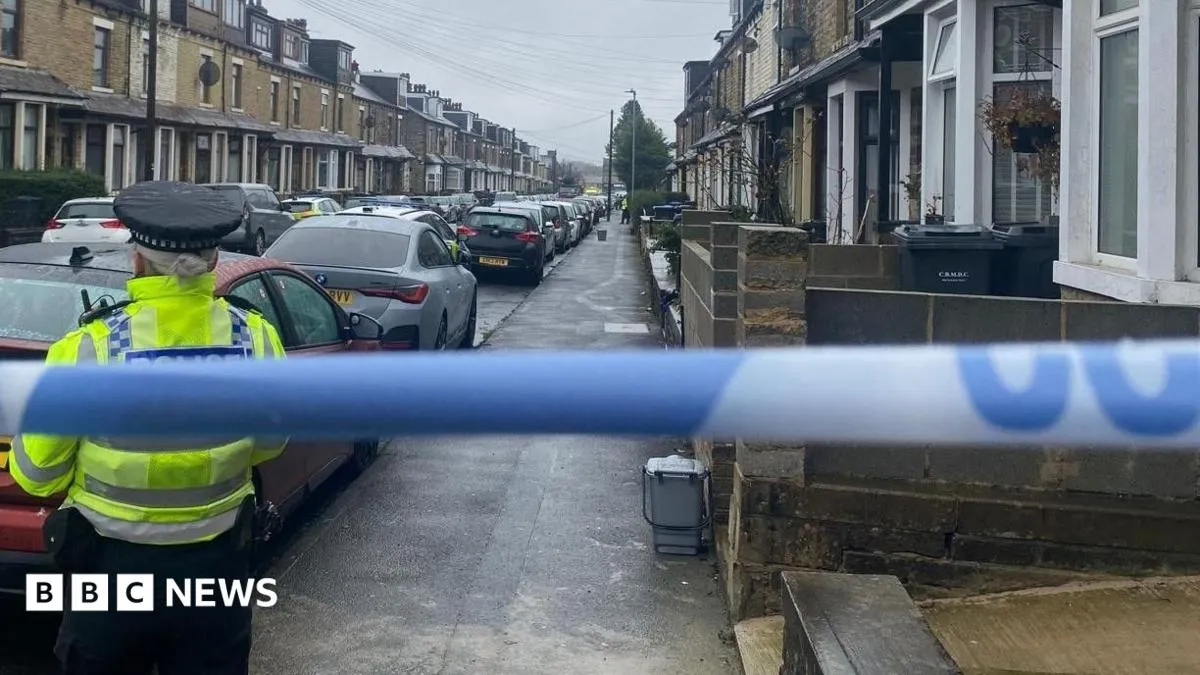
Councillor Ibrar Ali, who represents the Bradford Moor ward in Bradford, is in hospital with serious injuries after being stabbed, and a suspect has been arrested on suspicion of attempted murder. For leaders, the case sharpens an unresolved operational question: the protection architecture built for MPs after two murders does not reach the thousands of councillors who hold the most accessible public offices in Britain.
Ibrar Ali, the councillor for Bradford Moor, is in hospital with serious injuries after being stabbed, and a suspect has been arrested on suspicion of attempted murder. That is the full extent of what has been confirmed. Police have not named the suspect, have not set out a suspected motive, and the source report does not say whether charges have been brought. What is clear is the shape of the case: an elected representative for a ward in Bradford, West Yorkshire, was attacked and is now being treated for serious injuries, and the investigation has been opened at the most serious end of the criminal scale.
In English law, an attempted murder arrest is not a formality. Officers typically need reasonable grounds to suspect that someone acted with the intent to kill, not merely to cause harm. That is a higher bar than assault, and it signals how detectives are reading the incident at this stage. It is also worth being precise about what an arrest is and is not. An arrest is not a charge. Charging decisions in England and Wales sit with the Crown Prosecution Service, which applies a two-part test: is there a realistic prospect of conviction, and is prosecution in the public interest. A suspect can typically be held for 24 hours before police must seek an extension. Until a charging decision lands, the legal picture stays provisional, even as the human one does not.
Bradford Moor is a ward in Bradford, and its councillor holds one of thousands of local council seats across England. The role is the least glamorous and most exposed tier of British public life. Councillors decide planning applications, licensing, school admissions pressure, social care and housing allocations, the unglamorous machinery that determines whether a city actually functions. They also hold surgeries, the walk-in sessions where any resident can turn up with a grievance and a name. Typically these are part-time roles with modest allowances, no close protection, no armed detail, and a home address that is often a matter of public record. In practice, they are the most reachable elected officials in the country.
Britain has already had two brutal reminders of what happens when that reachability is weaponised. In 2016, Jo Cox, the MP for Batley and Spen, also in West Yorkshire, was murdered in her constituency. In 2021, Sir David Amess was murdered at a constituency surgery in Essex. The institutional response was real: Operation Bridger, a police-led protection programme for MPs, and a Speaker's Conference on the safety of MPs. That architecture was built primarily around Westminster. Councillors have historically sat outside the perimeter, with security arrangements that vary by council, by ward, and often by the personal judgment of the individual holding the seat.
The second-order damage from incidents like this is attritional. Raise the risk of a job while holding the pay flat and you quietly change who is willing to do it. The people who remain tend to be those with the thickest skin, the deepest local roots, or the fewest alternatives, and the ones who walk away are frequently the ones with options elsewhere. That matters because local government is where the decisions that touch daily life actually get made: whether a development gets built, whether a licence is granted, whether a family gets housed. It also matters because intimidation scales. A credible threat against one councillor does not only harm one person; it can shift how an entire chamber votes on a contested planning application or a contentious licensing decision. Fear is a voting bloc nobody campaigns for.
Watch three things from here. First, charges and any court appearances, which will clarify the direction of the case. Second, any police statement on motive, which the source material does not yet contain. Third, the institutional response: whether Bradford Council reviews member safety, and whether there is any movement on funding protection for councillors, a group that has historically sat outside the protection arrangements built for MPs. There is no condition update beyond serious injuries, and no detail on the suspect. Readers should treat everything past the confirmed facts as open.
For executives, the lesson is not abstract, and it is not confined to politics. Every organisation with public-facing staff, from a retailer to a hospital trust to a housing association, is running the same calculation: how much reachability does the job require, and how much protection is proportionate to the risk that reachability creates. The organisations that handle this well treat security as a budget line and a standing protocol rather than a reaction. They log threats even when they seem minor, they train front-line staff on what to do when a routine interaction turns hostile, and they do not wait for an incident to force the conversation with their board. In Bradford, that conversation has arrived the hardest possible way, and the people who run local services across the country will be watching how the next 48 hours unfold.
This story's Key Insights and Take-aways are locked.
Create a free account to unlock Executive Actions for one credit.
Register to UnlockAlways free for Executives Club members. Join the Club
More in Politics

Fifth Circuit Kills Pregnant Workers' Law Over Pandemic Proxy Votes
A procedural ruling, not a policy one, has blocked a federal pregnancy-accommodation law and put every pandemic-era statute in the crosshairs ahead of an expected Supreme Court appeal.

Measles kills a Virginia child under 5, the state's first death of 2026
Virginia's health department confirmed the death but withheld the child's vaccination status, leaving schools, clinics and employers to plan around the one detail that would explain the most.

Former Brazilian President Bolsonaro Hospitalized with Intestinal Obstruction
The health status of the former far-right leader raises immediate questions about political stability and the trajectory of Brazil's conservative movement.