
Brand's crimes were an 'open secret.' Now the industry monetizes them.
The same business that shielded Brand and Weinstein is now packaging their downfall as content, and the incentives behind that reversal are the real story.
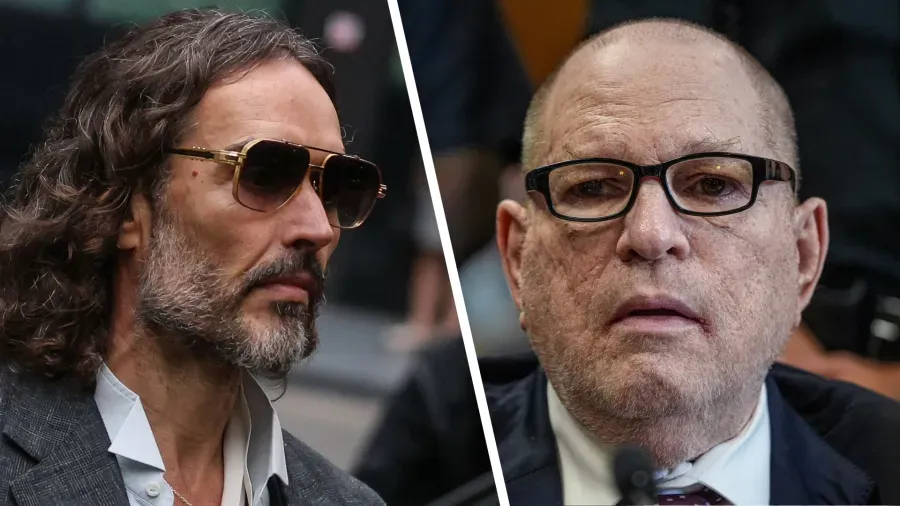
The Hill argues that Russell Brand's crimes were an 'open secret' inside an industry that protected him, as it had protected Harvey Weinstein, and asks why nobody intervened. The consequence for decision-makers is that the same business is now producing projects about those men, meaning complicity and monetisation are running on the same rails and reputation risk has become a governance issue, not a PR one.
The Hill's framing is blunt: Russell Brand's crimes were an 'open secret.' The question the outlet puts on top of it is the one the entertainment business has never answered in public: why didn't anyone stop him? That question lands because the answer is not ignorance. The people positioned to intervene, the agents, the broadcasters, the publicists, the advertisers, the executives who signed the contracts, were not in the dark. They were informed, and they chose the revenue. An open secret is not a secret at all. It is a decision that enough people made at the same time.
Now the twist, and it is the reason this story is worth more than a passing read. The same industry that shielded Brand, and before him Harvey Weinstein, is now making projects about them. The protectors have become the producers. The machine that once ran interference is now selling the tape. That is not a moral awakening arriving late. It is a business model rotating, and the difference matters enormously to anyone whose name sits on a slate, a masthead, or a balance sheet.
Open secrets are operational, not accidental. In media and entertainment, complicity typically runs down a predictable chain. Talent representation manages risk rather than behaviour. Legal teams paper over incidents with settlements and confidentiality agreements. Broadcasters and studios weigh a star's draw against the probability of a story breaking. Advertisers fund the whole arrangement without asking what it is they are funding. Each link has a rational-sounding excuse, and together they form a wall. The wall holds as long as the story stays inside the building, and it usually does, because the people who know are the people who get paid when it stays quiet.
So why the pivot now? Because the economics flipped. Documentaries and investigative series about powerful men have become reliable, comparatively cheap, high-engagement content, and the audience for them is not niche. Platforms and broadcasters need hours of it, and the reputational risk of making the film is now lower than the commercial risk of skipping it. When the cost of silence exceeds the cost of exposure, industries change their story quickly, and they change it without ever conceding they were part of the problem.
That is the trap in the current moment. A documentary is not a reckoning. It is a product. The structures that protected Brand and Weinstein, the representation networks, the deal-making culture, the pressure to keep difficult talent on air because they rate, are largely intact. What has changed is the market's appetite for the aftermath. The industry has learned to monetise accountability without practising it, and it has learned that audiences will accept the trade. The reckoning becomes content; the conditions that produced it stay in place.
This pattern is not confined to Hollywood. Any sector that concentrates power in charismatic individuals, tech, music, sport, venture-backed celebrity founders, runs the same playbook: early whispers, internal handling, a protective ecosystem, and a long silence broken only when the cost of staying quiet gets too high. The open-secret standard is now the one applied in hindsight to every board that looked away. What did the organisation know, when did it know it, and what did it do with that information?
For executives, 'we didn't know' is no longer a defensible position, legally or reputationally. Boards that treat talent risk as a communications problem rather than a governance problem are accumulating liabilities that never appear on the balance sheet until they do, all at once. Due diligence on the people who front your brand is a fiduciary question now, not a courtesy. The same logic applies to the agencies, platforms, and sponsors in the chain: each one is a node in the wall, and each one is now visible.
The strategic stakes are simple. If your business depends on personalities, you are in the reputation business whether you admit it or not. That means documented escalation paths for complaints, contracts that do not bury misconduct behind confidentiality, and the willingness to lose a star before you lose the audience. The Hill's question, why didn't anyone stop him, is really a question about incentives. Until those change, the industry will keep making films about the men it failed to stop, and it will keep collecting the receipts.
This story's Key Insights and Take-aways are locked.
Create a free account to unlock Executive Actions for one credit.
Register to UnlockAlways free for Executives Club members. Join the Club
More in Politics

Fifth Circuit Kills Pregnant Workers' Law Over Pandemic Proxy Votes
A procedural ruling, not a policy one, has blocked a federal pregnancy-accommodation law and put every pandemic-era statute in the crosshairs ahead of an expected Supreme Court appeal.

Measles kills a Virginia child under 5, the state's first death of 2026
Virginia's health department confirmed the death but withheld the child's vaccination status, leaving schools, clinics and employers to plan around the one detail that would explain the most.

Former Brazilian President Bolsonaro Hospitalized with Intestinal Obstruction
The health status of the former far-right leader raises immediate questions about political stability and the trajectory of Brazil's conservative movement.