
Britain and Brussels sit down Friday to unpick Brexit. Three deals are on the table
Andy Burnham, Ursula von der Leyen and António Costa meet in Brussels for the second post-Brexit summit, with red tape, carbon market linkage and youth mobility on the agenda, and exporters watching which of the three actually moves.
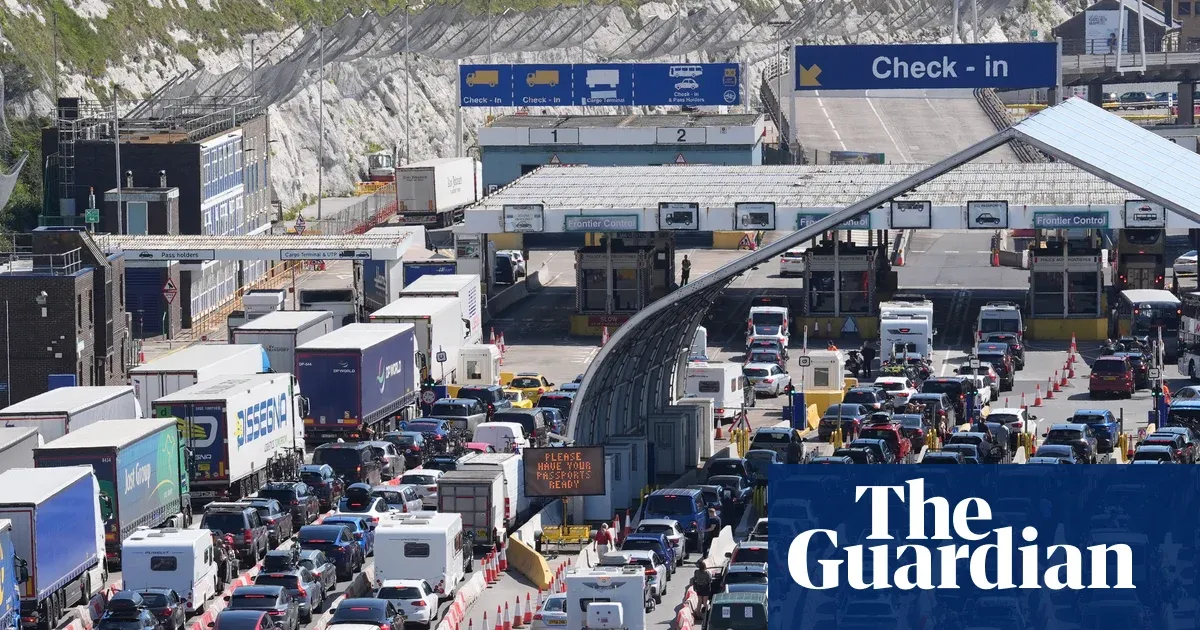
The EU and UK hold their second post-Brexit summit in Brussels on Friday, with Prime Minister Andy Burnham, European Commission President Ursula von der Leyen and European Council President António Costa working through easing Brexit red tape, restoring emissions trading and opening up youth mobility. For companies with cross-Channel supply chains, carbon exposure or a hiring pipeline that runs through Europe, the outcome sets the operating cost of the relationship for years.
The EU and UK meet in Brussels on Friday for the second summit since Brexit, and the three files on the table are the ones businesses have actually been waiting on: easing Brexit red tape, restoring emissions trading and opening up youth mobility. In the room will be Prime Minister Andy Burnham, European Commission President Ursula von der Leyen and European Council President António Costa. The stated aim is to hammer out the UK's longer-term relationship with the bloc, which is a polite way of describing the unglamorous, high-value work of making trade flow again. No single announcement on Friday settles that. But each of the three items moves a different lever, and each lever has a constituency attached to it with revenue, costs and jobs on the line.
Start with the jargon, because the words hide the mechanics. "Red tape" here means the customs paperwork, safety and standards checks, and rules-of-origin documentation that goods must clear to cross the Channel; historically, the small stuff is what hurts small firms most, because a fixed compliance cost hits a 20-person exporter far harder than a multinational. "Restoring emissions trading" means reconnecting the UK's carbon market to the EU's, so that a tonne of carbon carries the same price signal on both sides of the border. "Youth mobility" means a scheme letting young people live, study and work on the other side for a fixed period, typically capped by age and duration. Three dry phrases. Three live commercial questions.
The carbon file is the sleeper. The EU's emissions trading system has long been the world's biggest carbon market, and linking the UK scheme back into it would mean UK producers face a carbon price consistent with their European competitors rather than one set in a separate, thinner market. For energy-intensive sectors, that is not an accounting detail. It determines whether a UK plant's cost base travels with it when it sells into the bloc, or whether it stacks an extra charge on top. Where carbon markets are not linked, producers typically end up paying twice for the same tonne: once at home, once at the border. Where they are linked, that double charge largely disappears. Friday is a test of whether both sides want convergence badly enough to say so out loud.
Youth mobility is the most politically charged of the three, and the easiest to over-read. A scheme of this kind is usually framed as a cultural exchange, but its economic function is labour. Sectors that run on young, mobile workers, from hospitality and food production to seasonal agriculture and care, have spent years describing shortages. Universities and research employers care too, because a mobility scheme is often the on-ramp to a longer relationship with a market. The politics cut the other way: mobility deals touch immigration, and immigration is the issue that has historically made governments of both colours nervous about anything that looks like free movement by the back door. Watch the wording, not the warm statements. Age caps, time limits and reciprocity clauses are where the substance lives.
Red tape is where the reader's own cost base probably sits. Rules of origin determine whether a product qualifies for reduced-tariff treatment, and they require firms to prove where inputs came from, sometimes several layers down a supply chain. Customs declarations turn a truck crossing into a paperwork event. Standards checks on food, plants and chemicals can add physical inspections and waiting time. None of this is existential for a large group with a trade compliance team. All of it is a tax on the marginal exporter, the one deciding whether a second European market is worth the effort. That decision, repeated across thousands of firms, is what the phrase "longer-term relationship" is actually about.
For decision-makers, the read-through is about planning horizons rather than headlines. A summit that delivers on carbon linkage changes the cost of compliance for heavy industry and the credibility of net-zero transition plans that assume a single price of carbon. Progress on red tape changes the arithmetic on European distribution and whether a UK-based operation can serve EU customers from a single site. Movement on youth mobility changes hiring assumptions in labour-intensive sectors. And a summit that delivers on none of it is also information: it tells boards that friction is structural, and that duplicate capabilities on both sides of the Channel are the safer bet. All three files have been discussed for years; Friday's question is which one gets past discussion.
One contextual note worth holding onto: this is only the second summit of its kind since Brexit, and the cadence is itself a signal. Regular structured engagement between the Commission, the Council and Downing Street is how technical files actually advance, because the work happens in committees long after the cameras leave. That makes Friday less a finish line than a checkpoint. The people in the room are the ones with authority to set direction: Burnham for the UK, von der Leyen for the Commission, Costa for the member states. If the three of them leave Brussels with a mandate to keep negotiating on carbon, paperwork and mobility, the machinery keeps turning. If they leave with warm language and no mandate, the friction holds, and every operator with a cross-Channel supply chain keeps budgeting for it.
This story's Key Insights and Take-aways are locked.
Create a free account to unlock Executive Actions for one credit.
Register to UnlockAlways free for Executives Club members. Join the Club
More in Politics

Fifth Circuit Kills Pregnant Workers' Law Over Pandemic Proxy Votes
A procedural ruling, not a policy one, has blocked a federal pregnancy-accommodation law and put every pandemic-era statute in the crosshairs ahead of an expected Supreme Court appeal.

Measles kills a Virginia child under 5, the state's first death of 2026
Virginia's health department confirmed the death but withheld the child's vaccination status, leaving schools, clinics and employers to plan around the one detail that would explain the most.

Former Brazilian President Bolsonaro Hospitalized with Intestinal Obstruction
The health status of the former far-right leader raises immediate questions about political stability and the trajectory of Brazil's conservative movement.