

Burnham promises “No 10 North” devolution that drives growth in every postcode
His next-prime-minister pitch uses devolution to rebalance Britain’s power, with growth framed as nationwide, not London-only.
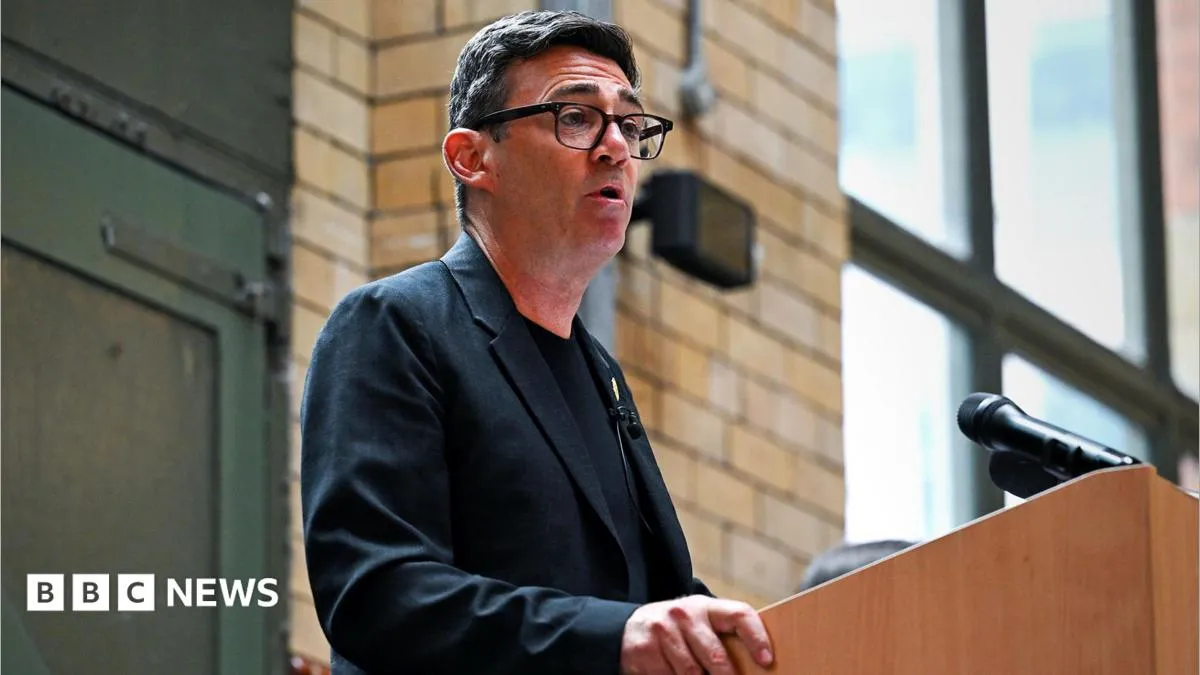
Labour's Andy Burnham, described as the man most likely to be the next prime minister, promises a new “No 10 North” plan centered on devolution. He argues it would “drive good growth in every postcode,” shaping how leaders think about regional investment and national economic performance.
Andy Burnham, described by the BBC as the man most likely to be the next prime minister, is staking his pitch on devolution, and he is doing it with a very specific promise: his plans would “drive good growth in every postcode.” Translation: the economic story should not be owned by London and the South East. It should be built across regions, with power and decision-making pushed outward.
That matters because “growth” is not just a slogan. In the UK, devolution is the mechanism that decides who gets to steer local priorities, how quickly decisions can be made, and whether national targets actually land in real places. Burnham’s promise is framed as a nationwide outcome, not a regional side quest. If voters and business leaders take him at his word, regional strategy becomes less negotiable and more measurable. And for decision-makers, it turns the question from “will the government spend?” to “who controls the levers that spending follows?”
Devolution debates in Britain tend to follow a predictable fault line: central government wants consistency and scale, while local leaders want flexibility and speed. The “No 10 North” idea signals that Burnham is trying to rebalance the center of gravity, both literally and politically. By tying devolution to growth in every postcode, he is also trying to neutralize a common critique of decentralization: that it can fragment efforts, dilute accountability, or create uneven outcomes. His framing pushes back by making the case that distributing power can create better economic performance, not just different governance.
There is also a corporate governance angle hiding inside the politics. When responsibilities move closer to where demand and talent actually sit, boards and investors typically care about two things: decision velocity and execution accountability. Devolution can speed up some kinds of policy decisions because local actors can tailor plans to local conditions. But it can also raise the risk of misalignment if national frameworks are unclear or if funding streams do not match local mandates. Burnham’s wording, “drive good growth,” is doing heavy lifting here. It implies that governance reform should translate into real-world outcomes, not bureaucracy redistribution.
Even without additional detail in this BBC snapshot, the strategic logic is clear. Britain’s economic performance is deeply regional, with differences across labor markets, infrastructure, education pipelines, and local industry clusters. When leaders talk about growth “in every postcode,” they are acknowledging that regional disparities are not incidental. They affect how businesses hire, where demand concentrates, and how supply chains work. For companies operating nationally, the governance structure influences planning assumptions. If the political direction suggests more regional control, then local economic development strategies, permitting timelines, and infrastructure priorities become more central to forecasting.
Regulatory and policy frameworks are often the bridge between political promises and business reality. Devolution can change how policy is administered, which agencies carry out local programs, and how tradeoffs get made when resources are limited. That can affect everything from investment decisions to go-to-market strategies, because businesses rarely experience “policy” as a single national event. They experience it as a chain of local decisions, delivered through budgets, procurement, oversight, and implementation capacity.
Burnham’s promise also speaks to the optics of prime-ministerial leadership. The BBC characterizes him as the man most likely to be the next prime minister, which means his devolution pitch is not only about governance mechanics. It is about narrative control. By insisting that devolution should “drive good growth in every postcode,” he is effectively challenging the establishment view that national economic management is best centralized. He is saying the opposite: that power rebalancing is the path to better growth.
For peers in politics and policy, the stakes are high because “growth” is the word that everyone claims but few can fully deliver. For business leaders, the stakes are high because growth claims are not abstract. They affect demand, workforce development, infrastructure rollouts, and the stability of the operating environment. If Burnham’s “No 10 North” plan becomes a real governing blueprint, the UK could see a renewed push to make regional outcomes a core performance metric. The question boards and investors will watch is whether devolution translates into faster, smarter execution that produces measurable economic results across the country, or whether it creates new coordination friction. Burnham’s line is simple, but it is also a challenge: the economic story needs to be written everywhere, not just in the places that already get the spotlight.
This story's Key Insights and Take-aways are locked.
Create a free account to unlock Executive Actions for one credit.
Register to UnlockAlways free for Executives Club members. Join the Club
More in Politics

Obama Defends Ilhan Omar After Agents Search Her Home in Trump Inquiry
The former president's intervention raises the stakes in a federal probe into immigration paperwork that has put a prominent progressive lawmaker in the crosshairs.

Blair-era minister: cut welfare to fund youth job support
Alan Milburn's call for welfare cuts to fund employment support opens a Labour fight over benefits and the Neet crisis.
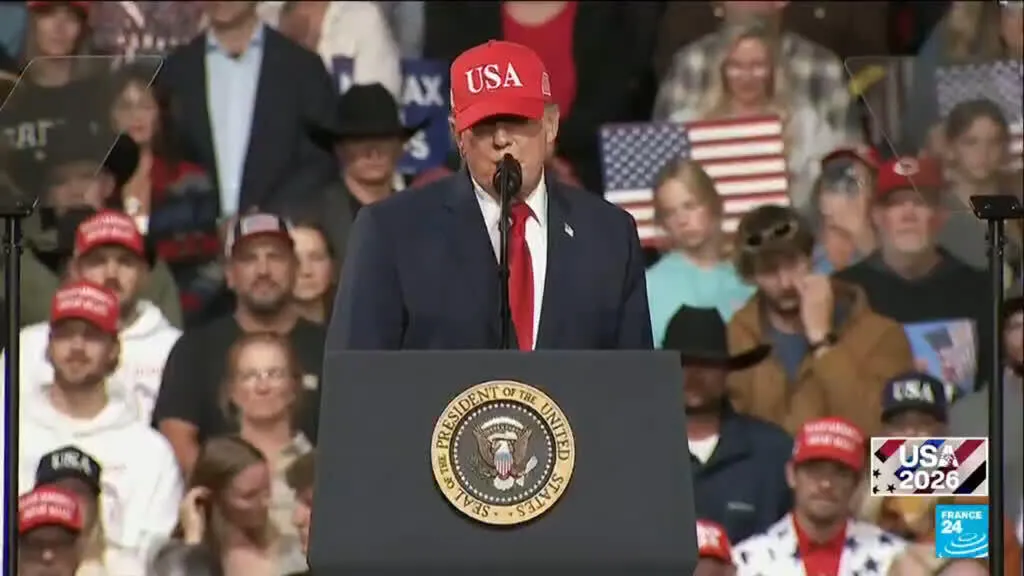
Hot September CPI: energy costs surge, voters feel the squeeze before midterms
The latest inflation print lands as Trump campaigns for GOP control of Congress, putting cost-of-living worries at the center of the midterm fight.