
Burnham set to confirm new Brexit deal with von der Leyen in Brussels
A Greater Manchester mayor, not a Westminster minister, is set to confirm the agreement, and the framing already concedes it leaves major issues unresolved.
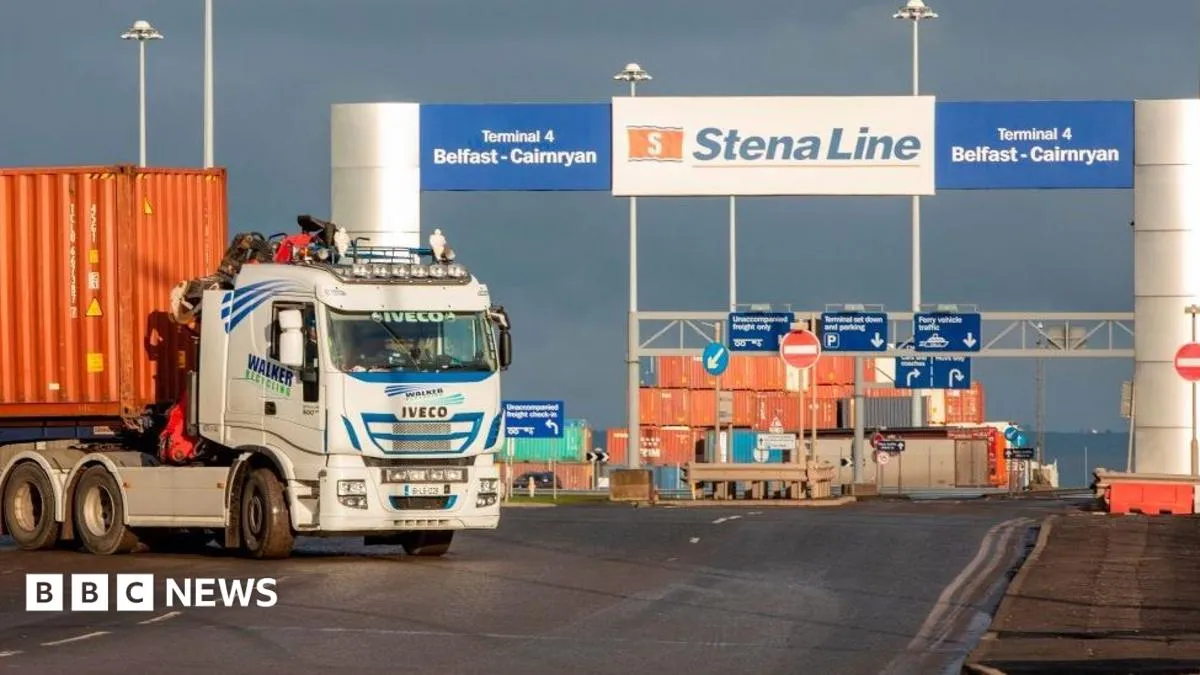
Andy Burnham, the Mayor of Greater Manchester, is expected in Brussels to confirm a new Brexit agreement with European Commission President Ursula von der Leyen. The deal is being framed as a step in the right direction that will not solve all issues, leaving businesses to work out which specific friction points it actually touches.
Andy Burnham, the Mayor of Greater Manchester, is expected in Brussels to confirm a new Brexit agreement with Ursula von der Leyen, the President of the European Commission. The deal is being described as a step in the right direction, and in the same breath as something that will not solve all issues. Both halves of that sentence matter. An agreement is landing, it is being confirmed at a meeting between a regional mayor and the head of the EU's executive arm, and the language around it already concedes it is partial.
Start with the counterparties, because they are the tell. Burnham is not a Westminster minister. He runs a city-region in the north of England, a role he has held since 2017, and he built his national profile as a Labour cabinet minister before that. Von der Leyen runs the European Commission, the institution that drafts and enforces EU law and holds the bloc's trade mandate. A metro mayor sitting across from the Commission president is not the picture most people have of how Brexit diplomacy works. It is, on the evidence of this report, how at least part of it is now working.
For context on what a Brexit deal has meant since the UK left: the trading relationship has been governed by the Trade and Cooperation Agreement, agreed in late 2020 and in force since the start of 2021. That deal cut tariffs and quotas to zero on goods that meet rules-of-origin requirements, but it did not remove customs paperwork, and it did not cover services in any meaningful depth. Northern Ireland got its own bespoke arrangement, first the Protocol and then the Windsor Framework agreed in 2023, precisely because the Irish land border made a uniform solution impossible. Every subsequent negotiation has been an exercise in shaving friction off that structure rather than replacing it.
The recurring sticking points are well known to anyone who exports. Sanitary and phytosanitary checks on food and agricultural products. Mutual recognition of professional qualifications. Mobility for workers, performers and crews. Access to research programmes. Financial services equivalence, which has been granted in fragments and withheld in others. A deal that will not solve all issues is, in practice, a deal that touches some subset of that list and leaves the rest where they were. The value to a business depends entirely on which subset.
That is why the caveat is not a throwaway. It is the honest description of what a partial agreement can do. For a Greater Manchester exporter, a small change to paperwork or a single new recognition route can be the difference between a viable EU customer and an abandoned one. For a company with no EU exposure, the same deal is close to irrelevant. Framing it as a step rather than a fix is also useful political cover: it lowers expectations, it survives contact with reality, and it leaves room for the next round.
Burnham's presence adds a second layer. Greater Manchester has spent years arguing that it should be able to act internationally on its own economic interests, and devolution in England has steadily handed city-regions more control over transport, skills and investment. Trade policy, though, is reserved to Westminster. So a mayor confirming an agreement in Brussels raises an obvious question that this report does not answer: what mandate does he carry, and who is bound by what he signs? Until that is clear, treat the meeting as a signal about how deals get done now, not as a settled constitutional settlement.
From the EU side, the incentive to engage with regional leaders is straightforward. The Commission wants working relationships that deliver practical outcomes without reopening the big political arguments, and it has historically preferred technical fixes to grand renegotiations. Deals that reduce friction at the border help EU exporters too. If a regional leader can deliver a workable arrangement on the ground, that is a cheaper win for Brussels than another summit with a UK government that may not be in office long enough to implement it.
For executives, the practical read is this. First, do not wait for the full text to start mapping exposure: identify which specific friction points your business actually pays for, whether that is veterinary certification, staff mobility or qualification recognition, and check whether this agreement touches them. Second, watch the implementation, not the announcement. Partial deals fail in the detail, at the port, in the portal, in the guidance that never gets updated. Third, note the precedent. If sub-national governments can now be counterparties on trade-adjacent agreements, the map of who to lobby has changed, and it has changed in favour of anyone with a regional footprint.
The strategic stakes are bigger than one agreement. The UK-EU relationship has been stuck for years between two unsatisfying options: a thin deal nobody wants to expand, and a full renegotiation nobody wants to start. A partial, practical, region-by-region approach is a third path, and it is the one this meeting appears to open. It will not solve all issues. It was never going to. But if it works, it becomes the template, and the next deal gets easier to sign.
This story's Key Insights and Take-aways are locked.
Create a free account to unlock Executive Actions for one credit.
Register to UnlockAlways free for Executives Club members. Join the Club
More in Politics

Fifth Circuit Kills Pregnant Workers' Law Over Pandemic Proxy Votes
A procedural ruling, not a policy one, has blocked a federal pregnancy-accommodation law and put every pandemic-era statute in the crosshairs ahead of an expected Supreme Court appeal.

Measles kills a Virginia child under 5, the state's first death of 2026
Virginia's health department confirmed the death but withheld the child's vaccination status, leaving schools, clinics and employers to plan around the one detail that would explain the most.

Former Brazilian President Bolsonaro Hospitalized with Intestinal Obstruction
The health status of the former far-right leader raises immediate questions about political stability and the trajectory of Brazil's conservative movement.