
Burnham Takes Brexit Rebuild to Brussels in Rare EU-UK Summit
A leader-level meeting framed around repairing ties after Brexit matters less for what it says than for what it signals about the next phase of EU-UK relations.
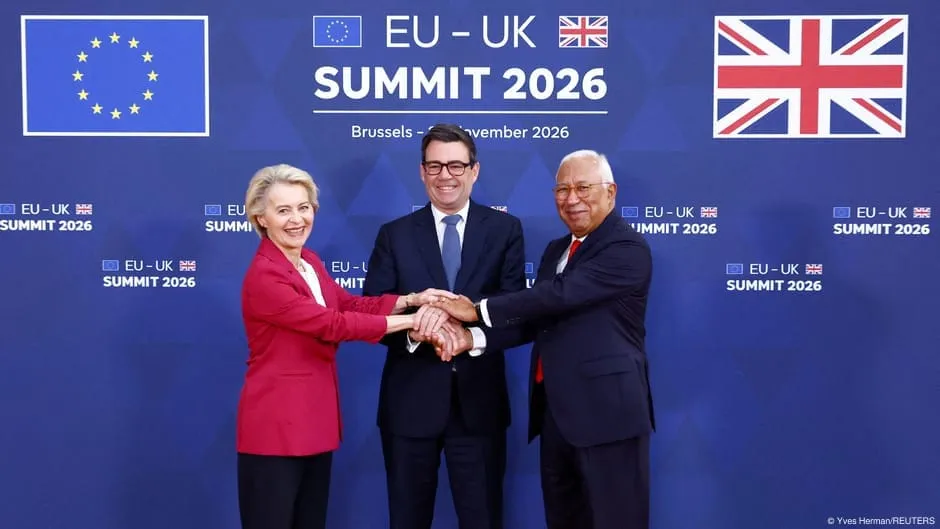
UK Prime Minister Andy Burnham met European Union officials in Brussels for a rare summit aimed at rebuilding ties after Brexit. For executives with exposure to EU-UK trade, mobility, or regulation, the meeting is a signal to watch whether political warmth converts into binding reductions in border and compliance friction.
UK Prime Minister Andy Burnham met European Union officials in Brussels for a rare summit framed around a single goal: rebuilding ties after Brexit. That is the sourced news, and it is worth sitting with, because the phrase "rebuild ties" is doing a lot of work. For most of the past decade, London and Brussels have met to argue about the terms of separation. A summit built around repair, rather than a renegotiation of the exit itself, suggests both sides now want something from each other beyond the settlement they already signed.
The rarity is the point. Leader-level EU-UK summits are not a standing fixture on the diplomatic calendar the way EU-US or G7 gatherings are. Historically, Brussels and London have managed their relationship through the machinery created by their trade agreement, with technical committees and joint bodies doing the quiet, unglamorous work. Elevating the conversation to a summit puts political capital behind it. When a prime minister and EU officials sit in the same room, they are typically signalling that they want deliverables, not just dialogue. The risk is equally clear: summits that produce atmospherics instead of legal text tend to raise expectations that the machinery underneath cannot meet.
For context, the trade deal that governs EU-UK commerce is unusually thin by the standards of modern trade pacts. It removed tariffs on goods but left a thicket of customs paperwork, rules-of-origin checks, and regulatory barriers in place. Services, which dominate the UK economy, got far less than the sector wanted. That is why "rebuild ties" tends to translate, in practice, into a short and familiar list: smoother border processes, mutual recognition of professional qualifications, easier movement for workers and touring professionals, cooperation on energy, and a security and defence channel that does not depend on the old membership structures. Each item on that list has a constituency, and each has an opponent.
Why now? Historically, detente between London and Brussels has been driven by two forces: sluggish growth on both sides and shared security concerns that do not respect the terms of a divorce settlement. When economies stall, friction at the border stops looking like a matter of principle and starts looking like a line item. When the security picture darkens, coordination becomes more valuable than distance. Neither dynamic requires either side to relitigate Brexit, which is precisely what makes a repair-focused summit politically survivable for leaders who cannot afford to reopen the original argument.
For executives, the practical question is not whether relations are warmer but whether warmth converts into reduced friction. It usually does so slowly and unevenly. Goods tend to move first, because customs processes are technical and can be smoothed by administrative agreement. Services, data, and labour mobility move last, because they touch sovereignty, immigration politics, and domestic regulation. That sequencing matters enormously for planning. A company that assumes a broad thaw will deliver easier hiring across the Channel may be waiting years. A company that assumes nothing will change may miss early openings in energy, defence procurement, and standards cooperation, where alignment is often easier to agree than trade liberalisation.
Watch the gap between communique language and legal text. Summits produce declarations; trade relationships run on protocols, annexes, and ratification. Any meaningful easing of border friction requires both sides to draft, sign, and implement changes, and to do so without triggering domestic backlash. That is a multi-quarter process at best, and it can stall at any stage. The most useful signal from Brussels is not the tone of the statements but whether the two sides announce a structured work programme with named areas and follow-up meetings. Vague goodwill is cheap; a work programme is a commitment that can be tracked.
The strategic stakes for peers in similar roles are about optionality, not optimism. If you run a business with EU-UK exposure, the sensible posture is to keep dual compliance capability funded, map which cost lines depend on border friction, and treat every announced deliverable as a trigger for a decision rather than a reason to relax. Detente is a real development, and it is worth tracking closely. But a summit photograph is not a customs code, and the executives who benefit most will be the ones who can tell the difference and act on it early.
This story's Key Insights and Take-aways are locked.
Create a free account to unlock Executive Actions for one credit.
Register to UnlockAlways free for Executives Club members. Join the Club
More in Politics

Fifth Circuit Kills Pregnant Workers' Law Over Pandemic Proxy Votes
A procedural ruling, not a policy one, has blocked a federal pregnancy-accommodation law and put every pandemic-era statute in the crosshairs ahead of an expected Supreme Court appeal.

Measles kills a Virginia child under 5, the state's first death of 2026
Virginia's health department confirmed the death but withheld the child's vaccination status, leaving schools, clinics and employers to plan around the one detail that would explain the most.

Former Brazilian President Bolsonaro Hospitalized with Intestinal Obstruction
The health status of the former far-right leader raises immediate questions about political stability and the trajectory of Brazil's conservative movement.