
Burnham Tells Badenoch to Withdraw 'Crass' Amputee-Marathon Defence of Disability Cuts
A single line at PMQs has turned Britain's welfare fight into a character test for the opposition leader, hours before the Home Secretary unveils a 200-a-year police fast stream.
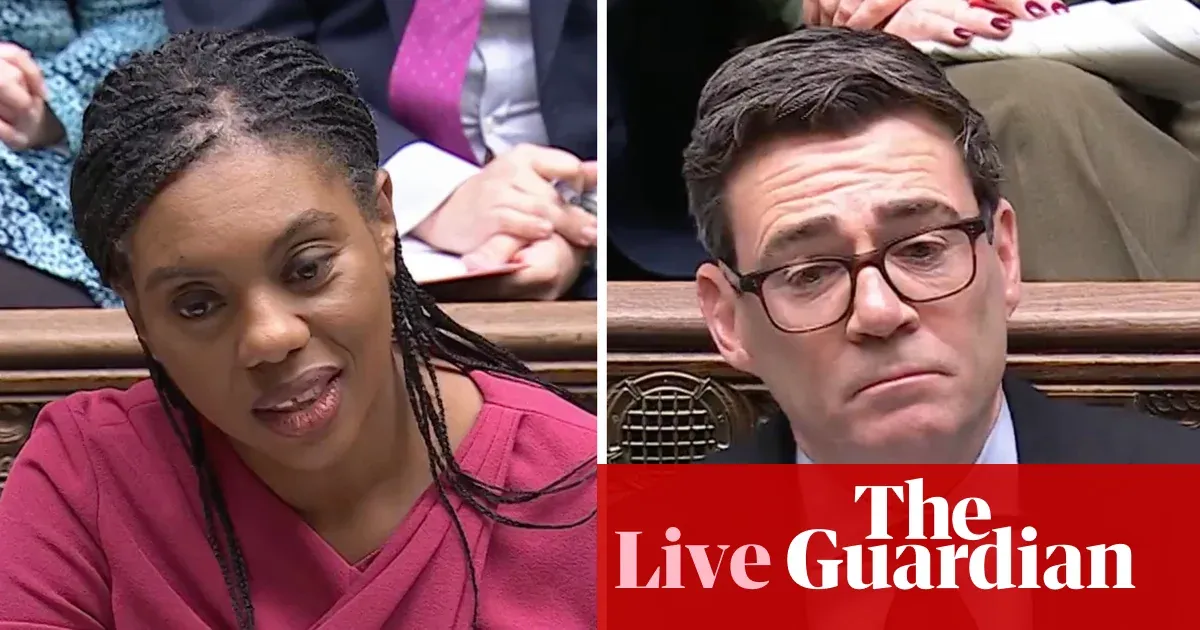
Andy Burnham has demanded Kemi Badenoch withdraw a 'crass' remark defending disability cuts on the grounds that 'amputees run marathons', as the prime minister and the leader of the opposition clashed over welfare at PMQs. The row lands the same day Home Secretary Shabana Mahmood is set to announce a fast-stream police leadership programme for up to 200 recruits a year, a plan Conservative and Reform UK figures have already greeted with scepticism over two-tier policing.
Andy Burnham has told Kemi Badenoch to withdraw a remark he called "crass": the argument that disability cuts can be defended on the grounds that "amputees run marathons". The demand landed as the prime minister and the leader of the opposition clashed over welfare at Prime Minister's Questions, turning the weekly set-piece into a public argument about how Britain talks about disability, work and who deserves support.
The logic at issue is the kind that travels fast. If an amputee can finish a marathon, the implication runs, then the bar for claiming incapacity must be set too low. Burnham's answer was to call the comment crass and demand it be withdrawn. That is the whole fight in miniature. One side frames disability benefits as a test of willpower and fiscal discipline. The other frames them as a question of medical reality and dignity. Both sides know the exchange will be clipped, posted and used, which is exactly why the wording matters more than the policy detail on days like this.
PMQs is the highest-profile half-hour in the British political week, and welfare is the terrain where it bites hardest. Disability benefits sit among the largest single blocks of UK welfare spending, and any government hunting for savings eventually arrives at eligibility rules. Historically, administrations of both parties have tried to tighten those rules, and each attempt has run into the same wall: the savings are real, but so is the human cost, and the political cost lands faster than the fiscal gain. That is the trap Badenoch walked into with a single sentence, and the trap the government is trying not to walk into as it manages its own welfare arithmetic.
The same day, Home Secretary Shabana Mahmood is set to announce plans for a new fast-stream police leadership programme for up to 200 recruits a year. Vikram Dodd has the details. The idea is not new in kind. UK policing has historically imported senior talent through direct-entry and fast-track routes, on the theory that a force staffed only by internal promotion can turn inward and slow. A fast stream compresses the ladder: bring in outsiders, train them hard, put them on a leadership track. The upside is fresh thinking and speed. The risk is a rank-and-file that reads the scheme as a shortcut for people who have not walked a beat, which is its own version of a two-tier system, this time inside the workforce.
That risk is sharpened by the reception. The Conservatives and Reform UK do not seem very impressed by Mahmood's proposal to meet their concerns about two-tier policing. The pushback was blunt: "If you don't want two-tier justice, stop legislating for it. Stop training people for it." Then the follow-up: "Last year the Home Office believed claims of 'two-tier' policing were 'far-right'. Will they now apologise?" And the closer: "Even in her statement Mahmood still can't bring herself to say it's wrong."
Read those three lines together and you have the shape of the problem. "Two-tier policing" is a contested claim about whether the law is applied unevenly across communities, and it has become a fixture of UK political argument. The Home Office's earlier characterisation of such claims as far-right is now awkward, because the Home Secretary is effectively engaging with the concern rather than dismissing it. That is a reversal worth marking: a framing once pushed to the fringe is now being answered from the front bench. Whether that counts as a concession or a co-option depends entirely on what the programme actually does, and on whether critics accept any answer at all.
For anyone with UK exposure, the practical read is that both stories are about the same thing: the price of legitimacy. Welfare reform sets the disposable income of millions of households, which feeds straight into consumer demand, hiring plans and the cost of sickness absence that employers carry. Policing reform sets the operating environment for everything from licensing and events to retail shrinkage and insurance. When a Home Secretary has to spend political capital defending a recruitment scheme against her own critics, the reform agenda slows, and slow reform is its own cost.
The second-order effects are where boards should focus. First, welfare rhetoric is a leading indicator of welfare policy: if the debate hardens, expect tighter eligibility tests and more conditionality, with knock-on effects for payroll, benefits administration and HR compliance. Second, police leadership reform is a trust play. If the fast stream is seen as fair, it buys credibility with the public and with officers. If it is seen as a fix, it hands ammunition to the very critics it was meant to answer. Third, the "two-tier" framing is now a permanent feature of the UK policy conversation, which means any organisation that touches enforcement, security or public order should expect to be asked where it stands.
What to watch next is simple. Does Badenoch withdraw the remark, or double down? Does the fast-stream programme survive contact with the rank-and-file scepticism that historically greets accelerated routes? And does the government's welfare package hold together when the moral argument and the fiscal argument point in different directions? The answers will not come from a single PMQs. But the line between a gaffe and a policy shift is often just repetition, and both sides are now repeating themselves.
This story's Key Insights and Take-aways are locked.
Create a free account to unlock Executive Actions for one credit.
Register to UnlockAlways free for Executives Club members. Join the Club
More in Politics

Fifth Circuit Kills Pregnant Workers' Law Over Pandemic Proxy Votes
A procedural ruling, not a policy one, has blocked a federal pregnancy-accommodation law and put every pandemic-era statute in the crosshairs ahead of an expected Supreme Court appeal.

Measles kills a Virginia child under 5, the state's first death of 2026
Virginia's health department confirmed the death but withheld the child's vaccination status, leaving schools, clinics and employers to plan around the one detail that would explain the most.

Former Brazilian President Bolsonaro Hospitalized with Intestinal Obstruction
The health status of the former far-right leader raises immediate questions about political stability and the trajectory of Brazil's conservative movement.