
California AG subpoenas Nvidia over China chips and an alleged spy affair
The probe asks whether Nvidia's chips reached China and whether the company misled investigators, putting Jensen Huang's disclosure record and board oversight under scrutiny.
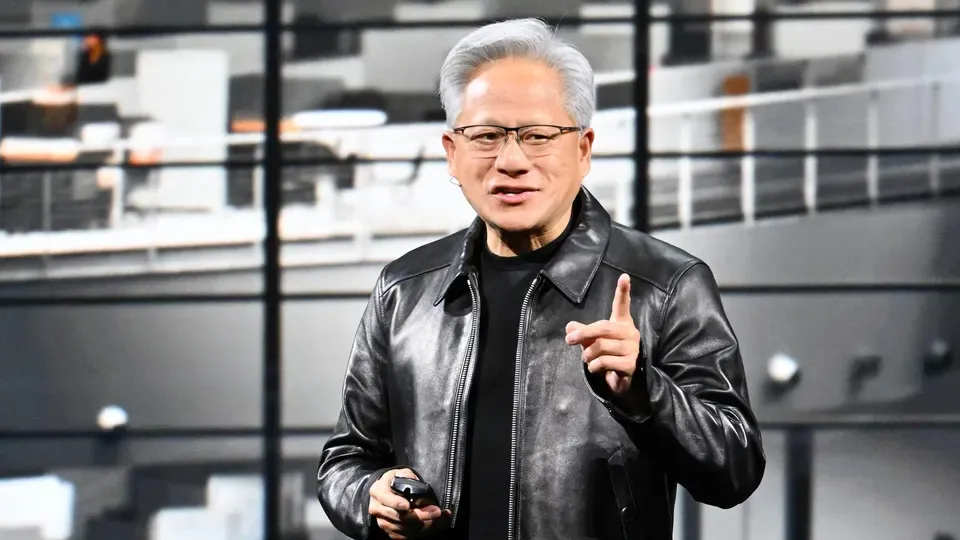
The California attorney general has subpoenaed Nvidia, the AI chipmaker led by CEO Jensen Huang, over whether its actions allowed China to obtain advanced AI chips and whether it misled investigators about those risks. For decision-makers, the case marks state regulators stepping into national security territory, turning export compliance and board-level disclosure discipline into a live enforcement risk.
California's attorney general has subpoenaed Nvidia, and the two questions at the center of it are about as uncomfortable as they get for a company sitting at the heart of the AI boom: did Nvidia's actions allow China to obtain advanced AI chips, and did the company mislead investigators about those risks? The subpoena names the chipmaker led by CEO Jensen Huang, whose GPUs are the scarce input behind nearly every frontier AI model. The reporting around the probe also ties it to an alleged Chinese spy affair involving Huang, a claim that carries its own reputational weight. Nvidia has not been charged with anything. A subpoena is a demand for documents and testimony, not a verdict, and it is worth saying that plainly before speculation outruns the facts.
A subpoena is the moment an inquiry stops being polite. Regulators typically begin with voluntary requests, letters, and informal conversations. When those produce answers that do not add up, or when the stakes are high enough that cooperation cannot be assumed, the demand becomes compulsory: produce the records, under penalty. That shift changes the internal dynamics at the target company. Legal teams move from explaining to preserving. Document retention policies get frozen. Employees get counsel. Board committees that had been briefed quarterly start meeting weekly. For Nvidia, the practical effect is that a set of internal decisions about who it sold to, how it screened customers, and what it told regulators is now being reconstructed from paper.
For context, the United States has spent years tightening controls on advanced semiconductor exports to China, on the theory that the most capable AI chips are a national security asset, not just a commercial product. Nvidia sits awkwardly in the middle of that policy. It is an American company with a dominant share of the AI accelerator market, and China has historically been a meaningful slice of its revenue. The company has repeatedly redesigned products to fit inside the rules as those rules moved, a strategy that is legal but inherently fragile: each adjustment invites the question of whether it honored the spirit of the restriction or merely the letter. That is precisely the terrain a state attorney general can now walk into.
The second prong is the more dangerous one. Selling chips that end up somewhere they should not is a compliance failure. Telling investigators something untrue about how that happened is a different category of problem, and it is the kind that turns a regulatory conversation into an enforcement matter. It also pulls in a wider cast: general counsel, the audit committee, outside counsel who signed off on disclosures, and the board itself. Directors are not expected to know which customer in a supply chain is a front company. They are expected to have a process that asks the question and a record that shows the answer. If the process existed and failed, that is one story. If the record is inconsistent, that is another.
The alleged spy affair adds a dimension no compliance manual covers. When personal conduct allegations intersect with national security, boards face a question they are structurally bad at answering: how much of a CEO's private life is a governance matter? The answer usually depends on leverage. If a foreign intelligence service has any hold over a leader with access to export-controlled technology and government contracts, that is not a private matter, it is a risk factor. The allegation here is just that, an allegation, and it has not been adjudicated. But it explains why a state investigation into chip flows would attract this much attention.
The second-order effects reach well past Santa Clara. Every chipmaker, hyperscaler, and distributor with China exposure now has a template problem: the compliance questions California is asking Nvidia are questions any of them could be asked. State attorneys general have broad authority and a taste for national-stage cases, and this one sits at the intersection of consumer protection, corporate disclosure, and geopolitics. Expect compliance teams to re-examine customer screening, end-use certifications, and the paper trail behind every export license. Expect boards to ask whether their geopolitical risk is actually being managed or just described in a risk factor.
Three things to watch. First, whether this stays a civil investigative demand or escalates toward a lawsuit. Second, whether federal agencies follow, because a state probe that uncovers something usually does not stay state-level for long. Third, whether Nvidia's disclosures change, since any shift in language about China risk or internal controls would be read as a signal by investors. None of that is a prediction. It is the standard sequence when a subpoena lands on a company this central to a technology the government considers strategic.
For executives and directors in the same position, the lesson is unglamorous. Geopolitical exposure is now a board-level line item, not a legal footnote. Document what you asked, when you asked it, and what you did with the answer. Assume that any explanation given to a regulator will be compared against internal emails years later. And treat the gap between the spirit and the letter of export rules as a risk to be priced, not a loophole to be optimized. The subpoena is Nvidia's problem today. The questions are everyone's.
This story's Key Insights and Take-aways are locked.
Create a free account to unlock Executive Actions for one credit.
Register to UnlockAlways free for Executives Club members. Join the Club
More in Technology

Anthropic mathematician claims Claude helped crack the Riemann hypothesis
If the proof holds, AI has toppled math's most famous open problem; if it does not, it is a case study in announcing breakthroughs before anyone verifies them.

AI's $4 Trillion Wipeout Erases Nasdaq's Gains for the Year
A brutal week took roughly $4 trillion off the AI sector and left the Nasdaq flat for the year, and the damage ran the full length of the supply chain.

Anthropic mathematician says AI proved the Riemann hypothesis. Verification will take time.
A single unverified claim from inside Anthropic now sits against more than 160 years of open mathematics, and the gap between asserting a proof and surviving peer review is the entire story.