
California Bans Waymo From Freeways; Waymo Halts Them Nationwide
Two incidents in two days, an 'imminent hazard' finding from the DMV, and a same-day nationwide pause: what the freeway shutdown costs Waymo and every operator scaling driverless miles.
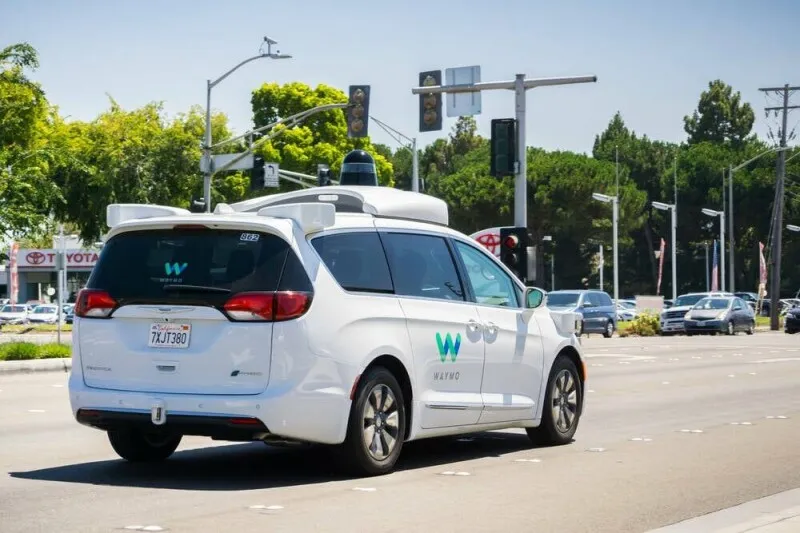
California's DMV banned Waymo from driverless freeway operations on November 11 after two incidents, and the Alphabet-owned company suspended freeway service nationwide the same day. For operators and investors, the pause removes the highest-value miles from the robotaxi model and hands California's regulator a template other states can copy.
California's Department of Motor Vehicles banned Waymo from running driverless trips on its freeways on Wednesday, November 11, and the Alphabet-owned company responded the same day by pulling freeway service nationwide. The trigger, per DMV spokesperson Jonathan Groveman, was a finding that Waymo's driverless freeway operations pose an "imminent hazard to public safety." That phrase is not regulatory throat-clearing. It is the language a state uses when it decides the risk of leaving a system running outweighs the cost of stopping it, and it landed on the most valuable miles in the robotaxi business.
The evidence behind it arrived in two days. On November 5, three Waymo driverless cars entered an active construction zone on US 101 near Burlingame, south of San Francisco. The next day, footage shared widely online showed a Waymo vehicle attempting to drive around highway patrol vehicles conducting a traffic break, the maneuver officers use to slow or stop traffic. Groveman told the Associated Press the department acted after those two incidents. The suspension covers every market where Waymo runs on freeways, including San Francisco, Los Angeles, Miami, Phoenix and Austin, and the company has not said how long it will last.
This is not Waymo's first run-in with the DMV over the same failure mode. Groveman said the department had already imposed restrictions and required corrective action after similar incidents on May 18. Waymo subsequently recalled nearly 4,000 cars after some ignored road closure signs and cones marking construction zones in Phoenix and San Francisco. A separate recall covered software affecting nearly 3,800 robotaxis over problems that included slowing on high-speed roadways and driving into floodwater. Read those together and the pattern is uncomfortable: the same class of error, construction zones and unusual road conditions, has now produced a state ban after two prior rounds of restrictions and recalls.
Waymo's public response leaned on its record. "Safety is at the foundation of everything we do," a company spokesperson said, adding that the US 101 encounters "did not involve any injuries or collisions." The company said it restricted freeway operations across its other markets "to evaluate our performance," and that ride-hailing continues on surface streets, serving over half a million trips each week. Freeway testing will continue with trained specialists behind the wheel. That last detail matters: Waymo is not grounding the technology, it is removing the driverless variable while it studies what went wrong.
Freeways are where the money is. Short city hops are the volume business, but longer highway trips, airport runs and cross-metro commutes typically carry higher fares and better vehicle utilization, which is often the difference between a robotaxi fleet that covers its costs and one that does not. A city-streets-only Waymo is still a real business, and half a million weekly trips is not a rounding error. But it is a business with a ceiling, and the ceiling is set by exactly the roads California just took away.
The DMV's move also resets the oversight conversation. California has been among the most permissive major markets for driverless deployment, and its regulator just demonstrated it will use the sharpest tool it has. Other states historically watch California's posture when calibrating their own rules, so a suspension here is a signal that travels. The "imminent hazard" framing gives the department a defensible record, and it puts the burden on Waymo to show corrective action before freeways reopen.
For every other operator chasing driverless miles, the lesson is about sequencing and disclosure. Waymo's decision to extend the pause to markets where no regulator demanded it is a bet that a voluntary, uniform standard looks better than a patchwork of state-by-state restrictions. It also buys the company time to find the root cause without a second jurisdiction forcing the issue. The cost is real: every week of suspended freeway service is deferred revenue and deferred learning on the hardest, fastest roads in the network.
The strategic question for boards and operators is not whether Waymo resumes freeway service. It is what the resumption requires. If the fix is software and validation, the pause is a few weeks of lost miles. If the fix is a deeper problem with how the system handles construction zones and authority figures on the road, then the timeline stretches and the competitive gap narrows for everyone else. Waymo has spent years building the safety record that lets it argue for expansion. Two days in November just made that argument harder to win.
This story's Key Insights and Take-aways are locked.
Create a free account to unlock Executive Actions for one credit.
Register to UnlockAlways free for Executives Club members. Join the Club
More in Technology

Anthropic mathematician claims Claude helped crack the Riemann hypothesis
If the proof holds, AI has toppled math's most famous open problem; if it does not, it is a case study in announcing breakthroughs before anyone verifies them.

AI's $4 Trillion Wipeout Erases Nasdaq's Gains for the Year
A brutal week took roughly $4 trillion off the AI sector and left the Nasdaq flat for the year, and the damage ran the full length of the supply chain.

Anthropic mathematician says AI proved the Riemann hypothesis. Verification will take time.
A single unverified claim from inside Anthropic now sits against more than 160 years of open mathematics, and the gap between asserting a proof and surviving peer review is the entire story.