
Cassidy Blocks Trump's Science Pick After Both Parties Doubt He'd Stand Up for Science
Jim O'Neill, a venture capitalist in Peter Thiel's orbit, was blocked after Republicans and Democrats alike questioned whether he would defend scientific independence, and that same test now hangs over every science nominee behind him.
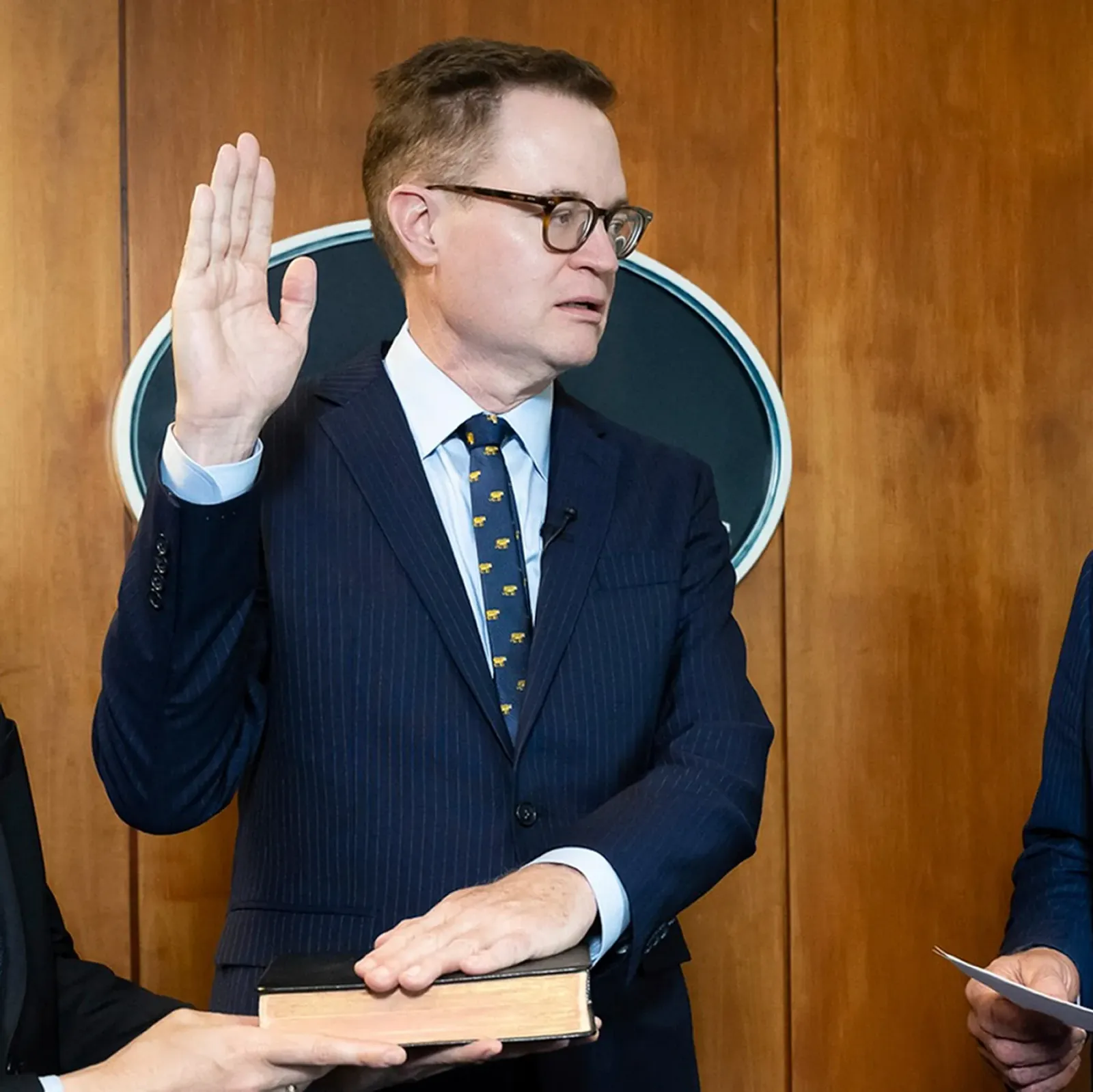
Senator Bill Cassidy blocked Jim O'Neill, a venture capitalist and Peter Thiel acolyte, from leading a federal science agency after bipartisan concern over whether he would stand up for science. The block shows that private-sector credentials and White House backing do not survive a committee chair who doubts a nominee's independence, a warning for anyone whose business depends on how these agencies function.
Senator Bill Cassidy blocked President Trump's pick to run a federal science agency, and the reason is the part worth reading twice. The nominee, Jim O'Neill, is a venture capitalist and Peter Thiel acolyte who faced bipartisan concern over whether he would stand up for science, according to the Times. Bipartisan is the loaded word. Nominations usually die from opposition inside one party, a calendar that runs out, or a scandal nobody can outrun. This one was stopped by a question Democrats and Republicans were asking in the same breath: when political pressure collides with the scientific process, which side does the guy in the chair take? A senator who is also a physician looked at that and said no.
The blocker is not a backbencher. Cassidy is a physician by training and one of the Senate's most identifiable health-policy voices, and that background shapes how his objections land: they are hard to wave off as reflexive partisanship. O'Neill's resume cuts the other way. He comes out of venture capital and the orbit of Peter Thiel, a pedigree that buys credibility on innovation, speed, and deregulation, and simultaneously raises the question of whether he would treat federal research as a portfolio to be optimized or a public trust to be defended. Neither profile is disqualifying on its own. Put together, they set up a confirmation fight about independence, and independence lost.
Understand what the job actually is and the fight makes more sense. The head of a science agency is not chiefly a manager of products; the role is a manager of decisions. Which research gets funded. Which expert panels get seated. Which data gets published, and how insulated all of it stays from the political weather of the moment. That is why "stand up for science" is not a slogan deployed by activists. The person in the chair typically has to defend findings that the administration may not enjoy and fund work with no near-term commercial payoff. For a nominee whose career was built on backing ventures that could return capital, that is an awkward fit on paper, and senators from both parties wanted to hear how he would handle the tension. Whatever the answer was, it was not enough.
Mechanically, this is how one senator becomes a wall. Federal nominations typically have to clear the committee with jurisdiction before they can reach the floor, and committee chairs decide what their committee votes on. A chair who will not move a nomination can stall it for as long as he likes, even with a Senate majority ready to confirm. That structural fact is why White House personnel math is always Senate math: a president does not just need a majority, he needs a chair willing to spend floor time and political capital on the nominee. When the chair is the one asking the hard question, the nomination is usually done.
The Thiel thread is not decoration. A nominee described as a Thiel acolyte arrives with a legible set of priors about institutions: skepticism of large bureaucracies, faith in founders, impatience with process. In some agencies, that is an asset. At a science agency, it converts confirmation into a referendum on whether the nominee's independence is real or rhetorical. That is a brutal test for anyone whose entire professional network sits inside one ideological camp, because the reassuring answer is not a policy position, it is a demonstrated willingness to disappoint the people who got you there. The bipartisan concern suggests that demonstration never happened. And that is the signal that travels: alignment with an administration does not substitute for the ability to say no to it.
What happens next matters more than the vote that never occurred. Vacancies at science agencies typically have downstream costs. Grant cycles slow. Advisory panels go unfilled. Hiring decisions get deferred. Institutions that compete globally for research talent lose ground quietly rather than dramatically. The White House then faces a choice it would rather not make: double down on a similar profile and risk another bipartisan wall, or send a working scientist with a thinner ideological paper trail and a longer confirmation runway. Both options cost something. The block also creates a template. Expect more senators to borrow the same litmus test, and expect nominees in science-adjacent posts to be asked, earlier and harder, whether they would defend evidence that embarrasses their own coalition.
If your business touches federal research funding, product approvals, university partnerships, or the data those agencies publish, this is not Washington inside baseball. Research institutions across red and blue states depend on federal science dollars, and private investors underwrite timelines that assume these agencies keep functioning. A stalled leadership post is a small story with a long tail: it changes how fast decisions get made, how much risk career staff are willing to take, and how attractive a life in public science looks to the next generation of researchers. The practical move is to model political vacancy risk alongside policy risk. Track who gets named in O'Neill's place. The profile of the next pick tells you whether the White House values confirmation over ideology.
The larger lesson is about what credentials actually buy. O'Neill had the modern appointee's full stack: private capital, a powerful network, a president's backing. He still hit a wall built from one plain question about independence. In a capital where loyalty is easy to demonstrate and independence is not, that question is going to get asked more often, of more nominees, at more agencies. Answer it convincingly, or the resume never gets to do the work.
This story's Key Insights and Take-aways are locked.
Create a free account to unlock Executive Actions for one credit.
Register to UnlockAlways free for Executives Club members. Join the Club
More in Politics

Fifth Circuit Kills Pregnant Workers' Law Over Pandemic Proxy Votes
A procedural ruling, not a policy one, has blocked a federal pregnancy-accommodation law and put every pandemic-era statute in the crosshairs ahead of an expected Supreme Court appeal.

Measles kills a Virginia child under 5, the state's first death of 2026
Virginia's health department confirmed the death but withheld the child's vaccination status, leaving schools, clinics and employers to plan around the one detail that would explain the most.

Former Brazilian President Bolsonaro Hospitalized with Intestinal Obstruction
The health status of the former far-right leader raises immediate questions about political stability and the trajectory of Brazil's conservative movement.