
Chile, Mexico and Peru All Landed in China the Same Week
Three Latin American leaders, three high-stakes China visits in one week, and a reminder that Beijing's courtship of the hemisphere runs on its own calendar.
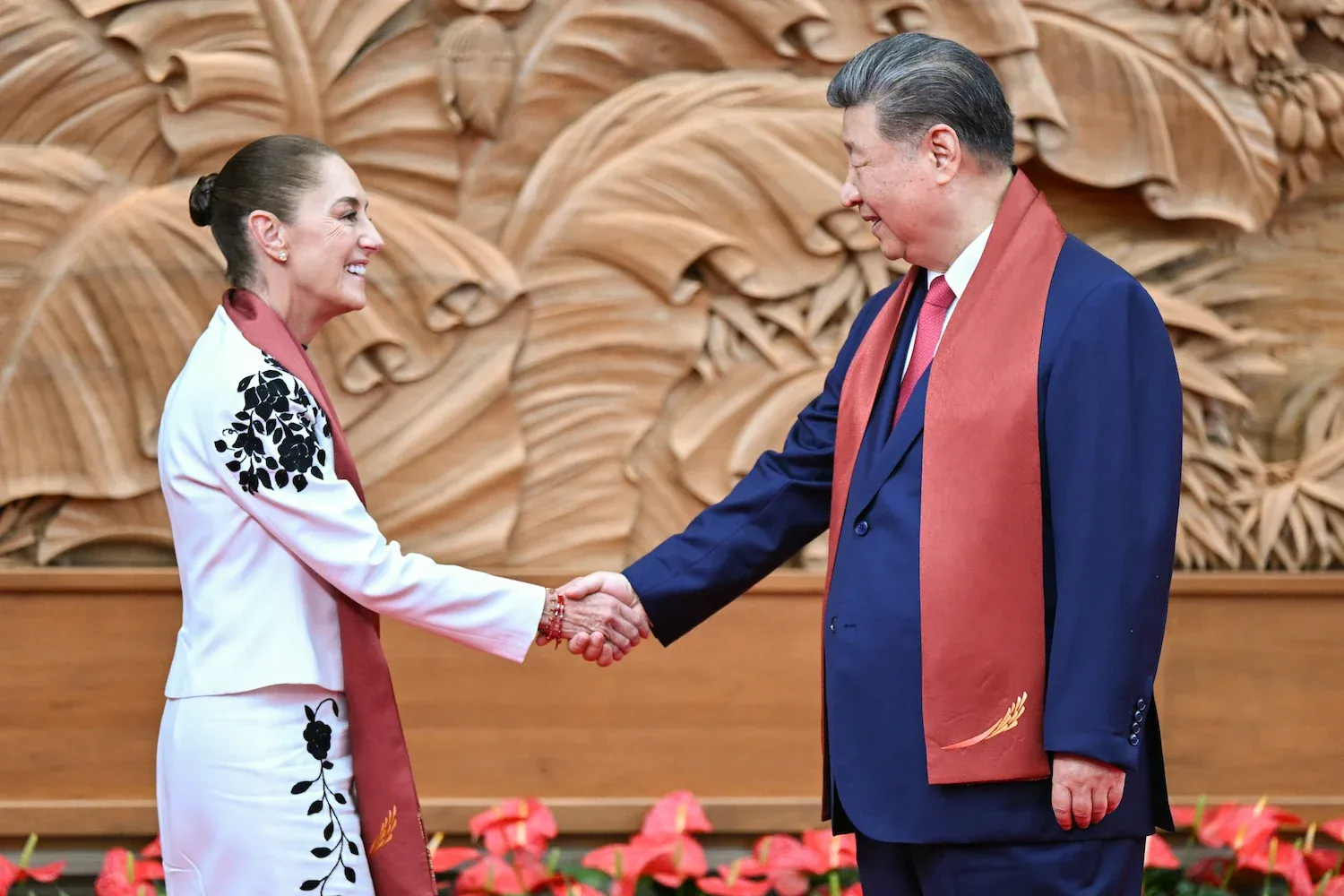
The leaders of Chile, Mexico and Peru each made high-stakes visits to China this week, a cluster of leader-level diplomacy Foreign Policy frames as the other summitry in Shenzhen. For executives with exposure to Andean minerals, Mexican manufacturing or Pacific logistics, the week is a leading indicator that commercial terms are being set now, not later.
Chile, Mexico and Peru all sent their leaders to China this week, three separate high-stakes visits compressed into a single seven-day stretch. Foreign Policy frames it as the other summitry in Shenzhen: the diplomacy that ran alongside the louder gathering and drew a fraction of the attention. That asymmetry is the story. Three Latin American governments, three delegations, one destination, and a week in which some of the hemisphere's most consequential commercial relationships were quietly refreshed while the cameras pointed elsewhere. Individually, each trip is routine statecraft. Together, they are a pattern.
The stakes are not abstract. For Chile and Peru, China is a primary buyer of the minerals that fund national budgets and fill state coffers. For Mexico, it is a supplier, a competitor and a diplomatic complication at the same time. A leader-level visit is the highest-bandwidth channel these governments have. It tells domestic exporters that the relationship is being managed from the top, and it tells Beijing that the door remains open. When three of those visits land in the same week, the signal compounds rather than fades.
For context, China spent roughly two decades turning itself into the default commercial partner for much of South America. It typically buys what the region digs, grows and processes, and typically sells back manufactured goods, machinery, vehicles and electronics. That pattern has made Beijing a permanent fixture in budget debates from Santiago to Lima, and it has kept Washington uneasy for just as long. The visits this week did not create that dynamic. They confirmed it is still running, and that Latin American governments still see value in tending it personally.
Mexico's arithmetic is different, and harder. Its economy is wired into North American supply chains, so its China policy is never purely commercial. Historically, Mexican governments have had to weigh the pull of Chinese investment and cheap inputs against the political cost of appearing to deepen a relationship that Washington watches closely. A leader-level trip to China is therefore a more loaded act for Mexico than for its southern neighbors, and it arrives in a period when trade policy is already contested ground. The same trip that reads as diversification in Lima can read as drift in Washington.
The backdrop is a hemisphere where great-power competition is no longer theoretical. Washington has spent recent years pressing partners to scrutinize Chinese involvement in ports, telecoms, power grids and critical minerals, and it has used tariffs and trade leverage to make that pressure felt. Latin American governments have generally resisted choosing sides in public while hedging in private, because the economics rarely reward a clean break. That is the practical meaning of a week like this one: not a pivot to Beijing, but a refusal to foreclose the option. For a region that has been burned by commodity cycles before, optionality is the whole strategy.
There is also a domestic-politics layer that rarely makes the wire copy. A presidential trip to China is a delivery vehicle. It creates the setting for investment announcements, export market access, infrastructure commitments and photo-ready signings that play well at home, and it lets a government show voters that it is not waiting on anyone else's permission to do business. Even when the concrete deliverables are modest, the political return is real, and it is available to any government willing to make the flight. That incentive is why the traffic tends to run in one direction.
For executives, the second-order effects are where the money actually sits. Leader-level engagement typically precedes the unglamorous machinery of commerce: offtake agreements, financing packages, port and rail concessions, customs facilitation, currency arrangements and visa regimes. None of that shows up in a photo op, and all of it shows up in a five-year plan. Boards with exposure to Andean copper, Mexican manufacturing, Pacific logistics or Chinese capital markets should read this week's itinerary as a leading indicator rather than a diplomatic footnote.
The strategic stakes for peers in similar roles are straightforward. If you run an extractive company, an agribusiness, a logistics operator or an automaker with operations in the region, your counterparts in Santiago, Mexico City and Lima just spent a week in the same rooms as their largest or most complicated trading partner. Whatever was discussed will eventually surface as contracts, permits, tariffs or financing terms, and it will surface on a timeline set in Beijing as much as in the capitals themselves. The leaders went to China. The consequences will arrive on your desk.
This story's Key Insights and Take-aways are locked.
Create a free account to unlock Executive Actions for one credit.
Register to UnlockAlways free for Executives Club members. Join the Club
More in Politics

Fifth Circuit Kills Pregnant Workers' Law Over Pandemic Proxy Votes
A procedural ruling, not a policy one, has blocked a federal pregnancy-accommodation law and put every pandemic-era statute in the crosshairs ahead of an expected Supreme Court appeal.

Measles kills a Virginia child under 5, the state's first death of 2026
Virginia's health department confirmed the death but withheld the child's vaccination status, leaving schools, clinics and employers to plan around the one detail that would explain the most.

Former Brazilian President Bolsonaro Hospitalized with Intestinal Obstruction
The health status of the former far-right leader raises immediate questions about political stability and the trajectory of Brazil's conservative movement.