
China Bars Bloomberg Reporter From Talks After One Shouted Question
One shouted question cost a Bloomberg reporter her seat at trilateral talks, a small exclusion that reveals how much of what executives see from Beijing is scripted.
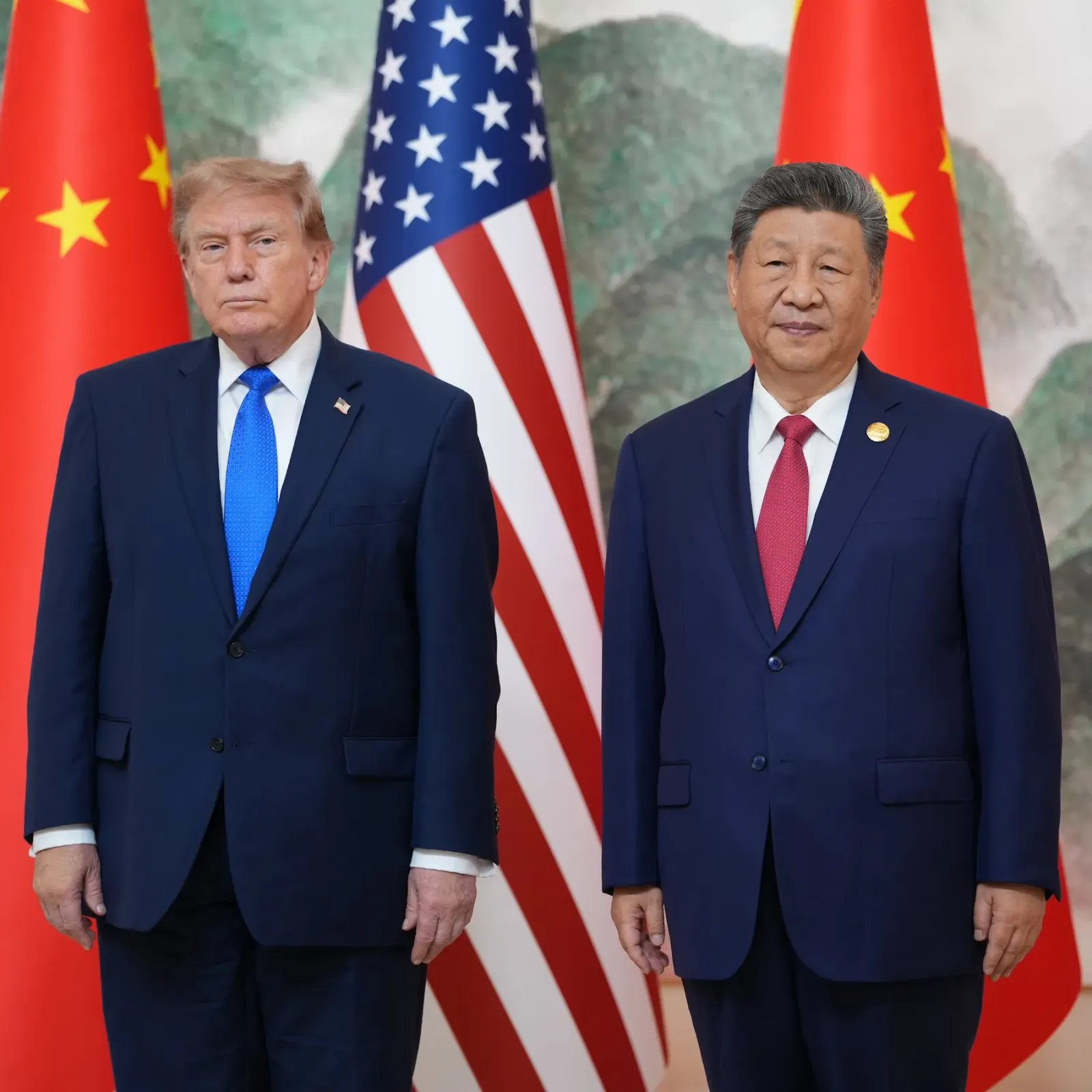
China barred a Bloomberg reporter from covering trilateral talks after she shouted a question at President Trump, an exclusion The New York Times frames as evidence of how tightly Beijing tries to stage-manage events. For executives with China exposure, it is a reminder that access is a discretionary lever, and that anything said in a controlled room reaches the public through the host's framing.
China barred a Bloomberg reporter from covering trilateral talks after she shouted a question at President Trump, according to The New York Times. The exclusion was not a scheduling hiccup. It is a working demonstration of how tightly Beijing tries to stage-manage the events it hosts, and how fast the machinery moves when someone steps off script.
The sequence is the story. The reporter held credentials for the talks. She called a question to Trump. She was then shut out of the trilateral session. In most Western press arrangements, shouting a question at a president is routine, occasionally even rewarded with an answer. In a Chinese-managed setting, it is a breach with an immediate price: the seat disappears. The same act that produces a soundbite in Washington produces an ejection in a Chinese-hosted venue.
For context, Beijing has long treated major diplomatic gatherings as choreography. Questions are typically pre-screened, camera positions fixed, and the pool of journalists narrowed to those unlikely to improvise. Foreign correspondents working in China operate under visa and accreditation systems that give authorities leverage over who gets in the room and who does not. Access is not a right there; it is a renewable privilege, reviewed case by case, and it can be withdrawn without a public explanation. Historically, the tighter the political moment, the tighter the room.
That leverage has been used before. In 2020, China expelled journalists working for The New York Times, The Wall Street Journal and The Washington Post, and restricted others, in a tit-for-tat escalation after the United States designated several Chinese state media outlets as foreign missions. The pattern is consistent: when Beijing wants to tighten the aperture, it works through credentials, visas and access rather than loud announcements. For newsrooms, that episode reshaped the calculus on what a Beijing posting is worth.
Why should anyone outside a newsroom care? Because the same instinct that removes a reporter from a room shapes how deals, statements and summits are presented to the outside world. If the only account of a trilateral meeting is the version its host chose to release, then investors, boards and rival governments are all working from a curated feed. Information control is a negotiating instrument, and it is applied to business delegations as much as to the press. There is also a chilling effect that never appears in an official readout. When one reporter loses access over a single shouted sentence, every other journalist in the pool recalculates. The rational move becomes staying inside the lines, which is exactly the outcome a managed press environment is built to produce. Coverage does not stop; it narrows.
The collision here is stylistic as much as diplomatic. Trump has historically run press interactions loose, taking shouted questions and treating the scrum as a stage of its own. Beijing's model runs the other way: the event is the message, and the message is control. That mismatch is structural, not personal. Trump's habit of taking questions from whoever shouts is a feature of his public style, and it sits awkwardly beside a host who prefers a fixed script. Put the two in the same room and something has to give. This time, what gave was a reporter's access.
For executives with China exposure, the practical read is blunt. Assume no unscripted access at official events. Assume that anything said in a controlled setting will reach the public through the host's framing, not your own. Assume that a single off-message remark by a visiting CEO or official can carry consequences that outlast the trip. Communications teams that plan for a scripted environment, and brief their principals accordingly, will be less exposed than those who treat a summit like a normal press availability.
The bigger picture is a lesson in asymmetry. Western press culture treats a shouted question as noise, sometimes as color. Beijing treats it as a variable to be eliminated. The reporter lost a seat over one sentence. That ratio, one question for one exclusion, is the story in miniature: in a managed room, the price of an unscripted moment is set by the host, and it is rarely small. For anyone who does business across that table, the lesson is to price access accordingly.
This story's Key Insights and Take-aways are locked.
Create a free account to unlock Executive Actions for one credit.
Register to UnlockAlways free for Executives Club members. Join the Club
More in Politics

Fifth Circuit Kills Pregnant Workers' Law Over Pandemic Proxy Votes
A procedural ruling, not a policy one, has blocked a federal pregnancy-accommodation law and put every pandemic-era statute in the crosshairs ahead of an expected Supreme Court appeal.

Measles kills a Virginia child under 5, the state's first death of 2026
Virginia's health department confirmed the death but withheld the child's vaccination status, leaving schools, clinics and employers to plan around the one detail that would explain the most.

Former Brazilian President Bolsonaro Hospitalized with Intestinal Obstruction
The health status of the former far-right leader raises immediate questions about political stability and the trajectory of Brazil's conservative movement.