
Colette Kress Tells Nvidia Staff to Move On After Jensen Huang's Exit
Nvidia's interim chief executive used an all-hands to draw a line under the co-founder's resignation, and how she handles the transition will set the template for every founder-led company watching.
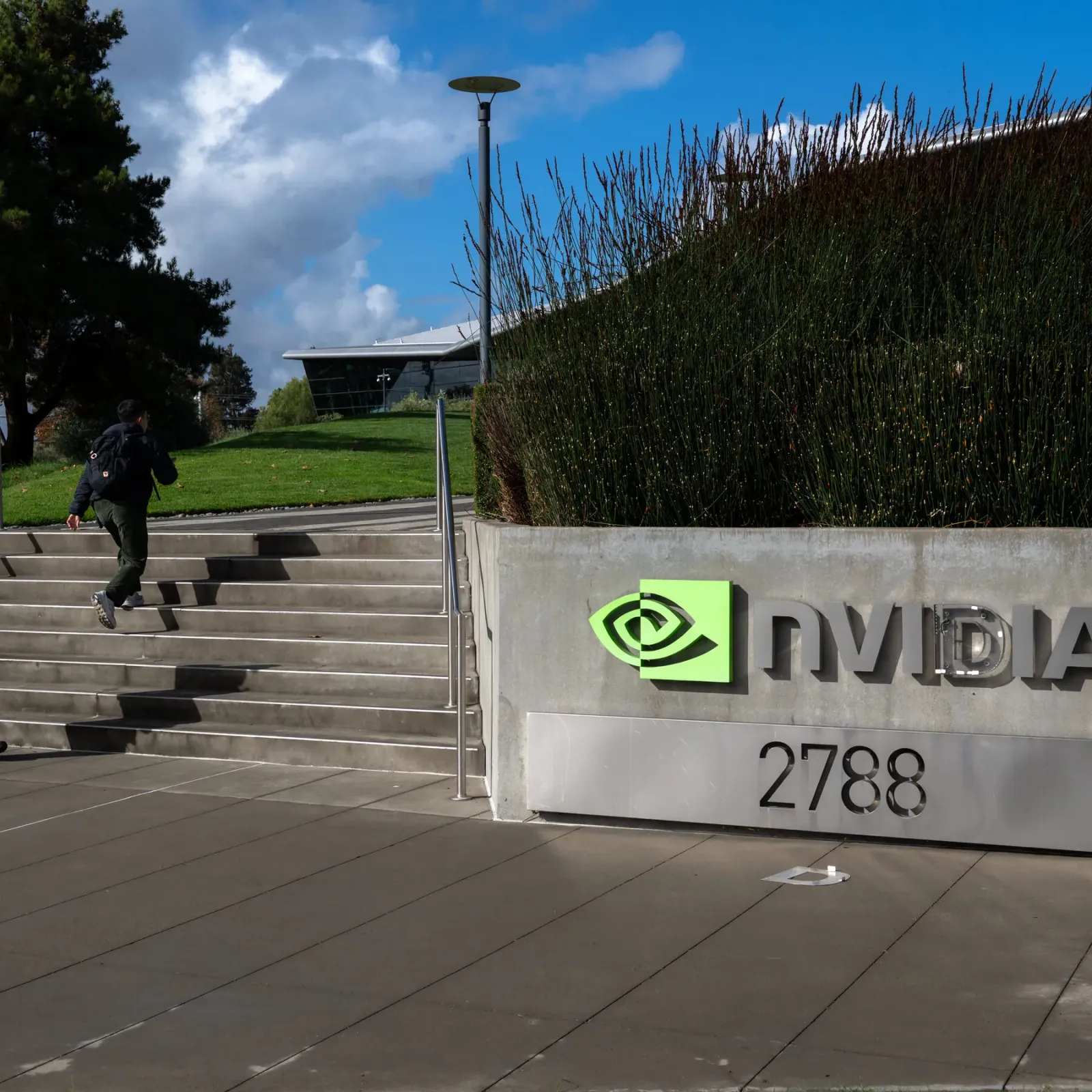
Colette Kress, Nvidia's interim chief executive, told employees at an all-hands meeting that she intends to move past the indiscretions of co-founder Jensen Huang following his resignation. For boards and operators, the moment is a live test of how quickly an interim leader can stabilize a founder-built company whose roadmap the wider AI supply chain plans against.
Colette Kress, Nvidia's interim chief executive, used an all-hands meeting with employees to do the thing interim leaders are actually hired to do: close a chapter. According to a New York Times report, Kress sought to put the indiscretions of Jensen Huang, the company's co-founder, behind them, addressing staff directly in the wake of his resignation. She was not put in the chair to unveil a grand new strategy. She was put there to stand at the front of the room and say the words that let everyone get back to work.
That is the whole of what the report gives us, and it is worth being precise about the edges. The nature of Huang's indiscretions is not detailed in the account. What is clear is the shape of the moment: a co-founder gone, an interim chief executive in place, and a workforce assembled to hear a message whose real audience was never only the people in the room. It was also customers, suppliers, partners, and shareholders watching from outside it, all of them asking the same question. Is the machine still running?
The word "interim" is doing a lot of work in that sentence. Boards typically reach for an interim chief executive when they want two things at once: continuity and optionality. Continuity, because the operating machine has to keep shipping while the dust settles. Optionality, because naming a permanent successor too quickly locks in a strategy before the board has finished deciding what that strategy should be. Interim appointments usually go to someone who already knows how the organization breathes, who can hold it steady without a six-month listening tour, and who is not personally invested in relitigating the past.
For context on why this lands harder than a routine C-suite shuffle: Nvidia sits at the center of the AI buildout. Its accelerators have historically been the scarce input that cloud providers, model developers, and enterprises compete to secure, and the company's roadmap functions as a planning document for much of the industry. When the top of a supply chain like that wobbles, the wobble travels. Customers commit multi-year capacity and capital against a vendor's direction. Suppliers size their own spending against the same direction. A leadership vacuum at a company in that position is not an internal HR matter. It is a scheduling risk for everyone downstream.
Founder-led companies carry a specific vulnerability into moments like this. When the founder is also the public face of the product, the company's identity and the person's identity fuse, and the org chart stops being the real map of who matters. Historically, the hardest part of a founder departure is not the reporting lines. It is the story. Employees, customers, and investors all carry a mental model in which the founder is the reason the thing works. An interim chief executive's first job is to loosen that model without breaking morale in the process.
An all-hands is a blunt instrument, but it is the right one here. It is the only forum where a new leader can address the entire company at once, in her own words, without the message being filtered through six layers of management and three rounds of rumor. Framing the moment as something to put behind you is a retention strategy as much as a communications one. In a market where AI talent is scarce and rival firms recruit relentlessly, the risk after any leadership disruption is rarely that the strategy collapses overnight. It is that the best engineers quietly update their resumes.
The second-order effects are where boards should be looking. Succession first: an interim label has a shelf life, and the longer it sits there, the more it reads as indecision to the people the company needs to keep. Disclosure second: how the departure is characterized to regulators and investors will shape legal and reputational exposure for quarters to come. Culture third: what leaders tolerate at the top sets the ceiling for what everyone below believes is acceptable, and that ceiling does not reset on its own.
The lesson for every board is not really about Nvidia. It is that key-person risk is a genuine line item, and most companies only price it after the person is gone. Kress has the room for now, and the room is the asset. What she does with it, and how quickly the board converts "interim" into a name, will determine whether this becomes a footnote in the company's history or the turning point that defined it.
This story's Key Insights and Take-aways are locked.
Create a free account to unlock Executive Actions for one credit.
Register to UnlockAlways free for Executives Club members. Join the Club
More in Business

S&P 500 Enters Correction, Down 10% From Its High on AI Worries
The index's slide past the 10 percent line is a symbolic verdict on investor mood, and the AI trade that powered the rally is now the thing testing it.

Dow and S&P 500 enter correction as Nasdaq logs worst week since 2020
All 11 S&P 500 sectors fell more than 1% in the same week for the first time since April 2025, a breadth signal that matters more than any single index level.

Chip stocks lose $2.3 trillion in a week, worst run in 25 years
A $2.3 trillion weekly wipeout in semiconductors is forcing every board with an AI story to ask whether it owns a thesis or just a crowded trade.