
Commerce kills the loophole letting China rent America's AI chips
A new rule blocks Chinese AI firms from remotely tapping advanced US chips, closing a gap that let them train frontier models without ever touching the hardware.
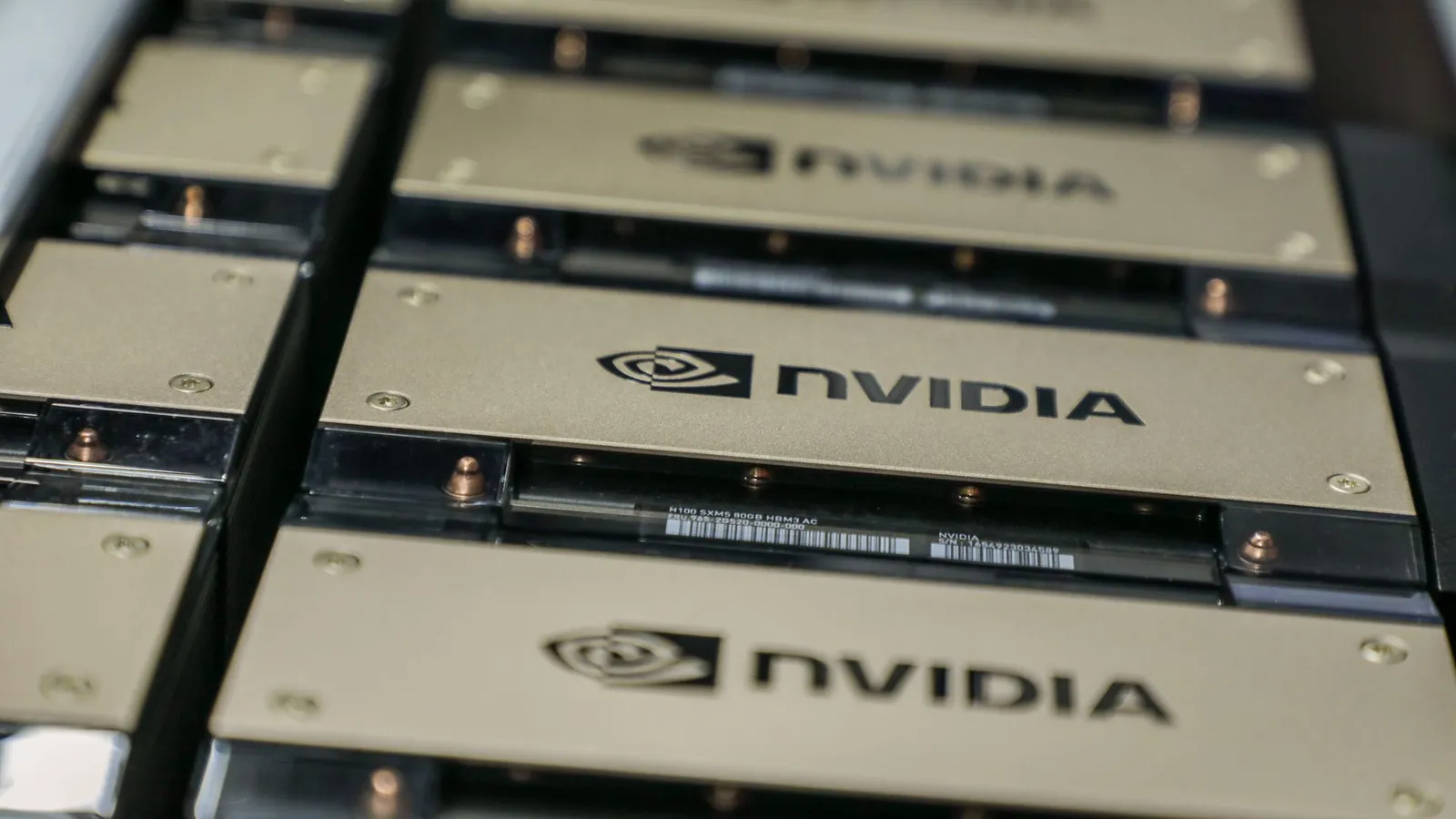
The US Department of Commerce issued a rule blocking Chinese AI firms and other restricted entities from remotely accessing America's advanced AI chips, a move praised by House Select Committee on China chair John Moolenaar. For decision-makers, it closes a compute loophole that let restricted players train models on US silicon without buying it, and signals that export controls now follow the workload, not just the box.
The US Department of Commerce this week issued a rule blocking Chinese AI firms "and other restricted entities from remotely accessing America's advanced AI chips." John Moolenaar, the head of the US Select Committee on China, backed the decision in a statement dated November 16, 2026: "This rule sends a message to the CCP that America is serious about closing dangerous export control loopholes China has been exploiting for years. Our most advanced AI chips are simply not for sale to our foremost enemy." He added that the rule is "an important step in keeping chips out of ill-intentioned hands," strengthens national security laws, and "will help protect America's lead in the AI race."
Here is the gap it closes, and why that gap was wide enough to matter. Exporting top-of-the-line American AI chips to China is already banned. But a ban on shipping hardware is not a ban on using it. If Chinese firms can reach those chips remotely, they can still train AI models without ever physically handling the machine. Remote access effectively means using a chip's compute without being in the room, or the country, where the silicon sits. The old rules governed the box. The new rule governs the workload.
Washington's posture toward Chinese AI has been anything but a straight line. It banned leading AI chips, then allowed somewhat nerfed versions into the country, then said in an earnings call this week that Nvidia would not be shipping more "Hopper data centre products." China, for its part, has gone back and forth on how many American-made AI chips it will take. Two governments, two sets of mixed signals, one very expensive supply chain caught in the middle.
The intent behind the zigzag is not mysterious. Earlier this year, Trump, alongside Elon Musk, Tim Cook, and Jensen Huang, flew to Beijing hoping to open China up to AI trade. The logic: sell enough AI chips to China to profit from it, but not so many, or at least not so many advanced ones, that America loses its edge in the worldwide AI arms race. Remote access breaks that bargain in the most direct way possible. It skips the income the US would collect from selling the chips, while still handing Chinese firms access to top-of-the-line models and, theoretically, the computational power to catch up.
The timing lands in a week of whiplash. The same stretch saw the ousting of ex-Nvidia CEO Jensen Huang, who has been asked to testify before Congress to address "clear national security concerns." A chip industry that spent years arguing export controls would backfire now faces a Congress that wants answers on the record, and a Commerce Department willing to write rules that reach past the shipping manifest.
Why now, and why not sooner? The AI race has been running for years. The China-based DeepSeek open-source model caused a ruckus early last year by demonstrating just how quickly Chinese AI had developed. We do not know how long China has been remotely accessing the best AI chips, but the loophole was hiding in plain sight: controls targeted the physical transfer of hardware, while the value of that hardware increasingly lives in remote compute. American AI leaders, as the source puts it, are likely happy to close the loophole now.
The open question is enforcement. A rule that blocks remote access has to be able to see remote access, and compute typically flows through cloud providers, intermediaries, and contracts that do not always announce their end user. Expect the compliance burden to land on anyone in the chain who can identify a restricted entity: hyperscalers, chipmakers, and the vendors reselling access to capacity. That is a different kind of diligence than counting boxes on a dock, and it is the part of this rule that will be tested first.
For executives and boards, the strategic read is straightforward. Compute access is now the chokepoint, not just compute ownership. If you run a company whose roadmap depends on frontier chips, your exposure is no longer limited to supply and price; it now includes who is allowed to touch the capacity you are renting, and from where. The rule also sets a precedent other jurisdictions may copy, which means the map of who can train on what is being redrawn in real time. Companies that treat export control as a legal formality will be the ones surprised by it. The ones that treat it as a design constraint will build around it.
This story's Key Insights and Take-aways are locked.
Create a free account to unlock Executive Actions for one credit.
Register to UnlockAlways free for Executives Club members. Join the Club
More in Business

S&P 500 Enters Correction, Down 10% From Its High on AI Worries
The index's slide past the 10 percent line is a symbolic verdict on investor mood, and the AI trade that powered the rally is now the thing testing it.

Dow and S&P 500 enter correction as Nasdaq logs worst week since 2020
All 11 S&P 500 sectors fell more than 1% in the same week for the first time since April 2025, a breadth signal that matters more than any single index level.

Chip stocks lose $2.3 trillion in a week, worst run in 25 years
A $2.3 trillion weekly wipeout in semiconductors is forcing every board with an AI story to ask whether it owns a thesis or just a crowded trade.