
Corey Hirsch: NHL Goalies' Mental Health Is a 'Very Real' Concern
A former NHL netminder tells NewsNation that mental health is a very real concern among players, and the new report lands as teams, sponsors, and leagues weigh what silence actually costs.
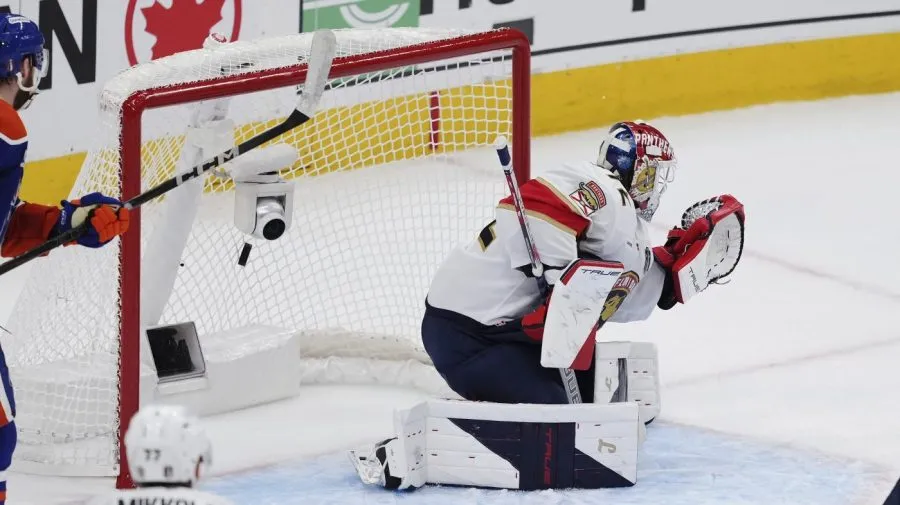
Former NHL goalie Corey Hirsch told NewsNation that mental health is a very real concern among players, as a new report highlights the mental health struggles of NHL goalies. For team executives and league leadership, the takeaway is that hockey's toughness brand and its talent pipeline are now in direct tension with the cost of untreated mental health problems.
Corey Hirsch, a former NHL goaltender, told NewsNation that mental health is a very real concern among players, and a new report is now putting the men in the crease under a spotlight they rarely volunteer for. The report highlights the mental health struggles of NHL goalies specifically, and Hirsch's framing leaves little room for the usual deflection: this is not a fringe issue, not an offseason talking point, and not something a team can fix with a wellness seminar and a hashtag. It is a live concern inside a league whose entire product depends on players who spend their working lives alone in everyone's line of sight.
Start with the job description, because it explains the pressure. A goalie is the last line of defense and the first name in the postgame autopsy. A forward can lose a puck in the corner and be forgiven by Tuesday. A goalie lets in a soft one and it gets replayed, ranked, and remembered for years. The position is also the most isolated on the ice: physically separated from the bench, wired into a helmet, and judged on a statistic that only moves in one direction when things go wrong. For context, the development path is brutal. Most NHL netminders grind through junior and minor-league hockey for years, competing directly against the person sitting next to them for a single roster spot, and each club typically carries only a couple of them. There is no bench to hide on and no rotation to share the blame.
That isolation is not new. What is new is the willingness to say it out loud. Historically, hockey culture has sold stoicism as a virtue, and the position that most rewards a short memory has also been the one least rewarded for admitting that memory hurts. Leagues and players' associations have built confidential assistance programs, and teams increasingly staff sports psychologists, but the incentive structure still punishes disclosure. A player who steps away for treatment risks a roster spot, a contract year, and a reputation as unreliable, in a sport where reliability is the entire job. That math is why so many athletes historically waited until a crisis forced the conversation rather than starting it themselves.
The business case is where this stops being a locker-room story and becomes a boardroom one. Professional hockey clubs are enterprises with enormous payrolls, and a goaltender is a capital asset with a short depreciation curve. When a player's mental health deteriorates untreated, the team does not just lose a person; it loses the asset, the cap space, the season, and sometimes the fanbase's patience. Sponsors and broadcast partners now watch how organizations handle these moments, and the reputational cost of being seen as indifferent is real. The teams that treat mental health as a performance input rather than a soft extra are, quietly, protecting the same balance sheet everyone else is.
Then there is the pipeline problem, which is bigger than any single roster. Goalies are developed young, often identified in childhood, and pushed into a specialization that strips away the team experience other players get. By the time they reach professional hockey, many have spent a decade in a role that rewards solitude and punishes visible doubt. Fixing the top of the pyramid without touching the bottom is a temporary patch. The junior programs, college teams, and European clubs that feed the league are where the norms get set, and where a young goalie first learns whether it is safe to say he is not okay.
There is also an awkward commercial tension nobody in the sport likes to name. Hockey sells toughness. It is the brand, the marketing, and the reason the sport lives where it lives in the cultural imagination. That same brand is what makes it hard for a goalie to raise a hand. Reform, in other words, is not just a clinical question; it is a marketing question, and the two are pulling in opposite directions. The organizations that figure out how to keep the toughness and drop the silence will have an edge in recruiting, retention, and the increasingly competitive market for elite netminders.
And this is not a hockey story. The same pattern shows up wherever performance is public, solitary, and unforgiving: trading desks, surgical theaters, founder suites, first-responder units. The tell is always the same. The people who most need to speak are the ones with the most to lose by speaking, so the silence looks like strength right up until it does not. Hirsch's point, delivered to a national audience, is that the silence is expensive.
For executives watching this play out, the strategic stakes are straightforward. Talent is the scarcest input in any high-performance organization, and the conditions that break a goalie break plenty of other people who never wear skates. The teams and companies that build real, confidential, non-punitive support systems will keep the people everyone else loses. The ones that keep selling stoicism as a strategy will keep finding out the cost later, in the worst possible way.
This story's Key Insights and Take-aways are locked.
Create a free account to unlock Executive Actions for one credit.
Register to UnlockAlways free for Executives Club members. Join the Club
More in Politics

Fifth Circuit Kills Pregnant Workers' Law Over Pandemic Proxy Votes
A procedural ruling, not a policy one, has blocked a federal pregnancy-accommodation law and put every pandemic-era statute in the crosshairs ahead of an expected Supreme Court appeal.

Measles kills a Virginia child under 5, the state's first death of 2026
Virginia's health department confirmed the death but withheld the child's vaccination status, leaving schools, clinics and employers to plan around the one detail that would explain the most.

Former Brazilian President Bolsonaro Hospitalized with Intestinal Obstruction
The health status of the former far-right leader raises immediate questions about political stability and the trajectory of Brazil's conservative movement.