
Costa Rica Wants 10% More for Bananas. Ecuador's 851 Floods Show Why
Growers are demanding their first real price increase in seven years as El Niño drowns and bakes the world's banana belt, testing the loss-leader economics that keep the fruit at 66 cents a pound.
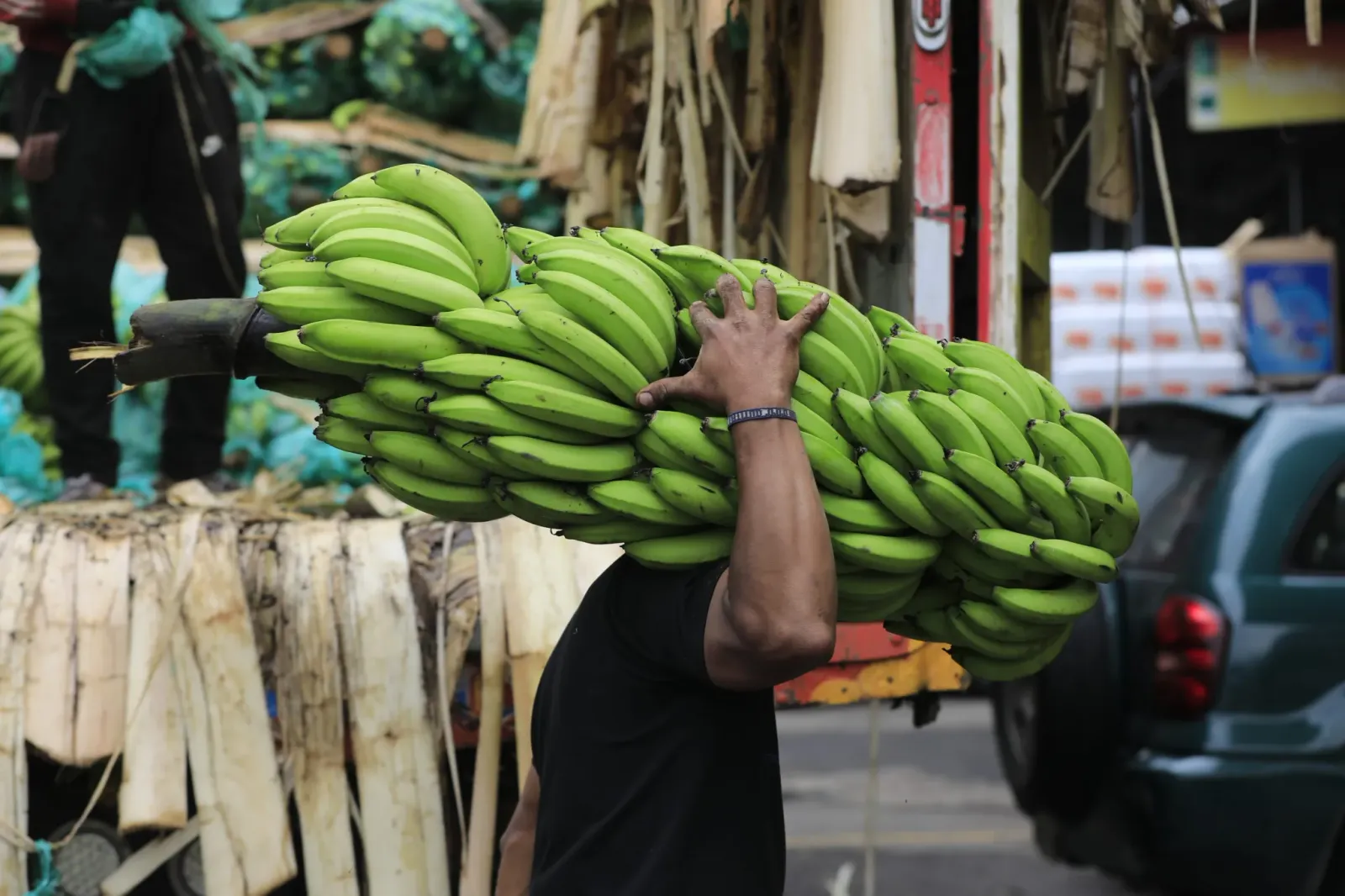
Costa Rica's National Banana Corporation has recommended raising the minimum export price of bananas by nearly 10% for next year, while Fairtrade International approved a 5.6% increase starting in January, both citing El Niño-driven climate losses. For retailers and consumer-goods operators, the squeeze tests whether bananas can stay a loss leader when the wholesale crisis is already here and the harvest damage is forecast to land hardest in 2027.
Costa Rica's National Banana Corporation has recommended raising the minimum export price of bananas by nearly 10% for next year, the first change in seven years, citing climate-driven productivity losses, a stronger currency and higher costs. The ask lands next to a harder number from the other end of the supply chain: Ecuador, the world's top banana exporter, recorded 851 floods between Aug. 29 and Nov. 13, with the banana-growing provinces of Guayas, Los Ríos and El Oro among those affected. Ecuador has issued a red alert for El Niño.
Those two facts are the same story. El Niño, the Pacific weather pattern that swings tropical rainfall between drought and deluge, is stress-testing the economics of the cheapest item in the produce aisle. This year's event could be historically destructive, with about a 60% chance of exceeding previous El Niños dating back to 1950. Americans paid just 66 cents per pound for bananas in October, according to Bureau of Labor Statistics data, against $2.10 for tomatoes and $2.14 for lemons. That gap is not an accident. It is a deliberate pricing strategy, and the strategy is now under pressure from both directions.
Bananas are unusually exposed because they are grown in the tropics and shipped long distances, so a single weather pattern can hit every major origin at once. Less rainfall stunts the fruit's growth, which can produce harvest losses of up to 65%. Too much rainfall waterlogs the soil and incubates fungal and bacterial disease, which also reduces yields. There is no version of El Niño that is good for bananas. A Helios report shared with Fortune found Ecuador is experiencing climate stress four times its historical level for this time of year because of heavy rainfall, with Costa Rica and the Philippines facing similar stress.
Francisco Martin-Rayo, CEO and cofounder of agricultural commodity price and climate risk forecaster Helios AI, told Fortune the El Niño weather extremes are "dramatically higher" and could destroy harvests next year. "A lot of harvests will be ruined, 1,000%," Martin-Rayo said. "We worry about this dramatically for 2027." He was blunt about the geography of the damage: "It is way too wet for bananas being grown in Ecuador and Costa Rica right now, and it is way too hot for bananas being grown in the Philippines right now, and so that means you're going to have production and yield impacts."
Growers are already pricing that risk into contracts. Fairtrade International approved a 5.6% increase in its average minimum prices for banana growers starting in January, citing El Niño as one of the reasons. Costa Rica's proposed near-10% bump would follow seven years of no changes at all, a stretch in which input costs, currency moves and now climate volatility all moved against producers. For a crop where retail margins are thin by design, the request reads less like a negotiation tactic and more like a solvency question.
The landed cost in the United States has climbed too. The Iran war has pushed up diesel and fertilizer prices, and during the first five months of 2026 banana imports rose 3% by volume but 12% by value compared with the same period last year, according to Department of Agriculture data. Read that split carefully: roughly the same volume of fruit is costing meaningfully more. That is inflation arriving at the port, not yet at the shelf.
Whether it reaches the shelf is a separate decision, and a harder one. Rob Weston, founder of agricultural data analytics firm CropGPT, told Fortune that grocery stores have typically absorbed the costs when selling bananas. "Bananas are interesting because grocery stores globally have traditionally treated them as loss leaders to attract shoppers, keeping retail margins extremely low and passing the financial burden directly down the supply chain to growers," Weston said. Martin-Rayo said price hikes are unlikely in the short term but expects at least some in the long term because of El Niño, though he is unsure exactly when they will manifest on store shelves. "We're already seeing this wholesale crisis, but the question is at what point does the retailer decide to pass those price increases through to the consumer," he said.
That question is the one to watch, because the banana is a rare instrument: a commodity cheap enough to anchor a shopper's entire perception of a store's prices, and volatile enough to punish whoever absorbs the difference. The 2027 harvest is the real exposure. If Martin-Rayo's forecast holds and a large share of next year's crop is ruined, the pressure moves from wholesale contracts to the produce aisle, and the retailer that has spent decades treating bananas as bait has to decide whether the bait still works at a higher price. For operators in food retail, agriculture and consumer goods, the practical work starts now: map grower exposure by origin, stress-test landed costs against a 2027 shortfall, and model what happens to basket economics the day a loss leader stops being one.
This story's Key Insights and Take-aways are locked.
Create a free account to unlock Executive Actions for one credit.
Register to UnlockAlways free for Executives Club members. Join the Club
More in Business

S&P 500 Enters Correction, Down 10% From Its High on AI Worries
The index's slide past the 10 percent line is a symbolic verdict on investor mood, and the AI trade that powered the rally is now the thing testing it.

Dow and S&P 500 enter correction as Nasdaq logs worst week since 2020
All 11 S&P 500 sectors fell more than 1% in the same week for the first time since April 2025, a breadth signal that matters more than any single index level.

Chip stocks lose $2.3 trillion in a week, worst run in 25 years
A $2.3 trillion weekly wipeout in semiconductors is forcing every board with an AI story to ask whether it owns a thesis or just a crowded trade.