
Cruz and Talarico's first call: a half-hour play for Trump's Space Academy
Texas's incoming Senate duo is already coordinating on a federal prize that would anchor jobs, contracts, and talent for decades.

Sen. Ted Cruz (R-Texas) said he spent roughly half an hour on the phone with Senator-elect James Talarico (D-Texas) discussing President Trump's proposed Space Academy, and both will push to bring it to Texas. For executives in space, defense, and advanced manufacturing, the call signals that the competition for a permanent federal installation has already started, before the new senator is even sworn in.
Ted Cruz did not wait for the new Congress to start cutting deals. The Texas Republican told The Hill he spent "probably half hour" on the phone yesterday with Senator-elect James Talarico, the Democrat who will become his partner in the Texas delegation, and the subject was not border policy or judicial nominations. It was the Space Academy. Cruz described the conversation as productive and said the two Texans will both push to bring President Trump's proposed Space Academy to their state. Talarico has not yet been sworn in. The courtship has already begun.
Read that again for what it actually is. The first substantive collaboration between a sitting Republican senator and an incoming Democratic senator from the same state is a bid for a federal installation. That is not a small thing. Federal academies and research installations are the closest thing in American politics to a permanent annuity. They arrive with construction contracts, faculty and staff payrolls, cadet pipelines, and decades of procurement attached. Once a state lands one, it almost never loses it. Ask Colorado Springs about the Air Force Academy, or Annapolis about the Naval Academy. These are not four-year stories. They are fifty-year stories.
Texas already has a serious claim on the space economy. NASA's Johnson Space Center in Houston has anchored American human spaceflight since the 1960s and remains the home of mission control. SpaceX's Starbase sits at Boca Chica on the Gulf Coast, where the company tests and flies its Starship vehicle. Blue Origin operates a launch site in West Texas. Add a deep bench of aerospace suppliers, a fast-growing engineering workforce, and research programs across the state's university system, and the pitch writes itself.
But Texas is not bidding against nobody. Florida has the Kennedy Space Center and Cape Canaveral. Alabama has Huntsville and NASA's Marshall Space Flight Center. Colorado Springs hosts both the Air Force Academy and a dense cluster of Space Force operations. California has the Jet Propulsion Laboratory and Vandenberg. Every one of those states has a congressional delegation that will make the same argument Texas is about to make, and most of them have been making it for longer.
The source material does not detail the proposed academy's structure, size, cost, or timeline, and that ambiguity is itself worth noting. The template for federal academies is well established, though: West Point, Annapolis, and the Air Force Academy each anchor a regional economy and a national talent pipeline that feeds directly into the services they serve. A space-focused academy would, by design, sit at the intersection of military, civil, and commercial space, three sectors that are currently colliding as launch costs fall and private constellations multiply. That collision is exactly why the site fight will be loud.
The bipartisan framing is the point, not a footnote. Federal site selection is a delegation sport, and it rewards unified state voices. Cruz is the senior senator and a Republican in a chamber his party controls. Talarico is a Democrat arriving in the minority. Neither can deliver an academy alone, and both know it. A half-hour phone call before the new senator takes the oath is a signal that the arithmetic is understood on both sides. It also sets a template: if these two can cooperate on a federal installation, they have a working channel for whatever comes next.
For operators, investors, and founders across space, defense, and advanced manufacturing, the practical takeaway is that this competition has effectively started early. Site decisions of this magnitude shape hiring, real estate, supply chains, and university partnerships for a generation, and the states that move first tend to be the states that win. Watch three things from here. First, whether rival delegations formally counter with their own bids. Second, whether the administration attaches a budget line, a timeline, or a selection process to the proposal, which would convert a talking point into a real contest. Third, whether Texas universities, contractors, and economic development groups start publicly positioning, because that is usually the tell that a bid is serious.
None of this is guaranteed. A proposed academy can stall in appropriations, get folded into a broader defense package, or simply never find a sponsor willing to carry it. But the opening move has been made, and it was made by two senators from opposite parties, on a phone call, roughly half an hour long, before one of them had even been sworn in. That is how federal installations get won. Quietly, early, and with the delegation already aligned.
This story's Key Insights and Take-aways are locked.
Create a free account to unlock Executive Actions for one credit.
Register to UnlockAlways free for Executives Club members. Join the Club
More in Politics
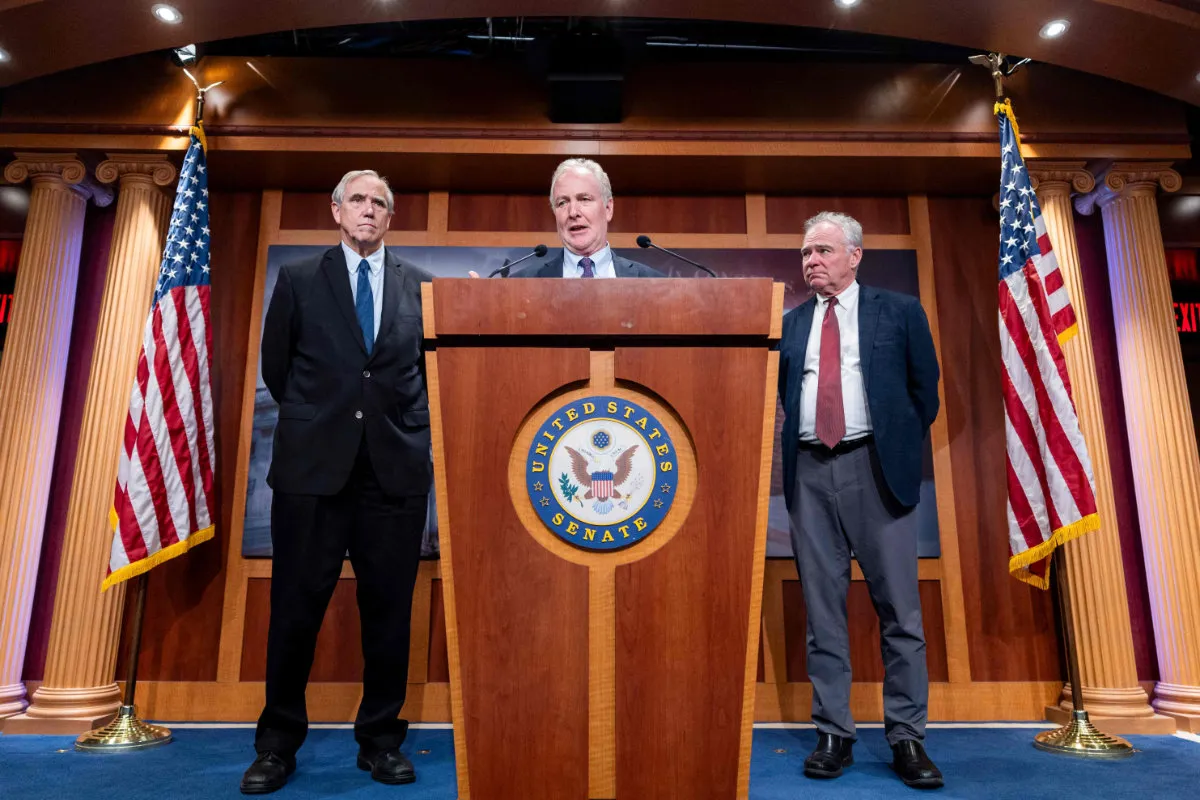
Thirteen Freshman Senators Just Became Chuck Schumer's Toughest Test
Democrats' newest class votes on Senate leadership before being sworn in, and the choice between Chuck Schumer and challenger Chris Van Hollen will set how hard the party fights.

Democrats Nominate Jeffries for Speaker, Teeing Up a Historic First
House Democrats' leadership slate delivers two firsts in one week, and it lands as Trump's security agenda heads to the Sunday shows.
Musk Says He Is 'Not MAGA' as Trump's Coalition Heads for the Exit
The most notable defection yet lands after a midterm thumping, and the question for every operator is how fast the next names follow.