

Democrats Nominate Jeffries for Speaker, Teeing Up a Historic First
House Democrats' leadership slate delivers two firsts in one week, and it lands as Trump's security agenda heads to the Sunday shows.

House Democrats nominated Minority Leader Hakeem Jeffries (D-N.Y.) for Speaker this week, a move that would make him the first Black lawmaker to lead the legislative chamber, and elected Rep. Katherine Clark (D-Mass.) as the first woman to hold her leadership post. For decision-makers, the slate is an early read on the Democratic agenda, the party's bench, and the fights that will define the next Congress.
House Democrats nominated Minority Leader Hakeem Jeffries (D-N.Y.) for Speaker this week, and the word "historic" is not decoration here. Jeffries would be the first Black lawmaker to lead the legislative chamber, a barrier no one has broken in its history. He already runs the Democratic caucus as Minority Leader. The nomination makes him his party's formal choice for the gavel, and it sets up the floor vote that will decide who holds it.
He was not alone in making history. House Democrats also elected Rep. Katherine Clark (D-Mass.) as the first woman to hold her leadership post, one of what The Hill called "many significant firsts in the lower chamber." Two glass ceilings, one leadership slate, one week. That is not an accident of timing. It is a statement about who the party wants seen running the institution, and leadership slates are also a bet on the future, because parties tend to elevate the people they want fronting the next campaign.
Worth being precise about the mechanics, because the nomination and the outcome are not the same thing. The Speaker is elected by the full House, not by a party caucus, and the majority party's nominee typically takes the gavel. A caucus nomination is therefore a declaration of intent, not a coronation. What it does do is real: it anoints the face of the party, fixes the negotiating posture heading into spending fights, and tells donors, staff, and committee chairs exactly where power is going to sit.
The timing tells you what Washington thinks is coming. The Hill's Sunday shows preview put two items center stage: Trump's security agenda and the House leadership elections. That pairing is the week in miniature. One party is deciding who runs its institution. The other is deciding how far it will push on security policy. Both are being argued on the Sunday circuit, which is less a talk show than a booking sheet for the fights ahead. Producers put guests on air because they expect news. When leadership elections and security policy share a Sunday, the campaign-to-governing handoff is officially underway.
For anyone outside the Beltway, the useful way to read a leadership slate is as a preview of the legislative calendar. Committee gavels, floor time, and the appetite for dealmaking all flow from who holds the top jobs. A leadership team that elevates new faces tends to signal a party that wants a different message, and message discipline is what determines whether a narrow majority can actually move bills or just hold press conferences.
That matters more than usual right now, because the two agendas on display pull in different directions. Security policy tends to produce executive action, oversight letters, and appropriations riders. Leadership elections produce process, and process decides which of those tools get used. Watch whether the security agenda converts into legislation or stays on the Sunday circuit as talking points. Watch whether the new leadership team gets the committee assignments that let it set the terms of debate rather than just respond to them.
There is a longer arc here too. Parties elevate leaders who can hold a coalition together across regions, generations, and factions, and the Democratic caucus just did that twice in one week. Jeffries's nomination and Clark's election are bets on a bench that can carry the party through a stretch in the minority or pivot quickly back to the majority. Either way, the people now at the top of the Democratic caucus will be the people negotiating the appropriations bills and the oversight calendar that eventually lands on corporate legal departments.
So the firsts are real, and they are worth marking. But the operational question for founders, operators, and investors is narrower and more practical: what does this team do with power once it has it? The answer starts with the floor vote, runs through committee assignments, and shows up eventually in the rules, the spending bills, and the subpoenas that shape how businesses plan. History gets the headline. The agenda gets the follow-through.
This story's Key Insights and Take-aways are locked.
Create a free account to unlock Executive Actions for one credit.
Register to UnlockAlways free for Executives Club members. Join the Club
More in Politics
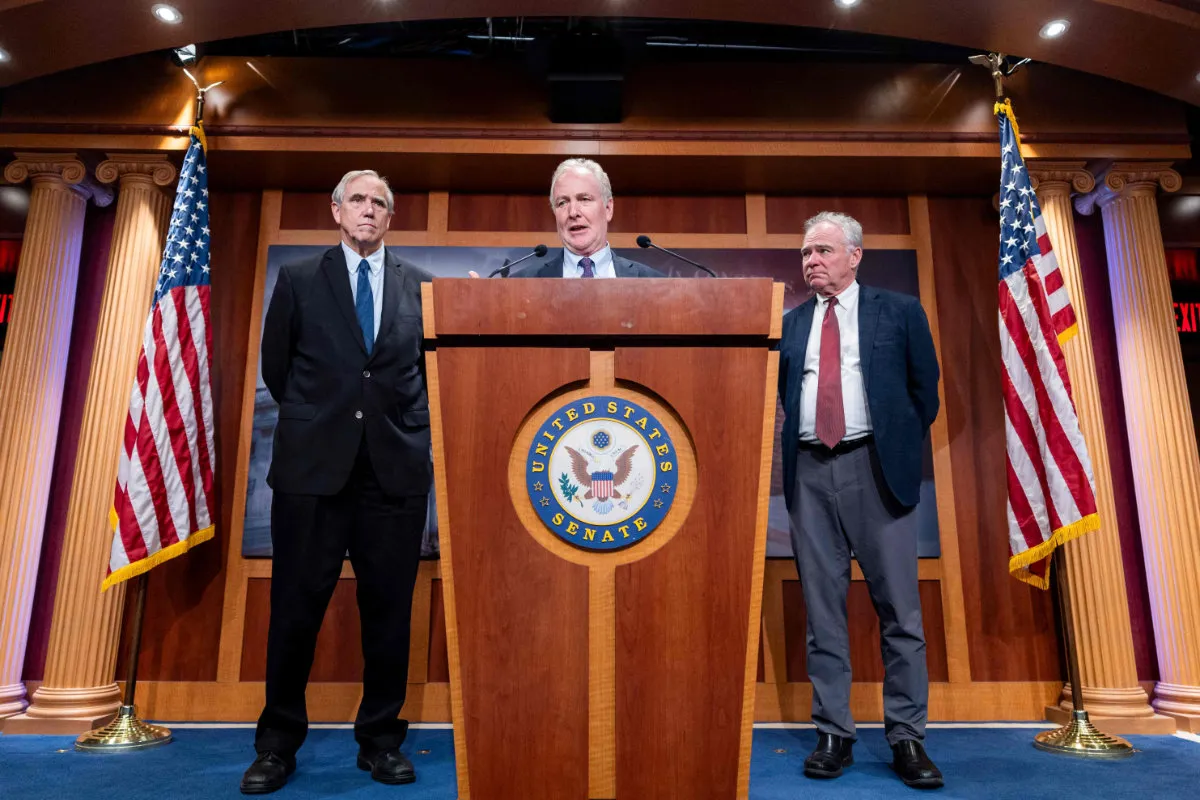
Thirteen Freshman Senators Just Became Chuck Schumer's Toughest Test
Democrats' newest class votes on Senate leadership before being sworn in, and the choice between Chuck Schumer and challenger Chris Van Hollen will set how hard the party fights.
Musk Says He Is 'Not MAGA' as Trump's Coalition Heads for the Exit
The most notable defection yet lands after a midterm thumping, and the question for every operator is how fast the next names follow.
Trump tells Zacharia 'you don't need this' as California bar investigates
A friendly Fox News call reframes a quick White House exit, but the state bar clock runs on a very different schedule than the news cycle.