
Thirteen Freshman Senators Just Became Chuck Schumer's Toughest Test
Democrats' newest class votes on Senate leadership before being sworn in, and the choice between Chuck Schumer and challenger Chris Van Hollen will set how hard the party fights.
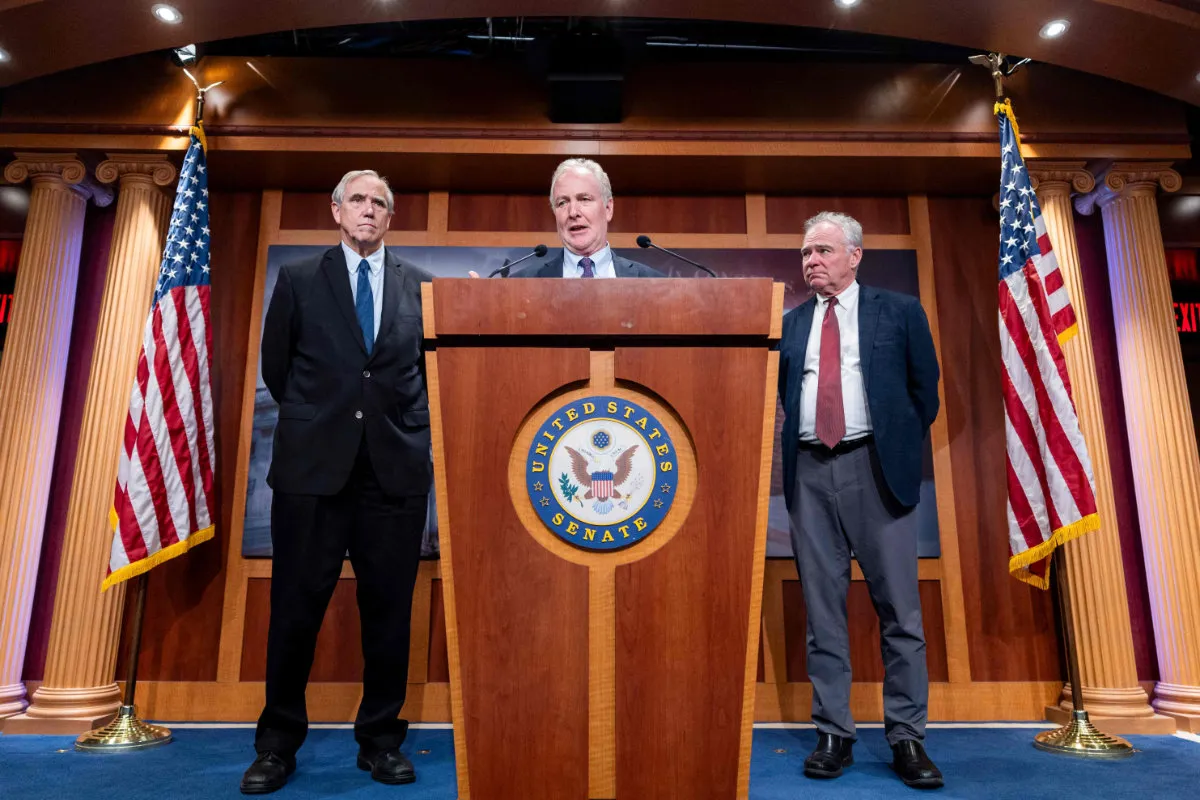
Thirteen newly elected Democratic senators are deciding whether to back incumbent Senate leader Chuck Schumer or challenger Chris Van Hollen in a leadership vote held before they are sworn in, with progressives among Van Hollen's supporters. The outcome will set the party's legislative posture and reveal whether its new class can convert campaign promises of change into actual control of the chamber's agenda.
Thirteen newly elected senators are about to cast a vote before they have even been sworn in, and it is not about a bill. It is about who leads them. According to Arab News, the incoming Democratic class is split over whether to back incumbent Senate leader Chuck Schumer or the challenger, with progressives among the freshmen lining up behind Chris Van Hollen. The leadership ballot is being framed as an early test of the party's commitment to change, and it is arriving before the new senators take the oath, which is exactly when their leverage is at its peak.
That timing is the whole story. A leadership vote held before swearing-in forces the incoming class to pick a side while they are still candidates in spirit, still accountable to the voters who just sent them there, and not yet socialized into the rhythms of the institution. Once the oath is taken, the incentives shift fast. Seniority reasserts itself, committee slots get handed out, and the freshman bloc that arrived promising disruption becomes a set of individual offices with individual priorities. Voting early is the one moment the new class can act as a bloc with real consequences.
The rift Arab News describes is between traditional party leadership and calls for a more aggressive legislative approach. In practice, that argument usually shows up in a handful of concrete places: how hard to force recorded votes that put the other party on the record, whether to use must-pass deadlines as leverage, how quickly to move on nominations and investigations, and how much of the agenda gets set by the leader's office versus the rank and file. None of that is abstract. The person who wins this vote controls the floor schedule, which is the single most valuable currency in the Senate. Whoever holds it decides what gets a vote and, just as importantly, what does not.
The arithmetic makes the freshmen unusually powerful. Senate leadership races are decided by a simple majority of the caucus, historically by secret ballot, and in a 100-seat chamber a group of 13 new members is not a rounding error. It is a bloc large enough to decide a contested race if it stays together. That is the bet the challenger's supporters appear to be making: that a cohort elected on promises of change will not spend its first week ratifying the status quo. The counterargument from the incumbent's side is equally familiar, and it is not unreasonable: leadership races are won by the people who count votes, and a public fight can hand the opposing party a month of negative coverage right when a new class is trying to define itself.
For the freshmen, the risk cuts both ways. Back the incumbent and the promise of change starts to look like a slogan. Back the challenger and lose, and the class begins its term on the wrong side of the person who assigns committees and doles out campaign support. That is the classic first-vote trap for any new cohort: the cost of loyalty is credibility, and the cost of disloyalty is access.
The second-order effects will show up well beyond the leadership office. Committee gavels and ranking-member slots flow from the leader's decisions. Staff hiring follows the same signal, because good operatives go where the agenda is. Donor networks read leadership fights as a proxy for where the party is heading, and they price their giving accordingly. A messy, drawn-out contest also burns the single scarcest resource a new class has: the first 90 days, when the press and the public are still paying attention.
What to watch is simple. Is the challenge contested openly or settled quietly? Do the 13 hold together as a bloc, or does the group splinter once individual offers start arriving? And does the losing side get folded into the leadership structure, or does it spend the term as an internal opposition? The answers will be visible within days, and they will be read as a preview of how the next two years actually go.
The broader lesson travels well beyond Washington. Any organization that onboards a large cohort with a mandate runs into the same collision: new arrivals want proof that change is real, and incumbents want continuity they can plan around. The vote is the proof point. Thirteen senators are about to tell their voters, in the only language that counts, whether the change they promised starts with the person at the top.
This story's Key Insights and Take-aways are locked.
Create a free account to unlock Executive Actions for one credit.
Register to UnlockAlways free for Executives Club members. Join the Club
More in Politics

Democrats Nominate Jeffries for Speaker, Teeing Up a Historic First
House Democrats' leadership slate delivers two firsts in one week, and it lands as Trump's security agenda heads to the Sunday shows.
Musk Says He Is 'Not MAGA' as Trump's Coalition Heads for the Exit
The most notable defection yet lands after a midterm thumping, and the question for every operator is how fast the next names follow.
Trump tells Zacharia 'you don't need this' as California bar investigates
A friendly Fox News call reframes a quick White House exit, but the state bar clock runs on a very different schedule than the news cycle.