
Decoupling Was the Plan. Now Washington and Beijing Both Want De-risking.
A full split would cost both superpowers more than they will pay, so the fight has moved to managing the damage - and that rewrites the risk map for every company caught in between.

Washington and Beijing are both backing away from full economic decoupling and reaching for 'de-risking' instead, a narrower strategy that targets a handful of strategic chokepoints while leaving most trade intact. For executives, the compliance and supply-chain question is no longer whether the two economies separate, but which specific links get cut, how fast, and who absorbs the cost.
The clean break is off the table. That is the conclusion both Washington and Beijing appear to have reached, and it is why the vocabulary of the trade fight has quietly changed. Decoupling, the idea of pulling the world's two largest economies apart, has proven too painful to actually execute. What is on the menu instead, as Foreign Policy frames it, is de-risking: a narrower, more surgical approach that accepts deep economic entanglement as a fact of life and tries to fence off only the parts that could be weaponized.
The distinction matters more than it sounds. Decoupling is a divorce. De-risking is a prenup. One assumes the relationship ends; the other assumes it continues and writes rules for the parts that could hurt you. For roughly a decade, officials on both sides talked as if the first were achievable. The second is what they are actually doing, and the gap between the two is where the money is made and lost.
Why the retreat? Because the bill for a full split lands on voters and shareholders, not on the officials who announce it. The two economies are woven together through consumer goods, industrial components, agricultural exports, and financial flows. American households buy Chinese-made electronics, appliances, and clothing. American firms sell into the Chinese market and depend on Chinese factories and suppliers to hit their margins. Historically, broad tariffs of this kind show up as higher prices and thinner earnings, which is why the rhetoric has consistently outrun the policy. When the cost becomes visible on a receipt, the appetite for a total break tends to evaporate.
The tools both sides are using now are targeted rather than total. Washington has leaned on export controls for advanced semiconductors and the equipment used to make them, investment screening, and restrictions on certain outbound capital. Beijing has answered with its own controls on critical materials, including gallium, germanium, and graphite, and it refines the large majority of the world's rare earths, the inputs that go into magnets, batteries, and defense systems. Each move is aimed at a chokepoint rather than the whole relationship. That is the logic of de-risking in a sentence: you cannot cut the trade, but you can try to control the handful of places where cutting would hurt the other side more than it hurts you.
Semiconductors, critical minerals, advanced batteries, pharmaceuticals, and data sit on that shortlist. Everything else, from furniture to footwear to the components inside a mid-range appliance, keeps flowing. The shortlist is also where the escalation risk concentrates, because a chokepoint only works as leverage if the other side cannot replace it quickly. The narrower the target, the harder the fight over it.
For companies, the practical consequence is that "China exposure" is no longer a single number on a risk register. It is a map. A firm's real exposure depends on which inputs, which customers, which technologies, and which jurisdictions it touches, and those answers differ by business unit. That is why so many multinationals have moved toward dual supply chains and "China plus one" manufacturing footprints in Vietnam, Mexico, India, and Eastern Europe. The goal is rarely to leave China outright. It is to have a second option ready if one specific link is severed, and to know in advance what that option costs.
The second-order effects run through the allies. Europe, Japan, South Korea, and Taiwan sit inside the same supply chains and face the same pressure to pick a lane they would rather not pick. Countries positioned as connectors, from Mexico to Vietnam to Malaysia, capture the redirected investment but inherit the same compliance burden. Rules drafted in Washington and Beijing become operating costs in Hanoi, Monterrey, and Penang, and they show up as legal fees, duplicated certifications, and slower factory ramps.
The strategic stakes for executives are straightforward. The question is no longer whether the two economies will separate, but which specific links get cut, how fast, and who eats the cost. Boards that treat this as a geopolitical talking point will be surprised by a line item. Boards that map their chokepoints now, price the alternatives, and build the relationships to switch will be the ones who can move when the next control lands. The bargain is being rewritten either way. The only open question is whether your company is holding a pen or a bill.
This story's Key Insights and Take-aways are locked.
Create a free account to unlock Executive Actions for one credit.
Register to UnlockAlways free for Executives Club members. Join the Club
More in Politics
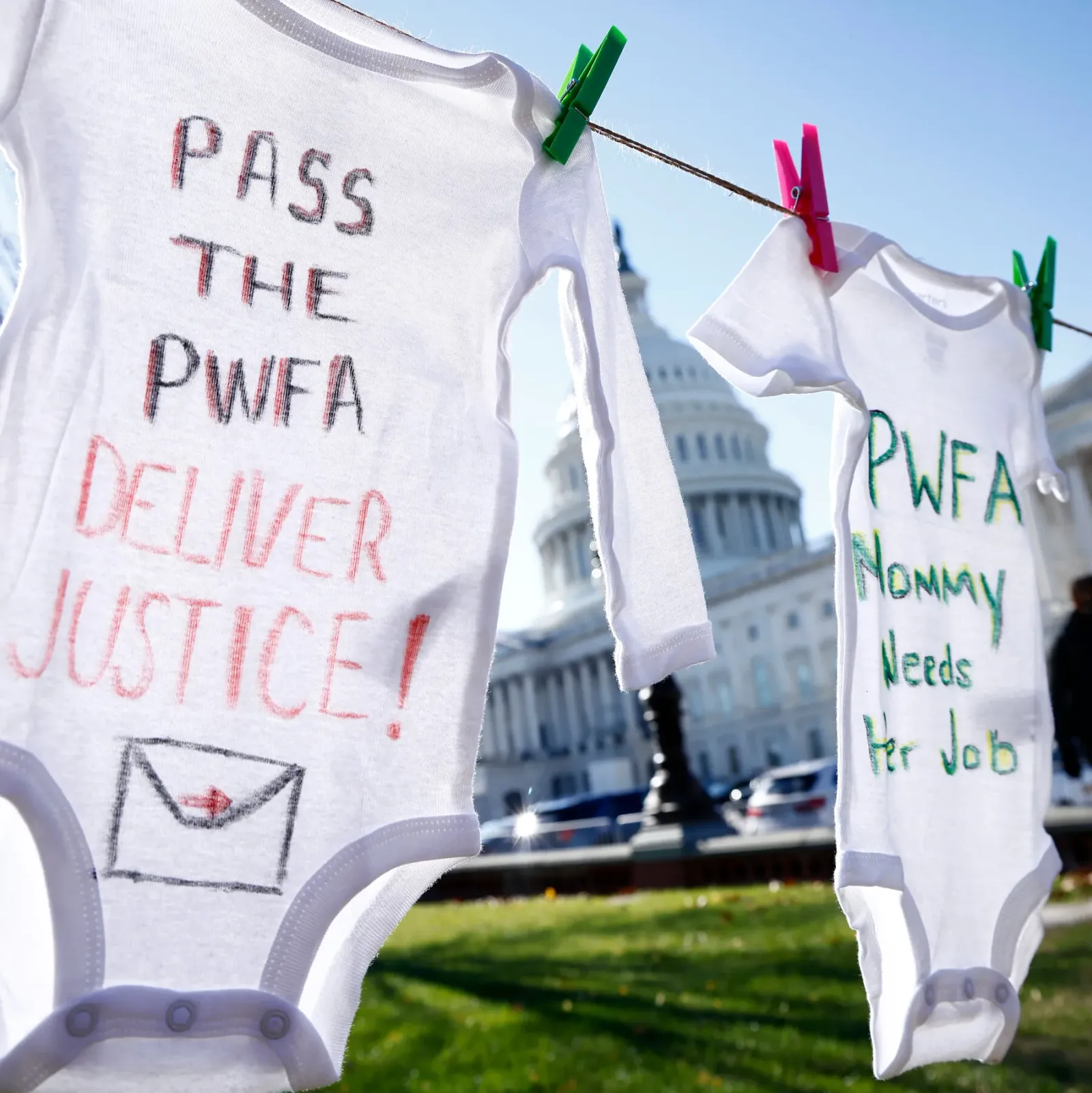
Fifth Circuit Kills Pregnant Workers' Law Over Pandemic Proxy Votes
A procedural ruling, not a policy one, has blocked a federal pregnancy-accommodation law and put every pandemic-era statute in the crosshairs ahead of an expected Supreme Court appeal.

Measles kills a Virginia child under 5, the state's first death of 2026
Virginia's health department confirmed the death but withheld the child's vaccination status, leaving schools, clinics and employers to plan around the one detail that would explain the most.

Former Brazilian President Bolsonaro Hospitalized with Intestinal Obstruction
The health status of the former far-right leader raises immediate questions about political stability and the trajectory of Brazil's conservative movement.