
Democrats Nominate Hakeem Jeffries for Speaker, One Floor Vote From History
The New York Democrat is now in line to become the first Black lawmaker to hold the office second in line to the presidency, and with it control of what the House votes on.
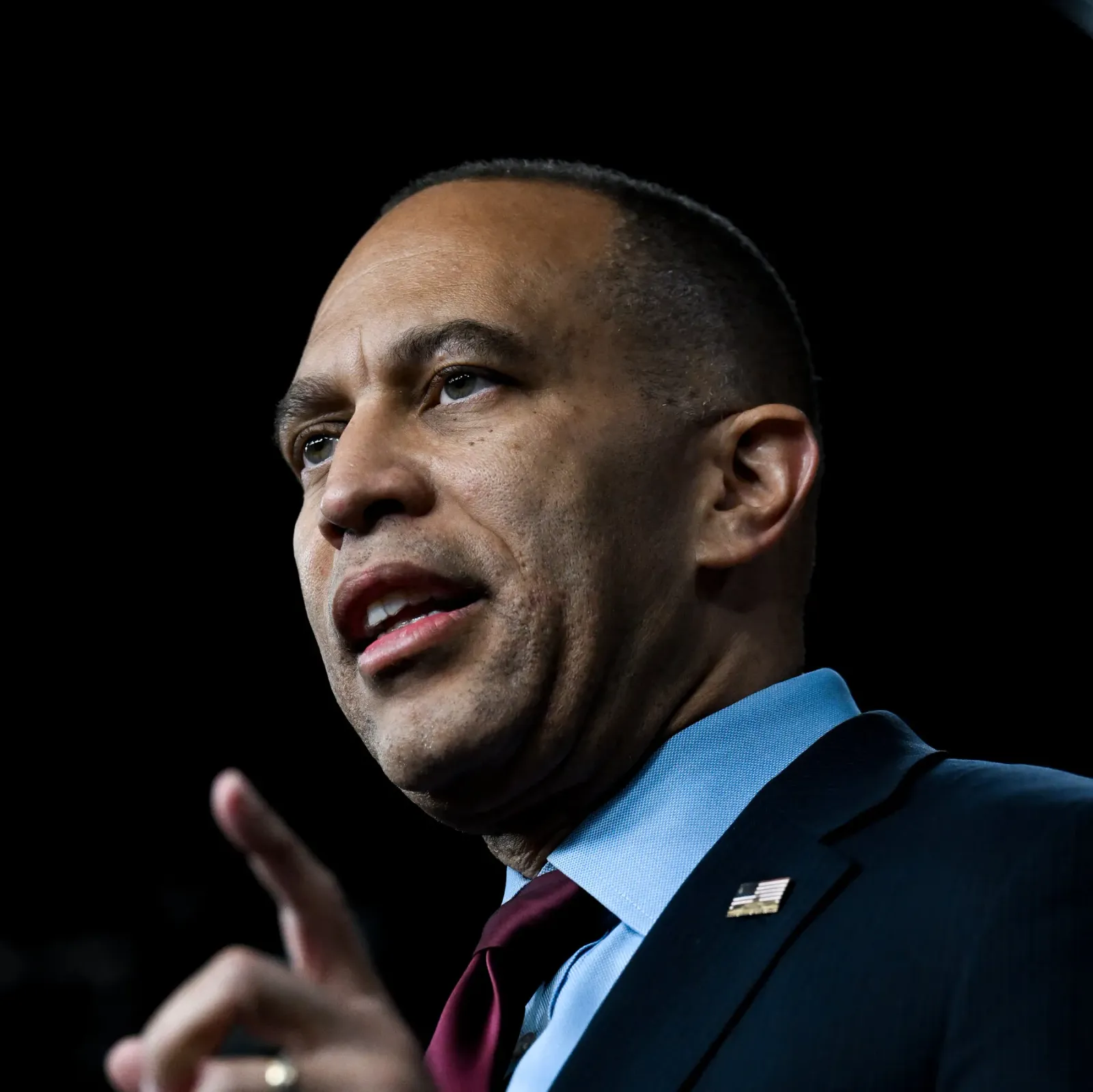
House Democrats voted to nominate Representative Hakeem Jeffries of New York for speaker, putting him in line to become the first Black lawmaker to hold the office second in the line of presidential succession. For anyone tracking legislation, the consequence is straightforward: the speaker controls the floor calendar, so the nomination is the earliest reliable signal of what the House will, and will not, vote on.
House Democrats voted to nominate Representative Hakeem Jeffries of New York for speaker, putting him in line to become the first Black lawmaker to win the post that sits second in line to the presidency. Read that sentence twice, because it holds two separate claims that are easy to blur. Democrats have made their choice. History is now one floor vote away. The nomination is the party's answer; the gavel is the House's answer. Everything between those two things is the story.
The mechanics matter here. A speaker is elected by the full House, not by a single party's caucus, which is exactly why the language is careful: the vote put Jeffries in line to win the post. The Democratic nomination makes him his party's candidate and the face of its conference. Whether he actually takes the chair depends on the arithmetic of the chamber, and the party holding the majority typically supplies the votes that decide it. In practice, the majority party's nominee almost always wins the floor vote, while the minority's nominee functions as a statement of intent as much as a candidacy. So the headline is real, and the asterisk is real too.
The speakership is not a ceremonial title. The speaker controls what reaches the floor, which means the office decides which bills get a vote and which quietly expire in committee. The speaker shapes committee assignments, sets the chamber's schedule, negotiates with the Senate and the White House, and oversees the Capitol itself. The job also sits second in the line of presidential succession, behind the vice president and ahead of the Senate's president pro tempore, which is why the post carries weight far beyond legislating. Anyone mapping a tax or regulatory strategy for the next two years is, whether they say it out loud or not, mapping the speaker's calendar.
The historical weight is the part that will outlast the news cycle. The office dates to the first Congress, and across its entire run no Black lawmaker has held it. Jeffries, a New York Democrat, would be the first. That is a milestone in a chamber where Black members have served since Reconstruction, and it lands at a moment when both parties are openly fighting over which coalition they represent. Symbols do not pass budgets. But symbols do shape who runs, who donates, and who gets taken seriously on a leadership ladder built over decades.
A leadership nomination is also an internal power settlement. Caucuses typically vote on their leadership slates before a new Congress convenes, and the result tells you where a conference wants to plant its flag: on message, on fundraising, or on legislative combat. The nominee becomes the party's chief fundraiser and its most visible recruiter of candidates, with real influence over where money and attention flow, including toward the districts that decide the majority. That is why these votes get watched so closely by people who have never run for anything. The nomination is a signal about the next two years of a party's priorities.
For executives, the practical read is blunt. Nothing moves in the House without the speaker's consent. Tax legislation, government funding, the debt limit, oversight of federal agencies, and the subpoena power that comes with a committee gavel all route through that office. Corporate government-affairs teams and investors track the floor schedule for a reason. A speaker who wants a bill to move can create the vote; a speaker who does not can let it die without ever saying no. Watch the schedule, not the soundbites.
The next checkpoint is the floor. Between now and then, expect the usual theater: whip counts, holdouts, and members extracting concessions before they commit. The distance between a nomination and a gavel is usually short, but it is not zero. For Jeffries, the vote already wrote one line of history. The second line, the one that makes him the first Black speaker, still needs a majority of the House to say yes. That is the number to watch.
This story's Key Insights and Take-aways are locked.
Create a free account to unlock Executive Actions for one credit.
Register to UnlockAlways free for Executives Club members. Join the Club
More in Politics

Fifth Circuit Kills Pregnant Workers' Law Over Pandemic Proxy Votes
A procedural ruling, not a policy one, has blocked a federal pregnancy-accommodation law and put every pandemic-era statute in the crosshairs ahead of an expected Supreme Court appeal.

Measles kills a Virginia child under 5, the state's first death of 2026
Virginia's health department confirmed the death but withheld the child's vaccination status, leaving schools, clinics and employers to plan around the one detail that would explain the most.

Former Brazilian President Bolsonaro Hospitalized with Intestinal Obstruction
The health status of the former far-right leader raises immediate questions about political stability and the trajectory of Brazil's conservative movement.