
Democrats Nominate Jeffries for Speaker. January's Floor Vote Is the Real Fight.
House Democrats unified behind Hakeem Jeffries for Speaker and elevated Ted Lieu to caucus chairman, but the gavel is decided by a full House vote in January.
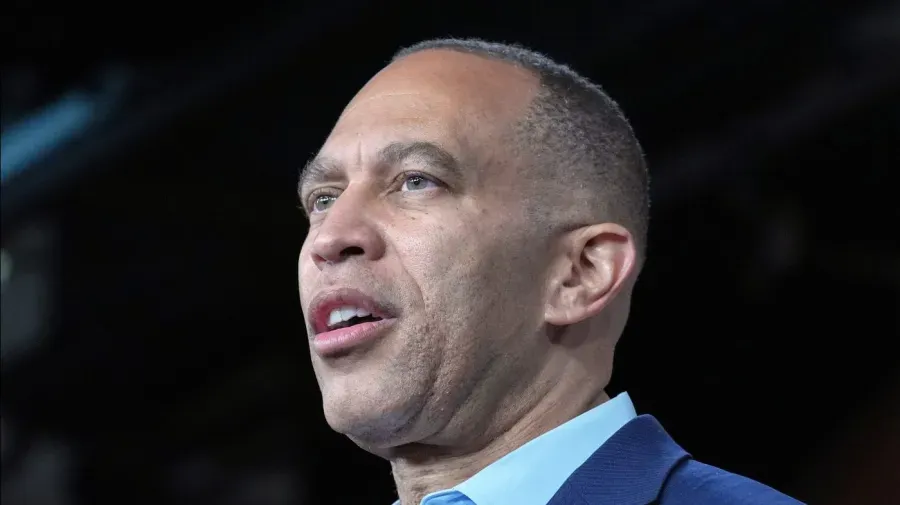
House Democrats nominated Minority Leader Hakeem Jeffries of New York for Speaker and elected Rep. Ted Lieu of California as caucus chairman for the next Congress. The nomination is only a party preference: the Speaker will be decided by a full House floor vote when the 120th Congress convenes in January, and that margin will determine how much room the next Speaker has to govern.
House Democrats have made their pick. Minority Leader Hakeem Jeffries of New York is the caucus's nominee for Speaker in the next Congress, a decision that puts the Brooklyn Democrat at the top of his party's ticket when the 120th Congress convenes in January. The same internal vote elevated Rep. Ted Lieu of California to caucus chairman for the next Congress, handing the prolific Los Angeles-area lawmaker a bigger megaphone inside the party.
Here is the part that matters more than the headline: this was a nomination, not an election. The Speaker is chosen by the full House, not by a single party's caucus, and the source of Jeffries's new title will be a floor vote in January. Until that vote is counted, the gavel is unassigned. Democrats have signaled their preference; the chamber has not yet ratified it.
That distinction is easy to blur in a leadership-election news cycle, and it is worth being precise about. Party caucuses nominate. The House elects. Historically, the majority party's nominee wins the floor vote and the minority's nominee serves as a symbolic standard-bearer, which is why the January roll call is the only number that ultimately decides who sits behind the Speaker's chair. Jeffries currently leads House Democrats as Minority Leader, and this nomination formally positions him to seek the top job when the new Congress is sworn in.
Jeffries's rise through the caucus has been unusually fast by the standards of a body where seniority is a religion. He became the first Black lawmaker to lead a party caucus in Congress, and he has spent his tenure as Minority Leader trying to keep a broad and ideologically varied conference pointed in the same direction. That job gets harder, not easier, the moment your name is on the ballot for Speaker. Every member who votes for you in a closed caucus meeting is also calculating what your speakership would mean for their committee slot, their district, and their fundraising.
Lieu's elevation to caucus chairman is the quieter half of the story and, for anyone tracking how the party will talk, the more revealing one. The caucus chair runs the room, sets the rhythm of member meetings, and helps shape the message that members carry home. Lieu has represented a Los Angeles-area district since 2015 and has built a reputation as one of the chamber's most prolific communicators, with a portfolio that has leaned heavily into technology policy and U.S.-China competition. Putting him in the chair's seat signals that the caucus wants a fast, loud, camera-ready voice running its internal messaging operation.
The mechanics ahead are straightforward but unforgiving. When the 120th Congress begins in January, the first order of business in the House is electing a Speaker. Members vote by name. A candidate needs a majority of those present and voting, which means absences, protest votes, and holdouts are not trivia; they are the whole ballgame. The last time a Speaker election went to multiple ballots was January 2023, when Kevin McCarthy needed 15 rounds to get there. Anyone who assumes January will be a formality has not been paying attention to how narrowly these votes can break.
For the broader business and policy world, the practical consequences arrive in a predictable sequence. Leadership elections settle who controls the floor schedule, which members get the gavels on the committees that write tax, energy, tech, and financial-services law, and how aggressively the chamber pursues oversight. Those decisions shape what can pass, what gets subpoenaed, and what quietly dies in committee. A caucus that unifies early, as Democrats did here, buys itself time to organize; a caucus that fights into January burns weeks it cannot get back.
The strategic read for anyone whose plans depend on Washington is to separate the nomination from the outcome. The nomination tells you who Democrats want. The January floor vote tells you who actually holds the gavel, and the margin will tell you how much room that Speaker has to maneuver. Watch the defections, not the applause.
This story's Key Insights and Take-aways are locked.
Create a free account to unlock Executive Actions for one credit.
Register to UnlockAlways free for Executives Club members. Join the Club
More in Politics

Fifth Circuit Kills Pregnant Workers' Law Over Pandemic Proxy Votes
A procedural ruling, not a policy one, has blocked a federal pregnancy-accommodation law and put every pandemic-era statute in the crosshairs ahead of an expected Supreme Court appeal.

Measles kills a Virginia child under 5, the state's first death of 2026
Virginia's health department confirmed the death but withheld the child's vaccination status, leaving schools, clinics and employers to plan around the one detail that would explain the most.

Former Brazilian President Bolsonaro Hospitalized with Intestinal Obstruction
The health status of the former far-right leader raises immediate questions about political stability and the trajectory of Brazil's conservative movement.