

Depardieu and Houellebecq face French police probe over 2018 film-set rape claim
French police are investigating whether two of the country's most famous cultural figures assaulted a woman during the 2018 shoot of Thalasso, an inquiry that tests how the film business handles allegations against its biggest names.
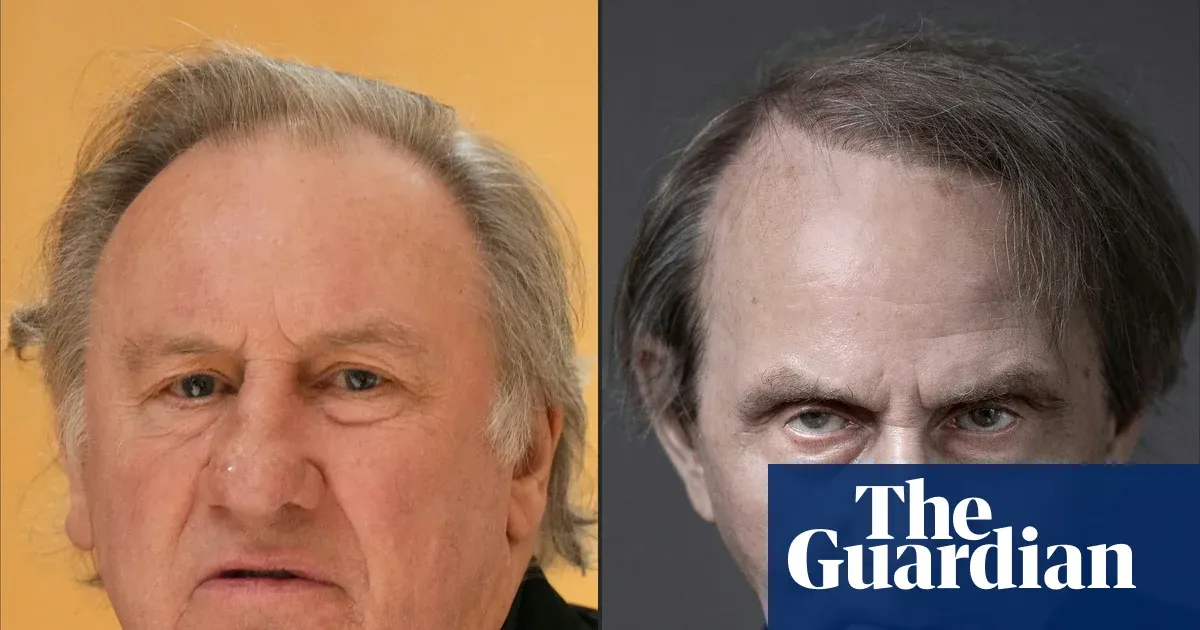
French police are investigating allegations that actor Gérard Depardieu and author Michel Houellebecq gang-raped and assaulted a woman during the December 2018 shoot of their film Thalasso. For producers, distributors and financiers, the case is a reminder that an investigation alone, long before any verdict, can freeze a project's commercial life and test the morality clauses in every talent contract.
French police are investigating allegations that Gérard Depardieu and Michel Houellebecq gang-raped and assaulted a woman during a film shoot in December 2018. The production was Thalasso, a film that stars the two men as versions of themselves: they meet at a health spa and spend the movie in white bathrobes, having long philosophical conversations. That is the premise, two famous men talking at length in a closed setting, and it is now the backdrop to a criminal inquiry. No charges have been announced, no findings have been made, and the investigation is reported to be ongoing.
Start with what is actually established, because the distance between an investigation and a conviction is where most coverage of cases like this goes wrong. French police are investigating allegations. That is the fact on the table, and it is a serious one. For context, in the French system a preliminary investigation typically precedes any decision by prosecutors on whether to bring charges, and such inquiries can run for months or considerably longer. Suspects are presumed innocent until convicted. The conduct described in the allegations is grave; so are the legal protections that surround anyone under investigation. Both things are true at once, and any honest reading of this story has to hold them together rather than pick the half that suits a headline.
Depardieu is one of the most recognized actors France has produced, a globally known name. Houellebecq is a novelist whose work is widely read and widely argued about inside France and well beyond it. What makes Thalasso unusual as a project is the pairing: it asks two men famous for being themselves, in public, to play versions of themselves on screen. Casting real-life notoriety as a narrative device is a business decision with a specific risk profile. That risk has now moved out of the marketing column and into the legal one, and it does not move back on its own.
For context, France's screen industry has, by many accounts, moved more slowly and more contentiously than its US and UK counterparts in confronting on-set conduct. That debate has repeatedly run into arguments about importing Anglo-American norms into a culture that prizes the separation of an artist's private life from the work. This case lands squarely inside that argument, and it lands on two of the country's most prominent cultural exports rather than on a mid-level production that could quietly disappear.
For the people who finance, insure and distribute films, the operative question is never guilt or innocence in the abstract. It is exposure. A star under investigation creates a live question for sales agents, distributors, streaming buyers and festival programmers, all of whom have to decide whether proximity to the story is worth the reputational cost. Insurers and completion guarantors typically price conduct risk into a production. Morality clauses in talent contracts typically allow a studio or producer to suspend or terminate a deal for behaviour that brings a project into disrepute, but those clauses are rarely tested quickly and almost never cleanly, because the behaviour in question is usually alleged rather than proven.
The harder problem is timing. Investigations of this kind can stretch across years before prosecutors decide whether to proceed. During that window nothing is resolved: a project is neither cancelled nor clear. Limbo is expensive. Marketing plans stall, co-production partners get nervous, backers ask for indemnities, and the reputational cost gets paid whether or not charges ever follow. Anyone who has watched a title get pulled from a platform over an allegation, then quietly restored, knows the pattern. The decision is rarely made on legal grounds. It is made on risk grounds, and it is made fast.
What to watch next is procedural, not dramatic. Whether prosecutors move from investigation to charges, and on what timeline. Whether the film's backers, current collaborators and future employers treat the inquiry as a reason to pause or a reason to wait. Whether the case becomes another data point in the industry's long argument about power on set, or a footnote that gets folded into a folder and forgotten. Those are the questions that will actually determine the commercial consequences, and none of them will be answered by the intensity of the coverage this week.
For executives in media and entertainment, the lesson here is structural rather than moral. Your exposure to a star's legal trouble is set long before the trouble arrives, in the contracts you sign, the on-set protocols you document, the insurers you retain and the partners you choose to stand next to. Presumption of innocence protects the individual. It does nothing at all to protect the balance sheet, the release schedule, or the board that has to explain either one.
This story's Key Insights and Take-aways are locked.
Create a free account to unlock Executive Actions for one credit.
Register to UnlockAlways free for Executives Club members. Join the Club
More in Entertainment

GTA 6 banks $3.8bn in one day, torching every launch record
One game just out-earned every video game launch and every single-day film box office haul in history, and the fallout lands on every media CEO's forecast.

GTA VI Racked Up $3.79 Billion in a Single Day, Topping Every Film Ever
A 13-year wait produced a $3.79 billion day, more than any movie has made in its entire run, and it resets the launch math for every studio, streamer, and brand chasing the same attention.

GTA 6 sells 32.5M pre-sales and $3.79B day one, torches 13-year record
Rockstar's sequel didn't just beat Grand Theft Auto V's 13-year-old benchmark; it reset what a launch can be, with 32.5 million pre-sale copies and $3.79 billion in a single day.