
DOJ and SEC accuse Napster investor Charles Cole of fake $3.36B cash claim
Authorities allege Charles Cole pledged $3.36 billion he never had to gain a roughly 25% stake.
Federal authorities and the SEC have brought parallel fraud cases against Charles Cole, a North Carolina man accused of conning Napster’s parent Infinite Reality. The alleged scheme involved a fake $3.36 billion cash pledge used to obtain 239 million shares, setting off a chain reaction from acquisition to regulatory fallout.
U.S. authorities say Charles Cole, a 57-year-old North Carolina man, obtained a massive ownership stake in Infinite Reality, and the alleged key to the deal was a claim of $3.36 billion in cash he never had. A DOJ indictment unsealed June 11 charges Cole with three criminal fraud and conspiracy counts, while the SEC filed parallel civil fraud claims the same day. The SEC complaint also names Cole’s attorney, Torben Welch, as a defendant.
The motive, according to federal regulators, was straightforward: Cole is accused of securing nearly 25% ownership by falsely pledging the cash and promising to invest more than $3 billion in the company. Over the course of 2024, authorities allege Cole obtained 239 million shares of Infinite Reality, roughly 25% of the total shares, by saying he had access to $55 billion in cash. In the aftermath of Infinite Reality’s later acquisition and rebranding of Napster, investigators say the money story collapsed under scrutiny because Cole allegedly “never gave a penny.”
So why does this matter beyond the headlines? For dealmakers, capital raises, and boards, ownership is not just math. It is leverage. A buyer or investor who appears flush with liquidity can accelerate decisions, reduce perceived risk, and shape how counterparties interpret timing and commitment. In this case, the alleged misrepresentation is tied to a specific stake: approximately a quarter of the company. That is large enough to affect governance, negotiation posture, and how other investors or shareholders evaluate whether funding is real, imminent, and enforceable.
According to the DOJ and SEC filings summarized by Billboard, Cole allegedly created a “fictitious paper trail” to make the cash claim look credible. The allegations include forged bank statements and a fake website, set up with offshore servers, designed to mirror a Malaysian bank’s real site. In other words, this was not just a vague promise. Authorities say it involved documents and infrastructure meant to withstand basic verification. Regulators then claim Cole used the fraudulently obtained shares to secure financing: the SEC complaint states that Cole, with Welch’s assistance, used the obtained shares to secure a $1 million loan from a private third-party lender that he never repaid.
Napster, meanwhile, is caught in the gravity of this capital story. Infinite Reality acquired Napster for $207 million in March 2025 and later rebranded, positioning Napster as something new. The article notes that Napster’s CEO reportedly told shareholders the investment was not going to come through, describing the company as the “victim of misconduct” and saying Napster was cooperating with law enforcement to “nail the fraudster.” That matters because it frames the company’s internal response: when the cash does not arrive, questions turn into investigations, and investigations turn into filings, and filings turn into scrutiny of counterparties and processes.
The SEC complaint and DOJ indictment also feed into a broader question executives now have to ask when they see big backers and big numbers: what is the cost of assuming the verification process works as intended? In the piece, a Forbes investigation is cited as having raised questions in the wake of the acquisition, including about the mysterious identity of Napster’s “$3 billion backer.” That sequence is important. It suggests a timeline where curiosity and doubt were present, but official charges still took shape through federal fraud mechanisms. For boards, that is a reminder that market skepticism can be early, but enforcement can be later and more structured.
A Napster spokesperson provided a limited statement to Billboard. The spokesperson said, “We have cooperated with law enforcement since the company initially reported it was the victim of misconduct. We are continuing to support this process. Questions about the proceedings should be directed to the U.S. Attorney for the Southern District of New York. We have no further comment on an active matter.” Cole and Welch could not immediately be reached for comment, per the report.
For executives at other music, tech, or media companies, the second-order implication is simple: capital narratives drive operating decisions, but regulators punish the reality gap. If a quarter-stake can be alleged to rest on fabricated documents and a fake website, then any “liquidity certainty” story in a term sheet deserves hard process. In a world where acquisitions, rebrands, and investor mystique move fast, the cost of being wrong is not just reputational. It can become ownership instability, financing disputes, and expensive compliance lessons. The Cole case is a high-stakes example of how a single alleged lie about cash can ripple all the way to an iconic music brand’s new chapter, and then straight into DOJ and SEC case files.
This story's Key Insights and Take-aways are locked.
Create a free account to unlock Executive Actions for one credit.
Register to UnlockAlways free for Executives Club members. Join the Club
More in Business
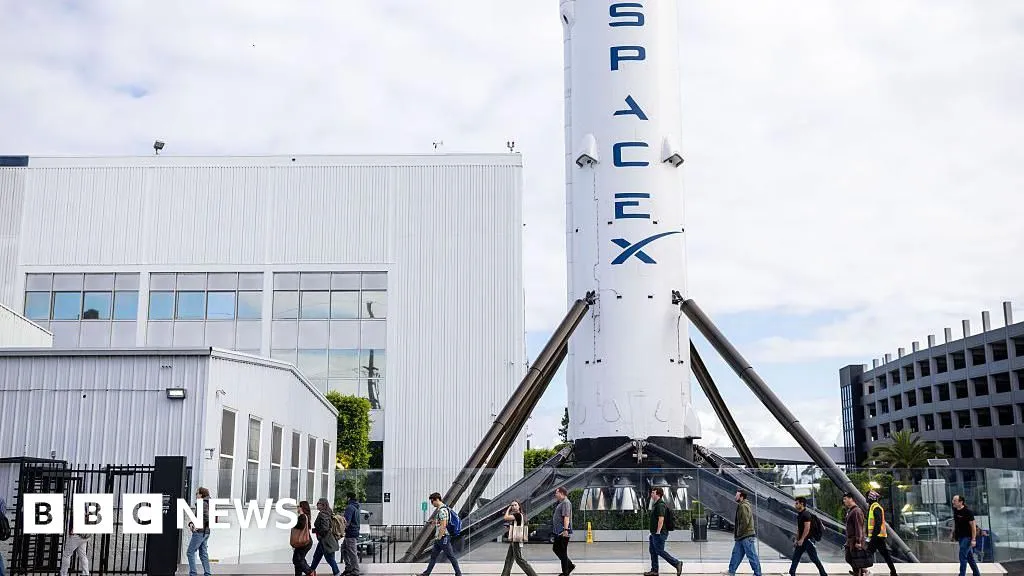
SpaceX raises $75bn in public sale, setting up Elon Musk’s record stock-market debut
A $75 billion public raise before a record listing turns SpaceX’s next chapter into a trillionaire test for markets.

SpaceX sets IPO at $135, selling 555M+ shares and launching trading Friday
Elon Musk's rocket company prices its world-scale IPO at $135 per share, moving into public markets immediately.

SpaceX prices IPO at $135 per share, starting the biggest listing ever
SpaceX moves from rumor to price point: $135 per share signals a new bar for private-market exits and public-market gravity.