
DOJ Says Moscow Sent a Russian to Tail Defense Tech Workers Over Ukraine
Igor D'iu was arrested Oct. 30 and accused of following employees of a major defense technology firm whose products Ukraine uses in the war, putting every company selling into conflict zones on notice.
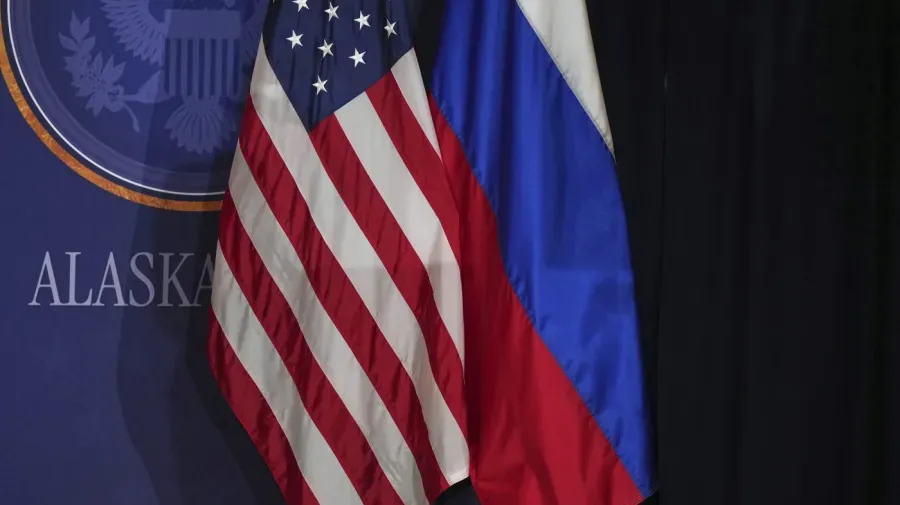
The Justice Department charged Russian national Igor D'iu with secretly working for Moscow to conduct illegal surveillance of employees at a major defense technology company, alleging he followed workers and tracked down their home addresses; he was arrested Oct. 30. For leaders of defense-tech and dual-use firms, the case converts employee safety, travel policy, and corporate counterintelligence from an IT line item into board-level risk.
The Justice Department announced Wednesday that federal prosecutors have charged a Russian national with secretly working for Moscow to conduct illegal surveillance of employees at a major defense technology company, a campaign allegedly driven by Ukraine's use of that company's technology in the war against Russia. The defendant, Igor D'iu, was arrested Oct. 30. The government's account says he followed workers and tracked down their home addresses, which is the kind of granular, on-the-ground surveillance that intelligence services typically reserve for people they want leverage over.
Notice what kind of case this is. The foreign-intelligence prosecutions that have grabbed headlines over the past decade have mostly been digital: hacked servers, phished credentials, stolen documents. This one alleges a man on the street, physically shadowing employees of a company whose products are in use on a battlefield. That distinction matters, because it means the threat surface for defense-tech firms now extends past the firewall and into the parking lot, the commute, and the home address. When a company's technology shows up in a war, its engineers become intelligence targets in a way that org charts rarely anticipate and security budgets rarely reflect.
For context on why a defense technology company attracts that attention: the war in Ukraine has made commercial technology strategically central in a way that older defense procurement cycles never were. Historically, militaries bought bespoke systems from a handful of prime contractors across decades-long programs. In Ukraine, smaller and faster-moving firms have supplied tools that reach the front lines in months, not years. That speed is the point. It also means a single company's product decisions can carry battlefield consequences, and that its workforce holds knowledge a foreign intelligence service might want. The same dynamic has pushed Western governments to tighten export controls and investment screening around dual-use technology, since a product that helps one side of a war is, by definition, a product the other side wants to understand. The source announcement does not name the company involved.
Home addresses are not trivia. For an intelligence service, knowing where an employee lives is raw material for a range of follow-on operations: intimidation, attempts to turn an employee into a source, phishing that lands with more credibility when it references a real street name, or pressure applied through family members. Following workers also maps internal patterns, such as who travels, who works late, and who meets whom. None of that requires breaching a network. It requires patience and a target list, which is exactly what makes physical surveillance so hard for a corporate security team to detect and so valuable to the agency running it.
The Justice Department's national security prosecutors have historically pursued Russian nationals on charges tied to sanctions, export controls, and foreign-agent activity, and many of those defendants never set foot in a US courtroom. This case differs in one important respect: D'iu was arrested. An arrest converts a paper indictment into a live criminal proceeding with discovery, detention fights, and potentially cooperation questions. It also gives prosecutors a chance to describe tradecraft in open court, which is itself a message to other intelligence services about what US investigators can see. The announcement, as released, includes no response from Moscow.
For peers sitting in the same seat as this company's leadership, the practical fallout runs across functions that rarely share a meeting. Physical security teams will reassess protection for executives and key engineers. HR and legal will weigh duty-of-care obligations for employees whose names and addresses may already be circulating. Travel policies for staff heading to high-risk regions, and even conference attendance, get re-examined. Insurance and disclosure teams may ask whether surveillance of employees is a material risk worth flagging. None of this stays hypothetical once a company's product is tied to a conflict: the firm becomes a participant, whether or not it wants the label.
What to watch next: how the case proceeds in court, whether prosecutors describe additional surveillance targets or a broader alleged operation, and whether the unnamed company confirms it is cooperating. The bigger signal is structural. As more venture-backed firms sell technology that ends up in active conflicts, the line between a fast-growing startup and a foreign-intelligence target keeps thinning. Companies that treat employee security as a cost center are the ones most likely to learn about the gap the hard way.
This story's Key Insights and Take-aways are locked.
Create a free account to unlock Executive Actions for one credit.
Register to UnlockAlways free for Executives Club members. Join the Club
More in Politics

Fifth Circuit Kills Pregnant Workers' Law Over Pandemic Proxy Votes
A procedural ruling, not a policy one, has blocked a federal pregnancy-accommodation law and put every pandemic-era statute in the crosshairs ahead of an expected Supreme Court appeal.

Measles kills a Virginia child under 5, the state's first death of 2026
Virginia's health department confirmed the death but withheld the child's vaccination status, leaving schools, clinics and employers to plan around the one detail that would explain the most.

Former Brazilian President Bolsonaro Hospitalized with Intestinal Obstruction
The health status of the former far-right leader raises immediate questions about political stability and the trajectory of Brazil's conservative movement.