

DonorPerfect pulled 11,000 nonprofits offline as AI bots hit its systems
Weeks before the year's biggest giving window, DonorPerfect's president chose a total shutdown over a breach, and GoFundMe Pro says donor data was already accessed.
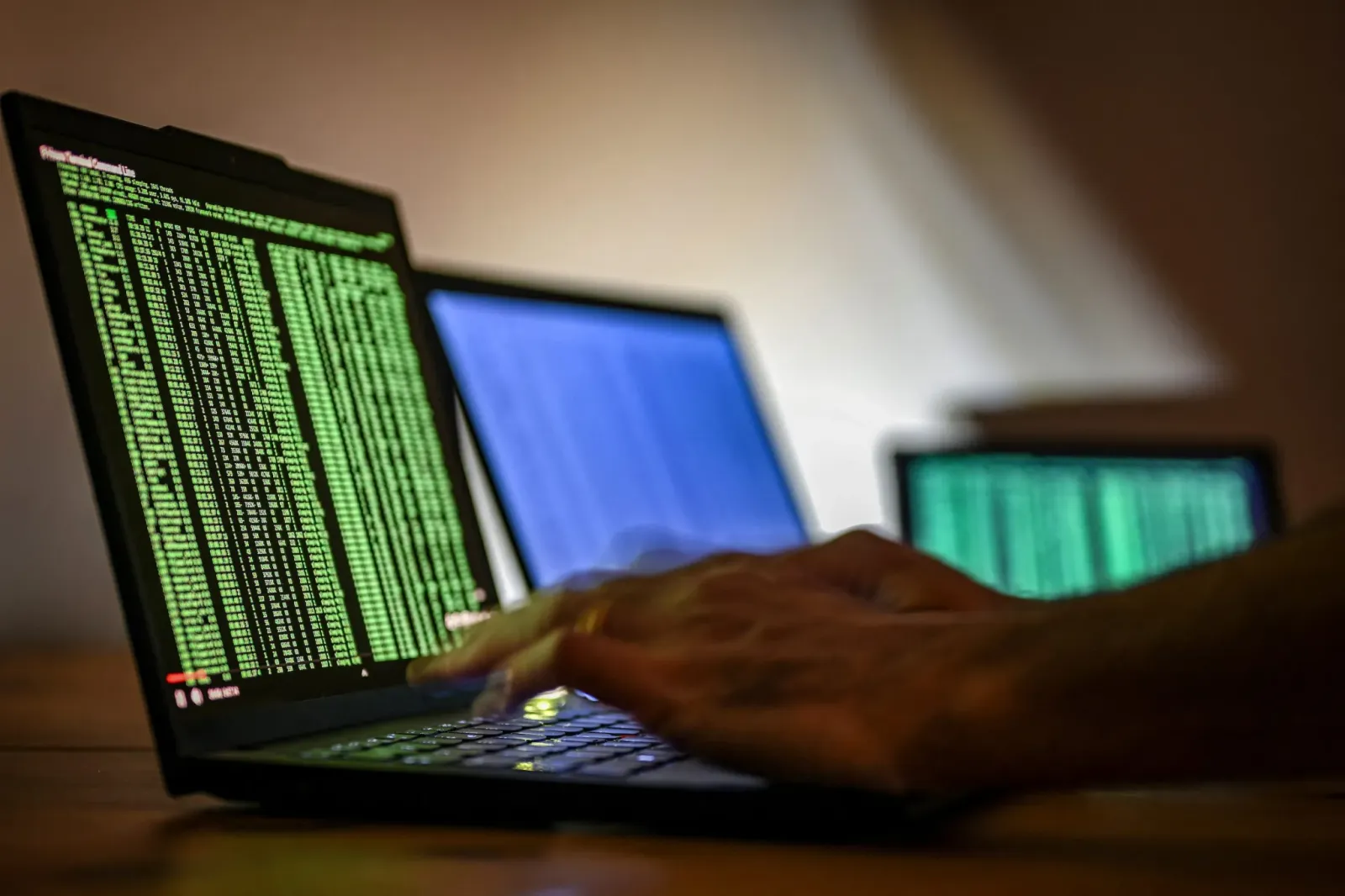
DonorPerfect president Lauren Sheehan took the nonprofit fundraising platform offline on Nov. 10, cutting off 11,000 customers after attacks she says used AI bots, while GoFundMe disclosed unauthorized access to donor data on GoFundMe Pro. For executives and boards, the twin incidents expose how concentrated vendor risk can freeze donor data and fundraising revenue weeks before Giving Tuesday.
On Nov. 10, Lauren Sheehan, president of DonorPerfect, made the call that every software CEO dreads and few make on purpose: she took the whole thing down. The fundraising software and CRM platform, which serves 11,000 nonprofit customers, went offline as attackers probed its systems. "It was just almost like we were in the Situation Room, and we're like, 'just take it down, so that we know that they can't get through,'" Sheehan told Fortune. DonorPerfect has confirmed unauthorized activity involving certain of its systems, engaged cybersecurity experts, and temporarily restricted access while it put protective measures in place. Sheehan told The NonProfit Times the company had "a lot of evidence" the attacks used AI bots, and that the initial access point was its own marketing website.
The timing could hardly be worse. Nonprofits received 37% of all 2025 online revenue in December, according to M+R's annual Benchmarks study, and Americans donated $4 billion on Giving Tuesday last year. Sheehan said many nonprofits raise 30% to 50% of their fundraising goals in the final two to three months of the year. "It's really difficult to tell your 11,000 customers that their system isn't available," she said. Customers largely understood the move was made out of an "abundance of caution," she added: "We wanted to take the systems offline until we were totally and completely confident that they were safe."
DonorPerfect is not the only target. GoFundMe said a security incident resulted in unauthorized access to GoFundMe Pro, the platform it sells to nonprofit customers. In an email to affected customers that the company shared with Fortune, GoFundMe said the accessed information included donors' and supporters' names, postal addresses, email addresses, phone numbers, and dates of birth. For some organizations, the attacker also accessed credentials for GoFundMe Pro's Salesforce integration and may have used them to reach those organizations' records in Salesforce. GoFundMe said it would begin notifying affected individuals on Nov. 19 and has reported the incident to law enforcement. "There is strong reason to believe that bad actors are making similar attempts to access other fundraising platforms serving the nonprofit sector," a GoFundMe Pro spokesperson said.
The attacks landed in a week of loud outages: Microsoft went down worldwide, the FAA grounded flights across the country, and Chase's systems were disrupted for hours. Homeland Security Secretary Markwayne Mullin said he could say "with 98% certainty, we're not seeing a cyber attack," and Microsoft, the FAA, and Chase each gave their own explanations. DonorPerfect's case is different because the company has confirmed unauthorized activity on its systems. "I think what sets companies apart is really how they respond," Sheehan said. "We just leaned into the radical transparency, and we're choosing transparency, caution, and long-term protection for our clients."
DonorPerfect is privately held, has 250 employees, and is in its 45th year. It proactively contacted The NonProfit Times to report its own attack, an unusual move in a sector where breaches are often disclosed quietly and late. Sheehan said the company has been emailing logs and monitoring details to competitors and partners that serve nonprofits, and offered to coordinate with them on the PR side. "Normally, I'm not communicating with our competitors in this way," she said. "The health of the industry is more important than any individual company."
DonorPerfect and its online donation forms are back online. A few services remain down, including the API used for some partner integrations. Donations made through partners like GoFundMe are still being processed safely, Sheehan said, but that data is not automatically passing into DonorPerfect, so customers have to import and export it by hand. A third-party forensic firm is still investigating, and Sheehan said she cannot answer many questions until it finishes. "There really is a tension, a significant tension between doing it fast and doing it right," she said. "And we need to get this right." DonorPerfect contacted the FBI, according to the Chronicle of Philanthropy. The FBI declined to tell Fortune whether it is investigating either attack, saying only that it "may engage with the affected organization" when an incident potentially involves violations of federal law.
The deeper risk is donor trust, which nonprofits already have to earn every cycle. "Donors are ready to trust nonprofits, but they want to see the receipts more," Steve Isom, chief operating and financial officer of nonprofit software company Bloomerang, previously told Fortune. A Bloomerang report shows 85% of active donors trust the organizations they donate to to use funds effectively, but that trust takes time to build and scam activity can erode it. A breach that exposes names, addresses, phone numbers, and birth dates hands attackers exactly the raw material for convincing phishing and impersonation, aimed at people who are already in a giving mood.
For every company selling into the nonprofit sector, the lesson is uncomfortable: the attack surface is your marketing site, the weapon is automated, and the cost of caution is measured in fundraising weeks you cannot get back. "Somebody's deploying these bots," Sheehan said. "If it was a human threat actor, they would move on to something else. But this isn't going to necessarily. So this might just be our new reality." She also warned that no vendor is exempt: "There's no technology provider that is immune to these type of disruptions, and the cybersecurity threats are evolving at a rapid pace." Boards that treat vendor security as an IT line item should expect harder questions this giving season, starting with who else in the stack holds donor data, and what happens to the money if that vendor goes dark in December.
This story's Key Insights and Take-aways are locked.
Create a free account to unlock Executive Actions for one credit.
Register to UnlockAlways free for Executives Club members. Join the Club
More in Technology

Anthropic mathematician claims Claude helped crack the Riemann hypothesis
If the proof holds, AI has toppled math's most famous open problem; if it does not, it is a case study in announcing breakthroughs before anyone verifies them.

AI's $4 Trillion Wipeout Erases Nasdaq's Gains for the Year
A brutal week took roughly $4 trillion off the AI sector and left the Nasdaq flat for the year, and the damage ran the full length of the supply chain.

Anthropic mathematician says AI proved the Riemann hypothesis. Verification will take time.
A single unverified claim from inside Anthropic now sits against more than 160 years of open mathematics, and the gap between asserting a proof and surviving peer review is the entire story.