
Dustin Moskovitz's Anthropic Win Is Paying Off. The IPO Is What Worries Him.
The Facebook co-founder's early Anthropic check is paying off, but the New York Times reports the looming IPO leaves him uneasy, and that discomfort is a warning for anyone holding illiquid AI equity.
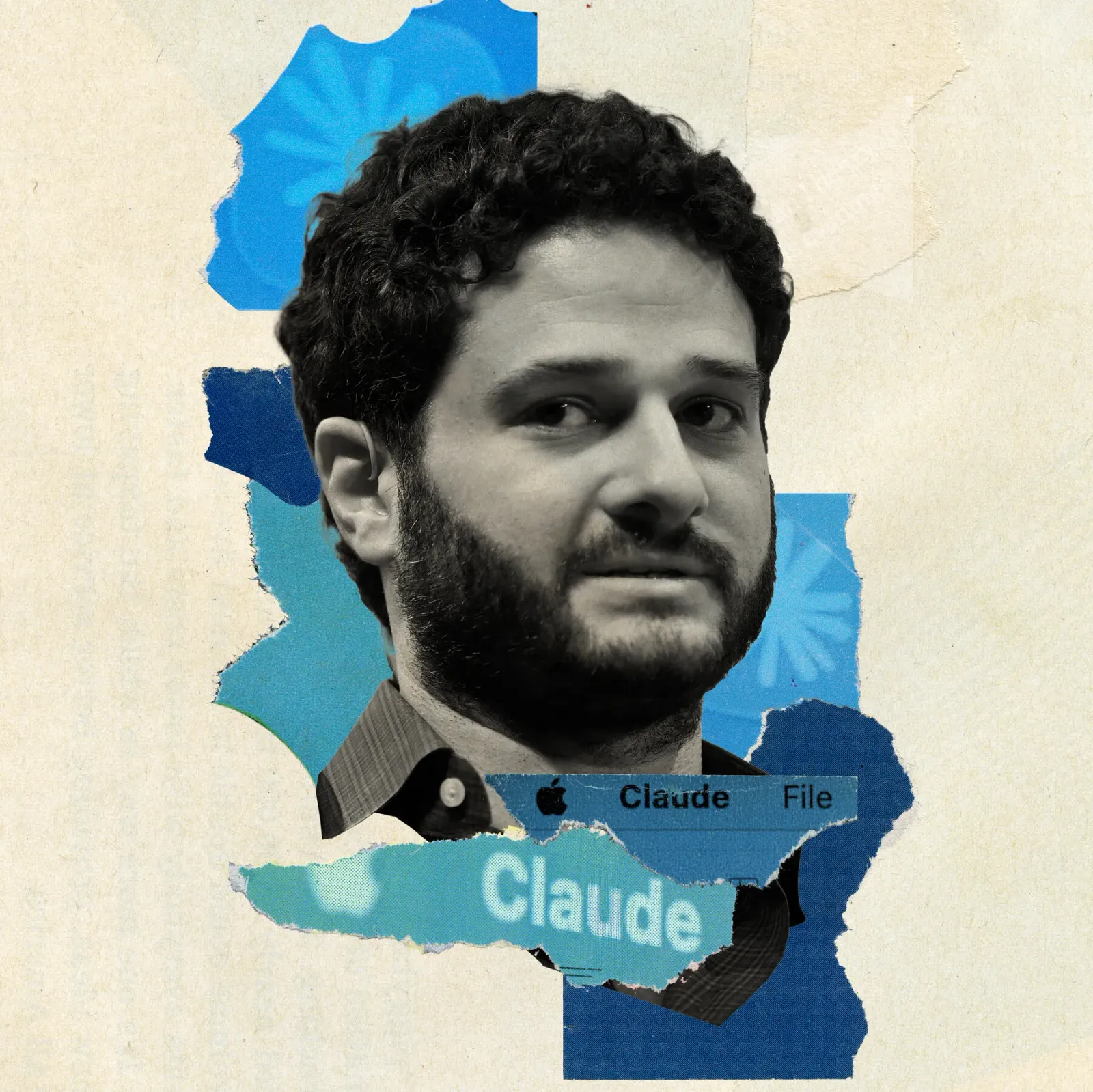
Facebook co-founder and Asana CEO Dustin Moskovitz, an early Anthropic investor, is sitting on a winning stake that For executives and boards holding illiquid AI equity, his discomfort is an early signal that governance terms, not valuation, will decide what a listing is actually worth.
Dustin Moskovitz made an early bet on Anthropic, and that bet is working. The Facebook co-founder's stake in the AI lab has paid off, the kind of paper gain most investors would frame and hang on the wall. According to the New York Times, it is not making him happy.
The wrinkle is the IPO. The Times frames Moskovitz's discomfort around Anthropic's move toward public markets, and the tension is easy to see once you name it. A private stake in a frontier AI lab is a bet on a mission. A public stake is a bet on a quarterly number, and those two things do not always point in the same direction. That gap is the whole story, and it is about to become a live question for a lot of people holding the same kind of paper.
Moskovitz is not a tourist in this debate. He co-founded Facebook in 2004 alongside Mark Zuckerberg, later founded the workplace software company Asana, where he is chief executive, and with his wife Cari Tuna runs Good Ventures. Through Good Ventures and the grantmaking outfit Open Philanthropy, he has for years directed money toward research on keeping advanced AI systems safe. That history matters here. When someone with that portfolio says a windfall leaves him uneasy, the unease is not a complaint about returns. It is a statement about what returns can do to the thing you were trying to protect.
Anthropic itself was built to hold exactly this tension. Founded in 2021 by former OpenAI executives Dario and Daniela Amodei, the company makes the Claude family of models and has raised billions, with Amazon and Google among its largest backers. It is also structured as a public benefit corporation and governed in part through a Long-Term Benefit Trust, an arrangement designed to keep mission considerations in the room even as commercial pressure mounts. Historically, that kind of architecture is what lets a safety-focused lab take outside capital without handing over the steering wheel. It is also, by design, the thing that gets hardest to defend the moment there is a ticker symbol.
An IPO changes the physics. Listing means new shareholders, a quarterly earnings cadence, disclosure obligations, and a stock price that reacts in real time to every product launch and every safety incident. For a lab whose pitch to enterprise customers and regulators rests on being the careful one, going public raises a question no prospectus can fully answer: who wins when the growth number and the safety commitment collide? The trust structure is the test case. If it holds through a listing, it becomes a template other AI labs can copy. If it bends, the market learns something considerably less comfortable.
The second-order effects run through the entire cap table. Early employees and investors holding illiquid equity get a path to cash, which is good for retention and recruiting until it is not, because liquidity also makes it easier for key researchers to walk across the street. Rivals are watching the same playbook. OpenAI has been wrestling with its own corporate structure, Google DeepMind already sits inside a public company, and xAI and Meta are spending heavily to stay in the frontier race. Frontier training is brutally capital intensive, and public markets remain one of the few pools deep enough to fund it at that scale. That is the pull. The question is what the push costs.
For executives and boards, the Moskovitz story is a preview of a question heading for a lot of balance sheets. If you hold illiquid equity in a private AI company, the IPO you have been waiting for may arrive with strings attached, and the diligence that matters is not the headline valuation. It is the governance: what the trust can veto, what the founders still control, and which commitments survive contact with a quarterly call. Founders who raised on mission language should assume that language gets read aloud, in public, by someone with a different incentive.
What to watch next is narrow and specific. Whether Anthropic moves toward a listing at all, and on what timeline, is the first data point. The second is whether the Long-Term Benefit Trust's authority is spelled out in any public filing, because that is where mission language either becomes enforceable or becomes marketing. The third is what Moskovitz himself does with his position, since an early investor with a public platform and a safety agenda has options a passive shareholder does not. The money is real. The open question is what the money does to the mission on the way out the door.
This story's Key Insights and Take-aways are locked.
Create a free account to unlock Executive Actions for one credit.
Register to UnlockAlways free for Executives Club members. Join the Club
More in Business

S&P 500 Enters Correction, Down 10% From Its High on AI Worries
The index's slide past the 10 percent line is a symbolic verdict on investor mood, and the AI trade that powered the rally is now the thing testing it.

Dow and S&P 500 enter correction as Nasdaq logs worst week since 2020
All 11 S&P 500 sectors fell more than 1% in the same week for the first time since April 2025, a breadth signal that matters more than any single index level.

Chip stocks lose $2.3 trillion in a week, worst run in 25 years
A $2.3 trillion weekly wipeout in semiconductors is forcing every board with an AI story to ask whether it owns a thesis or just a crowded trade.