
Dutch privacy watchdog tells consumers: don't buy AI smart glasses
A national regulator has put its name behind a consumer boycott of camera-equipped eyewear, a warning that lands before any fine, recall, or ban.
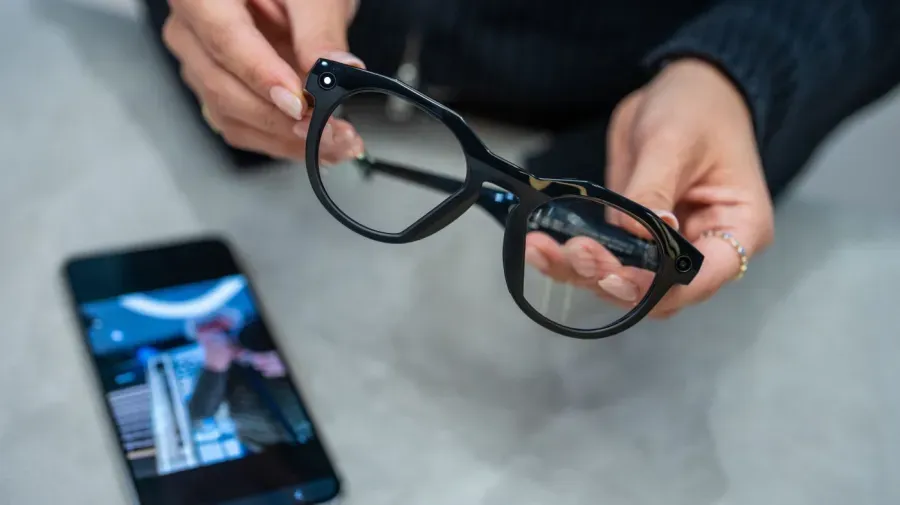
A Dutch privacy watchdog is warning consumers against buying AI-powered smart glasses, putting a national regulator on record against a fast-growing consumer hardware category. For executives, the advisory shows how privacy authorities can slow adoption of any product that records people who never opted in, without issuing a single fine.
A Dutch privacy watchdog is telling consumers, in plain terms, not to buy AI-powered smart glasses. That is the whole of the warning as reported, and it is a bigger deal than it sounds. Regulators issue guidance, open investigations, and levy fines. They rarely tell shoppers to walk away from an entire product category. When one does, it signals that the regulator believes the risk cannot be fixed with a settings toggle or a longer terms-of-service document, and that the person most exposed is the one standing in front of the lens, not the one wearing it.
The distinction matters because AI-powered smart glasses are one of the more visible bets in consumer hardware right now, with camera-equipped frames pitched as the next everyday computing surface. The Dutch warning lands squarely on the buyer's side of that trade. It does not ban the devices, and the source describes no fines, no recalls, and no formal enforcement action. It is a consumer advisory: a national privacy authority attaching its name to the position that the privacy cost of wearing a camera and a microphone on your face is not worth the utility.
The category's core feature is also its core problem. A camera and a microphone sit at eye level, paired with AI that can identify, transcribe, translate, or summarize what it sees and hears. In practice, that means a wearer can capture a conversation, a face, a screen, or a room without anyone around them knowing. The data often does not stay on the device. It typically routes to a cloud account for processing and storage, which drops it into a company's data pipeline and, in Europe, into the scope of the General Data Protection Regulation.
That regulatory architecture is what gives the Dutch warning its weight. Europe's privacy rules give national authorities the power to investigate companies and impose penalties that can run into the tens of millions of euros or a percentage of global annual revenue, whichever is higher. The warning is notable precisely because it comes from inside that enforcement system, where an advisory can escalate into an investigation, and an investigation into a fine. A regulator does not have to spend a euro in court to change buyer behavior. It only has to say the words out loud.
For the companies building this category, the timing is awkward. Consumer hardware lives and dies on adoption, and adoption depends on people feeling comfortable wearing the thing in public. A regulator telling shoppers to skip it does two things at once: it hands hesitant buyers a reason to wait, and it hands every other privacy authority in Europe a template to copy. Retailers, carriers, and enterprise buyers weighing pilots now have a documented reason to slow down, and procurement teams hate being first to sign when a regulator has already raised a flag.
The deeper issue is the bystander. Every other consumer camera, from a phone to a doorbell, is visible in the moment it is used. Glasses are not. The people being recorded carry the risk, and they never agreed to anything. That asymmetry is exactly the kind of thing privacy regulators exist to police, and it explains why the warning targets buyers rather than sellers: the regulator is trying to stop a market norm from forming that would be very hard to reverse later. Once recording in public feels normal, the consent conversation is effectively over.
Watch three things from here. First, whether the advisory hardens into formal guidance or enforcement, which would raise the cost of selling these devices in the Netherlands and possibly well beyond it. Second, whether other European authorities echo the position, since privacy enforcement in the bloc has a habit of moving in packs once one regulator stakes out ground. Third, whether device makers answer the objection directly with design: on-device processing instead of cloud uploads, obvious recording indicators, and defaults that treat consent as the starting point rather than an afterthought.
For executives, the lesson is broader than eyewear. Any product that collects data about people who did not choose to use it now sits in the regulatory crosshairs, and the first sign of trouble is often not a fine. It is a regulator telling the public to stay away. That move is cheap for the regulator and expensive for the brand, and it tends to surface in a board deck long before it surfaces in a financial statement.
This story's Key Insights and Take-aways are locked.
Create a free account to unlock Executive Actions for one credit.
Register to UnlockAlways free for Executives Club members. Join the Club
More in Politics

Fifth Circuit Kills Pregnant Workers' Law Over Pandemic Proxy Votes
A procedural ruling, not a policy one, has blocked a federal pregnancy-accommodation law and put every pandemic-era statute in the crosshairs ahead of an expected Supreme Court appeal.

Measles kills a Virginia child under 5, the state's first death of 2026
Virginia's health department confirmed the death but withheld the child's vaccination status, leaving schools, clinics and employers to plan around the one detail that would explain the most.

Former Brazilian President Bolsonaro Hospitalized with Intestinal Obstruction
The health status of the former far-right leader raises immediate questions about political stability and the trajectory of Brazil's conservative movement.