

ECB Sees Dotcom Echo in $4 Trillion Off-Books AI Debt
The ECB's Financial Stability Review finds more than $4 trillion in AI commitments that act like debt but stay off big tech's balance sheets, and says the borrowing shift echoes the dotcom and subprime eras.
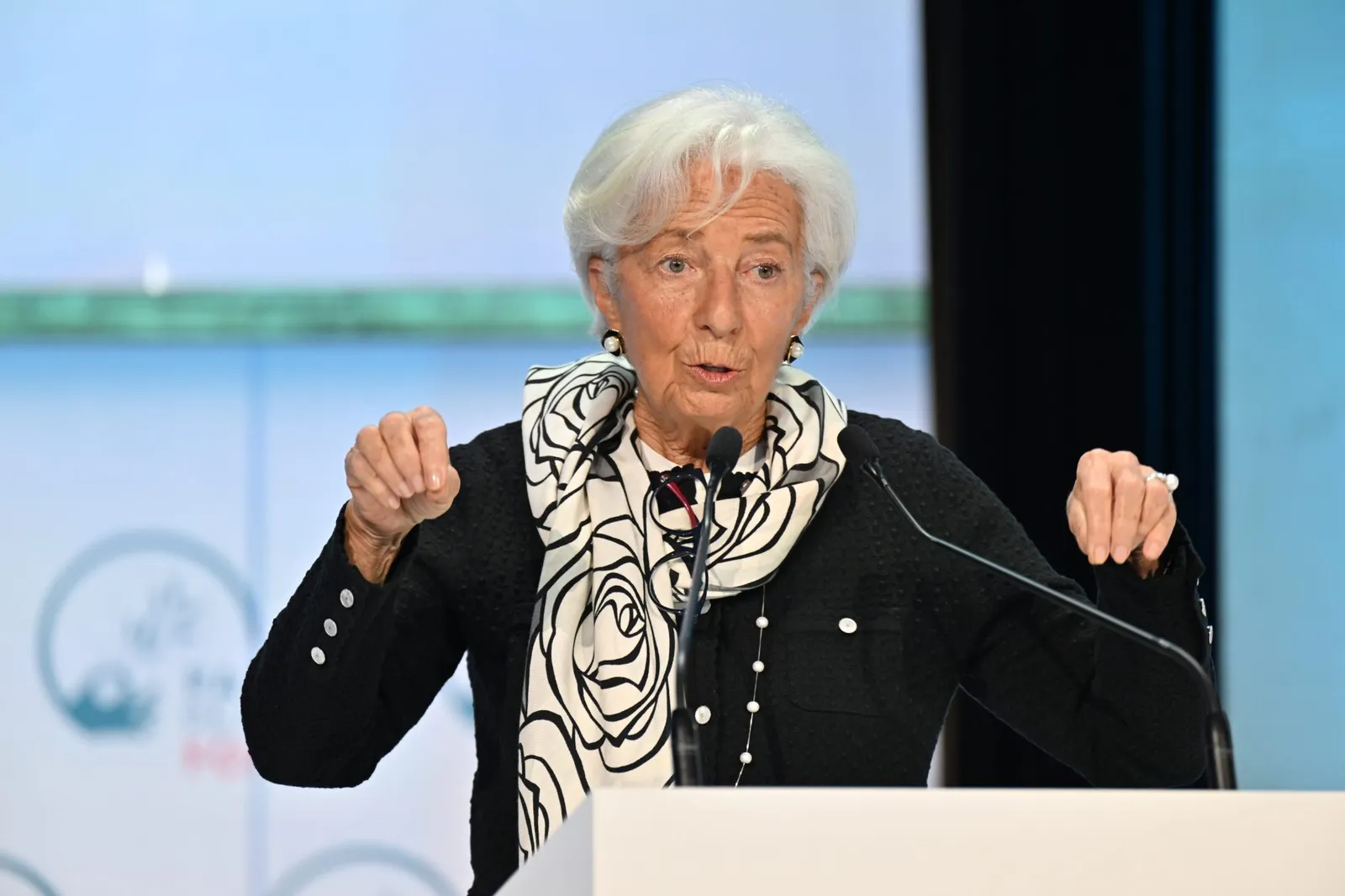
ECB Vice-President Boris Vujčić and the central bank's Financial Stability Review estimate more than $4 trillion in off-balance-sheet AI commitments at Alphabet, Amazon, Meta, Microsoft, Nvidia, Oracle, Broadcom and Anthropic. The ECB warns that the rapid shift toward debt finance echoes the dotcom and subprime bubbles, so executives and boards must show AI earnings can carry debt-like obligations that do not appear as liabilities.
The European Central Bank has put a number on the AI boom's hidden plumbing: more than USD 4 trillion. In its twice-yearly Financial Stability Review, the ECB estimated that big tech firms carried 'total off-balance-sheet commitments of more than USD 4 trillion as of the second quarter of 2026,' a figure it said was 'well in excess of their outstanding on-balance-sheet liabilities.' The sample covers Alphabet, Amazon, Meta, Microsoft, Nvidia, Oracle, Broadcom and Anthropic. That is not a rounding error or a fringe accounting quirk. It is a parallel balance sheet sitting beside the one investors see, and it is the raw material for the central bank's warning.
The warning is direct. 'The rapid shift towards debt finance invokes historical parallels with the dotcom and subprime bubbles,' the ECB wrote. The timing matters: the ECB's count lands a day after the Federal Reserve's own November Financial Stability Report, which counted more than $3 trillion in signed leases that haven't started yet, take-or-pay contracts and residual value guarantees at seven big tech companies, none of it showing up as debt. The two tallies cover different companies and use different methods, so they are not additive. But they point in the same direction. The AI buildout is increasingly financed by obligations that behave like debt while sitting outside the debt line.
The ECB's box on debt financing of AI, written by six ECB authors, reads like a checklist from 2008. It lists obligations that work like debt but are not booked as debt, revenue that loops back to whoever paid for it, credit ratings the bond market may not believe, loans that outlast what they paid for, and leverage building outside the banks. The Financial Crisis Inquiry Commission concluded that 'a combination of excessive borrowing, risky investments, and lack of transparency put the financial system on a collision course with crisis.' The ECB does not claim the same crisis is underway. It claims the structure rhymes.
Start with the off-the-books problem. Then: in December 2007, Citigroup said it would take $49 billion of assets from its structured investment vehicles onto its balance sheet to prevent ratings downgrades and fire sales. The vehicles had been built to sit off its books. Now: hyperscalers sign contracts to use data centers and chips owned by someone else. The owners then borrow against those promised payments from 'banks, bond investors or private credit funds.' The ECB wrote that 'such cash flow commitments are debt-like in economic terms, but they do not appear as liabilities on the balance sheets of hyperscalers under US accounting standards.' Under U.S. lease rules, a lease is not booked until the asset goes into use. Meta's $27 billion Hyperion data center in Louisiana is the illustration. It was built through a joint venture in which Blue Owl Capital owned 80%, keeping the full debt off Meta's balance sheet. The bonds were rated A+ and yielded 6.58%. The ECB's downside case is the Citi moment in slow motion: if earnings disappoint, 'the full debt incurred for the AI buildout would gradually be recognised on balance sheets,' and leverage and ratings would worsen.
Then there is the demand loop. Cloud providers and AI labs buy and lease chips from chipmakers, which often finance the purchases. The ECB says those deals 'inflate the expected revenues of both the chipmaker and the service provider, because the reported demand of an involved firm is partly driven by that firm's own financing decisions.' The loop shows up in earnings, too. A footnote says 'other income' at Alphabet and Amazon comes from revaluing their stakes in Anthropic, and it notes Nvidia's stakes in CoreWeave, OpenAI and Anthropic. In the review's foreword, ECB Vice-President Boris Vujčić wrote that 'circular financing is making intrinsic demand hard to gauge.'
Ratings are the next pressure point. The ECB is measured, not apocalyptic. It says spreads on hyperscaler bonds have widened compared with corporate bonds carrying the same ratings, especially at longer maturities, which 'could be an indication that markets currently view rating agencies' risk assessments as too benign.' Elsewhere the review notes credit default swap spreads for a number of big tech firms climbing 'to record levels.' Then comes the maturity mismatch. 'The maturity of hyperscalers' outstanding debt exceeds the economic lifetimes of a substantial share of the physical capital funded by this debt, especially in the form of advanced chips,' the ECB authors wrote. The ECB cites market intelligence that AI equipment lasts one to three years. The IMF puts GPUs at about two years, against seven for standard equipment. Most hyperscalers have stretched the accounting life of their servers from three years in 2020 to six years in 2026.
Finally, leverage is moving outside the banks. The ECB says euro area non-banks, meaning funds and other investors, have increased their AI exposures significantly and have started buying debt issued by AI firms. It points to 'the near collapse of Situational Awareness, a US hedge fund, in July 2026' as an example of concentration meeting leverage. The ECB also lists what does not match yet. 'So far, however, hyperscalers' earnings have broadly kept up with expectations,' the authors wrote. Vujčić wrote that even if banks are not exposed to an AI correction 'in material terms,' they 'could face spillovers via strong links with non-banks.' The ECB separates the two bubbles it names. The dotcom bust brought 'only a shallow recession thanks to a large share of equity finance.' In a footnote, it says 'credit booms that turned into a bust were associated with a significant and prolonged contraction in real GDP,' and that a U.S. shock 'would likely result in a significant contraction in euro area GDP as well.' The authors wrote that 'the rapid acceleration of debt financing raises concerns that the AI buildout might become debt-driven and unsustainable.'
The detail that ties the story together is that the ECB needed AI to count the AI debt. A chart note says ECB staff extracted the off-balance-sheet figures from SEC filings with 'an agentic AI model developed by ECB staff,' running on OpenAI's ChatGPT 5.6-Sol. Staff trained it to match totals they had compiled by hand for the first quarter, then checked its output manually. Anthropic's figures come from its IPO filing. On the ECB's tracker, earnings are the one item still holding up, and every other item depends on them. The central bank's next check comes in May, if it keeps to this year's schedule.
This story's Key Insights and Take-aways are locked.
Create a free account to unlock Executive Actions for one credit.
Register to UnlockAlways free for Executives Club members. Join the Club
More in Business

S&P 500 Enters Correction, Down 10% From Its High on AI Worries
The index's slide past the 10 percent line is a symbolic verdict on investor mood, and the AI trade that powered the rally is now the thing testing it.

Dow and S&P 500 enter correction as Nasdaq logs worst week since 2020
All 11 S&P 500 sectors fell more than 1% in the same week for the first time since April 2025, a breadth signal that matters more than any single index level.

Chip stocks lose $2.3 trillion in a week, worst run in 25 years
A $2.3 trillion weekly wipeout in semiconductors is forcing every board with an AI story to ask whether it owns a thesis or just a crowded trade.