
Ellison calls Musk's $1B 'an honor' as Skydance carries $80B in debt
Skydance's CEO used his first public comments on Musk's reported investment to crown him the greatest entrepreneur of our time, while confirming HBO's unflattering Musk documentary still airs and CNN and CBS stay separate.
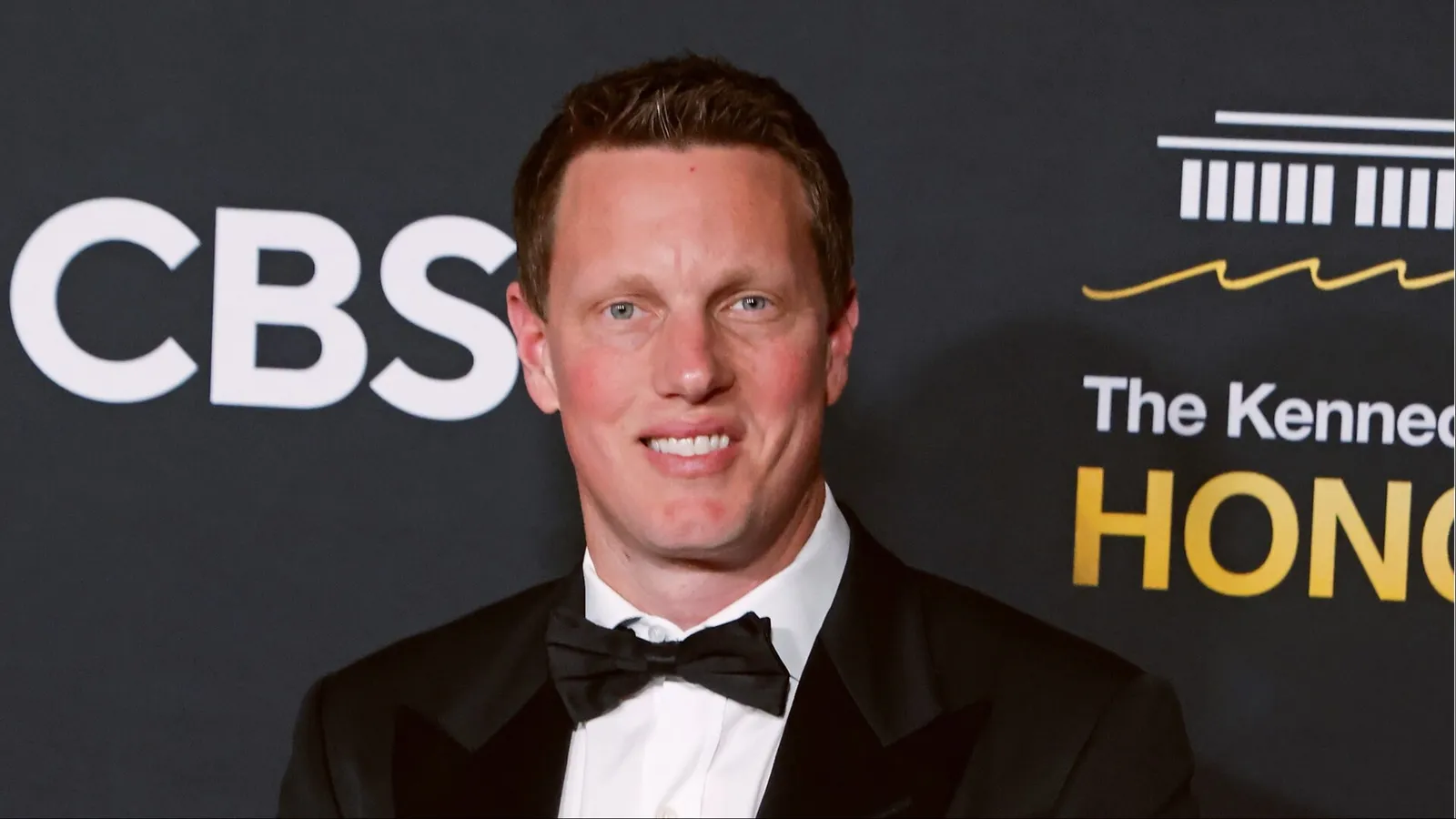
Skydance chairman and CEO David Ellison publicly addressed Elon Musk's reported roughly $1 billion investment in Skydance for the first time at The New York Times' 2026 DealBook Summit, calling Musk "the greatest entrepreneur of our time" and his shareholder status "an honor and a privilege." The praise lands as Skydance absorbs a reported $80 billion debt load and reshuffles its streaming, television, and news leadership, giving media and tech executives a live case study in how narrative capital gets deployed against balance-sheet math.
David Ellison did not hedge. Asked Wednesday at The New York Times' 2026 DealBook Summit about Elon Musk's reported investment in Skydance, the chairman and CEO called Musk "the greatest entrepreneur of our time" and said having him as a shareholder is "an honor and a privilege." It was the first time Ellison publicly addressed Musk's reported roughly $1 billion stake in Skydance, which followed the Warner Bros. Discovery and Paramount Skydance merger. He did not confirm the amount. He did not need to. The quote did the work.
The number that matters more sits on the other side of the ledger. Skydance is carrying a reported $80 billion in debt, and $1 billion does not move that needle. For scale: Forbes puts Musk's net worth at $915 billion, so the check is a rounding error for him and a rounding error for the balance sheet he just bought into. What Ellison bought with the appearance is something else entirely, a public signal that the world's richest person looked at the combined Paramount-Skydance-Warner Bros. asset and decided to write a check. "He doesn't invest in a lot of companies," Ellison said, framing the money as a "vote of confidence." That framing is the product. The capital is the footnote.
Skydance is not standing still while it waits for that confidence to compound. Over the past couple of weeks the company has reshuffled its top ranks and its cost base. HBO's Casey Bloys was appointed to run Paramount and Warner Bros. streaming operations, consolidating two streaming organizations under one executive. Former Mattel executive Ynon Kreiz was named Skydance co-CEO alongside Ellison. And Variety reported Wednesday that Skydance will combine Warner Bros. Television Group and Paramount Television Studios, folding two television production arms into one. Each move points the same direction: fewer duplicative structures, one P&L where there used to be two.
The open question is what Musk's shareholder status actually buys him. Ellison has not confirmed the investment, and it is unknown whether the stake comes with any role in decision-making at Skydance. As a shareholder, he should not carry the sway that, say, Amazon MGM Studios owner Jeff Bezos apparently had in the casting of Robert Pattinson as James Bond. That comparison is the useful one for anyone modeling influence in Hollywood: owning a studio buys a different kind of leverage than holding a minority position in a parent company. Musk's $1 billion, if that is the figure, is a seat in the room. It is not the gavel.
Ellison spent part of the interview drawing lines around what the money does not buy. Alex Gibney's four-hour documentary "Musk," which paints an unflattering picture of its subject, will still air on HBO. "We believe in independence," Ellison said. "We don't believe in censorship of any kind." He also said he has no plans to merge CNN and CBS News, telling the room, "We're happy operating them as they are," and tying the decision to a belief in bipartisan coverage. For a company absorbing two newsrooms and a streaming business, those two sentences are the editorial policy. They are also a preemptive answer to the question every journalist in the building was about to ask.
When The New York Times' Aaron Ross Sorkin asked whether a collaboration with Musk was "on offer, in the plan," Ellison left the door wide open: "if there was the appropriate opportunity in the future, we'd be thrilled to do so." Musk was set to speak at the summit later in the day, which means the other half of this story may still be in the room. Ellison's phrasing matters because it converts a passive investment into an option. Nothing is promised. Everything is possible. That is exactly how you talk about a billionaire shareholder you want to keep.
Zoom out and the pattern is familiar to anyone who has run a company through a leveraged merger. You inherit a debt load that dictates your calendar, you cut overlapping cost centers, you promote operators who can run combined units, and you recruit a marquee name to the cap table so the market reads validation instead of risk. The $80 billion figure is the constraint. The $1 billion is the story. For peers in media, tech, and any capital-intensive business watching this play out, the lesson is that balance-sheet math and narrative math are separate exercises, and the best operators run both at once. Ellison just showed the sequence: praise the investor, protect the newsroom, consolidate the studios, and never confirm the number.
This story's Key Insights and Take-aways are locked.
Create a free account to unlock Executive Actions for one credit.
Register to UnlockAlways free for Executives Club members. Join the Club
More in Business

S&P 500 Enters Correction, Down 10% From Its High on AI Worries
The index's slide past the 10 percent line is a symbolic verdict on investor mood, and the AI trade that powered the rally is now the thing testing it.

Dow and S&P 500 enter correction as Nasdaq logs worst week since 2020
All 11 S&P 500 sectors fell more than 1% in the same week for the first time since April 2025, a breadth signal that matters more than any single index level.

Chip stocks lose $2.3 trillion in a week, worst run in 25 years
A $2.3 trillion weekly wipeout in semiconductors is forcing every board with an AI story to ask whether it owns a thesis or just a crowded trade.