
Ellison Confirms Musk's $1 Billion Skydance Stake: 'An Honor'
The world's richest person now owns a slice of the Paramount-Warner Bros. Discovery combination, handing a newly merged studio a shareholder with a megaphone, a satellite network, and an AI lab.
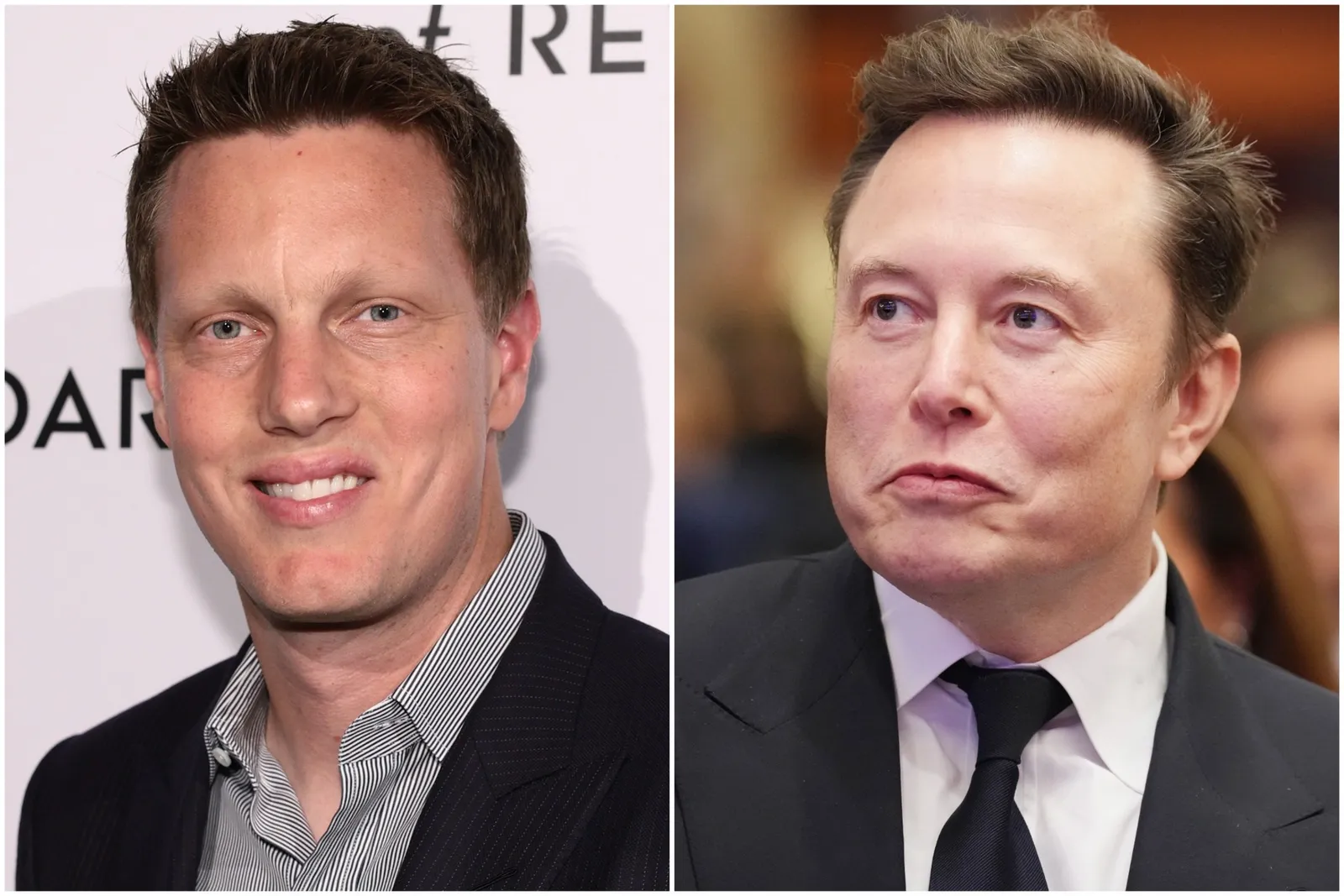
David Ellison, chairman and CEO of Skydance, confirmed that Elon Musk has invested in the company formed through the merger of Paramount and Warner Bros. Discovery, with CNBC and Semafor having reported the stake at roughly $1 billion post-merger. For media and tech leaders, the deal signals that the next round of studio capital may come from operators with distribution and AI assets attached, not just private equity.
David Ellison, chairman and CEO of Skydance, confirmed Wednesday that Elon Musk is a shareholder in his company, the entity formed through the merger of Paramount and Warner Bros. Discovery. The check is not a vanity line item: CNBC and Semafor reported last month that Musk, the world's richest person, invested about $1 billion in Skydance after the merger closed. Ellison, speaking at a New York Times 2026 event, put it simply: "To have him as a shareholder is an honor."
That is the whole of the confirmed detail, and it is worth being precise about what we do not yet know. Neither the reports nor Ellison's public remarks spelled out the share class, the valuation the stake was struck at, or whether the investment carries a board seat. What we do know is the shape of the thing: a nine-figure, post-close commitment from the wealthiest individual on the planet into a studio that has just finished absorbing two of Hollywood's most storied libraries. For a merged entity still proving to the market that the combination works, roughly $1 billion is not a rounding error. It is oxygen.
Why Musk specifically, and why now, is the question everyone in the room was really asking. He is not a passive media investor in the traditional mold. He controls X, the social platform that doubles as the industry's real-time scoreboard, and xAI, one of the labs competing hardest for compute and content. He runs Tesla and SpaceX, which means satellites, bandwidth, and a direct-to-consumer hardware footprint that most studios can only rent. Whether any of that gets wired into Skydance is unconfirmed, and no one involved has described a strategic partnership. But capital rarely arrives this clean. When the investor also owns distribution, an AI lab, and the loudest account on the internet, the interesting question is not the check. It is what the check is attached to.
The backdrop matters. The Paramount and Warner Bros. Discovery combination is a shrinking-to-scale move, the kind of deal studios reach for when streaming economics punish subscale players and content spend keeps climbing. Mergers of this size historically draw close regulatory attention, and the arithmetic is unforgiving: combine the libraries, cut the overlap, then convince Wall Street the whole is worth more than the parts. Fresh equity from a high-profile investor helps on all three fronts. It strengthens the balance sheet, it signals confidence to talent and lenders, and it gives the company a story that is not purely about cost cuts.
It also introduces a governance variable that boards rarely price correctly. A $1 billion shareholder with a global megaphone is a different animal from a $1 billion shareholder with a quiet quarterly letter. Musk's public posting has moved markets, tangled with regulators, and made headlines that his own companies then had to manage around. For a studio whose core assets are intellectual property, brand safety, and talent relationships, having that voice inside the cap table is a genuine strategic bet. It can open doors with creators and technologists who follow him. It can also hand the company's communications team a second, uncontrollable press office. Both things are true at once, and Ellison calling it an honor suggests he has weighed the trade and likes the upside.
There is a broader signal here for anyone who raises or deploys capital in media. The money is starting to come from operators again, not just financial sponsors. Historically, studio equity has flowed from private equity, sovereign funds, and strategic rivals. What is different in this cycle is that the operator writing the check often brings compute, distribution, or audience reach that no fund can replicate. That changes diligence. A board evaluating a large strategic investor now has to underwrite not only the valuation but the investor's other businesses, their regulatory exposure, and their willingness to be quiet when quiet is required.
For peers in Ellison's seat, the practical questions are already live. Does a stake like this come with content or licensing arrangements down the road, particularly as AI labs hunt for rights-cleared libraries? Does it tilt the company's distribution strategy toward platforms the investor controls? Does it complicate an eventual re-rating of the stock if the investor's other ventures become volatile? None of these have been answered publicly. All of them will be asked privately, in boardrooms from Burbank to New York.
The simplest reading is also the most defensible: a newly merged studio just took roughly $1 billion from the most visible investor alive, and its CEO called the arrangement an honor on the record. That is a statement of confidence, and it is a statement of strategy. What happens next is where the story gets expensive for everyone watching.
This story's Key Insights and Take-aways are locked.
Create a free account to unlock Executive Actions for one credit.
Register to UnlockAlways free for Executives Club members. Join the Club
More in Business

S&P 500 Enters Correction, Down 10% From Its High on AI Worries
The index's slide past the 10 percent line is a symbolic verdict on investor mood, and the AI trade that powered the rally is now the thing testing it.

Dow and S&P 500 enter correction as Nasdaq logs worst week since 2020
All 11 S&P 500 sectors fell more than 1% in the same week for the first time since April 2025, a breadth signal that matters more than any single index level.

Chip stocks lose $2.3 trillion in a week, worst run in 25 years
A $2.3 trillion weekly wipeout in semiconductors is forcing every board with an AI story to ask whether it owns a thesis or just a crowded trade.