
Elon Musk Bought a Stake in David Ellison's $110 Billion Warner Bros. Merger
The Skydance CEO confirmed on camera that the SpaceX founder now owns equity in the company built by the $110 billion Warner Bros. Discovery combination, and he did not say how much.
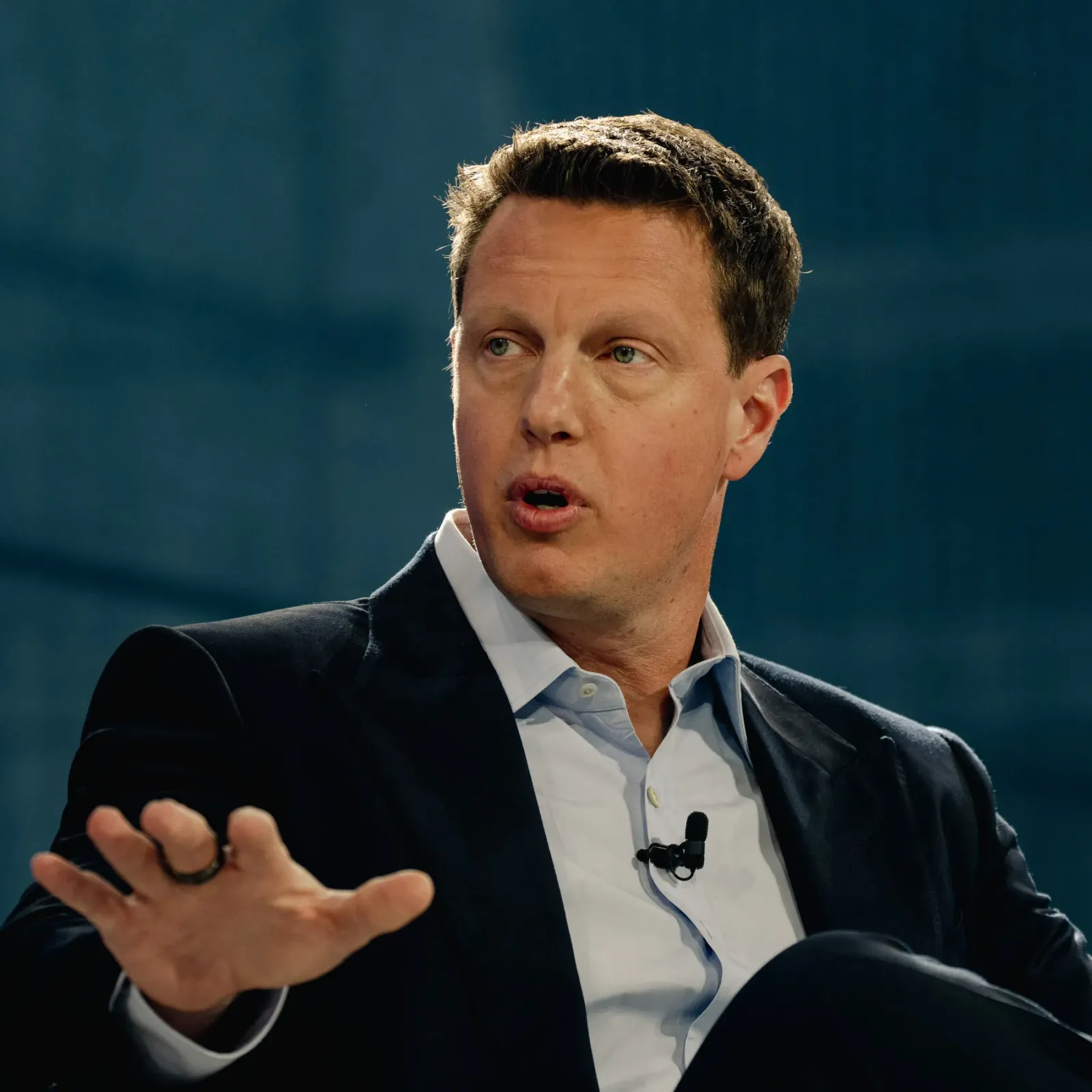
David Ellison, CEO of the media giant formed by the $110 billion merger with Warner Bros. Discovery, confirmed that SpaceX founder Elon Musk has invested in the company. The undisclosed stake puts one of the world's most closely watched investors inside the ownership of a major studio and streaming asset, turning a capital question into a governance, regulatory, and signaling question for every media board.
David Ellison, the chief executive of the media giant formed by the $110 billion merger with Warner Bros. Discovery, has confirmed that Elon Musk, the SpaceX founder, is an investor in the company. Ellison said it on camera, in a video segment published by The New York Times. What he did not say is how much. No dollar figure, no percentage, no structure, no board seat. That silence is the story. In a business where ownership stakes usually surface in filings and press releases, a confirmation delivered verbally, with no number attached, leaves the market to guess at both the size of Musk's position and the influence that comes with it.
The confirmed fact is simple and large. Musk, who founded SpaceX and owns X, now holds equity in the company created by the $110 billion combination with Warner Bros. Discovery. This is not a passive index allocation. Musk's capital tends to arrive with attention, and attention is the raw material of the media business. His involvement in any deal is rarely neutral. For Ellison, the confirmation is a vote of confidence from one of the most closely watched investors on earth, landing at a moment when the merged company still has to prove that its scale converts into profit.
Scale is the entire thesis of the deal. A $110 billion merger between Skydance and Warner Bros. Discovery pulls together one of the largest content libraries and streaming footprints in the industry, and it arrives with the costs that always accompany size: integration, duplicated overhead, debt service, and the slow, unglamorous work of fusing two corporate cultures. Historically, mergers of this magnitude take years to reveal whether the promised synergies are real. Ellison's job is to convince investors that the combination generates cash flow rather than simply a bigger balance sheet.
Who writes the check matters as much as the amount. Musk built SpaceX into the dominant private launch company and turned X into a megaphone he uses constantly. His ties to the Ellison family run deep: Larry Ellison, the Oracle co-founder and David's father, served on Tesla's board and ranked among its largest individual shareholders. A Musk investment in David Ellison's company is therefore less a cold financial transaction than an extension of an existing relationship, which cuts both ways. It brings credibility and reach. It also brings a co-investor with a habit of saying whatever he thinks, whenever he thinks it.
Then there is the regulatory layer. A combination of this size typically draws antitrust review, and because the assets include broadcast stations, transferring those licenses historically requires approval from the Federal Communications Commission. Regulators examine ownership concentration, local market effects, and whether one company ends up with too much control over what audiences see. Adding a high-profile, politically active investor to the cap table does not change the legal test, but it does change the political weather around it. Every disclosure becomes a headline, and every headline becomes ammunition for whoever wants the deal slowed down.
For rival executives, the signal is uncomfortable. If Musk is willing to put money into a legacy studio while the industry fights over streaming economics, artificial intelligence, and the cost of content, it suggests sophisticated money still sees leverage in owning the library and the distribution, not only the algorithm. It also raises the question every board should be asking: who else is quietly buying in, and at what price? Undisclosed stakes in newly merged entities have a way of surfacing later, usually at the worst possible moment and usually with a valuation attached that nobody negotiated for.
The practical questions are now governance questions. Will the position be disclosed in a filing? Does it carry a board seat, information rights, or a standstill agreement? Does it create conflicts if Musk's other companies, in AI, social media, or satellite communications, end up across the table from the studio? Media boards have spent a decade learning that a strategic investor can be an accelerant or an anchor, and the difference is usually settled in the paperwork, not the press tour.
What to watch next is straightforward: the size of the stake, the form it takes, and whether it appears in a regulatory filing. Until then, the confirmed fact is narrow and the implications are wide. A $110 billion media company now counts Elon Musk among its owners, and nobody outside the room knows how much of it he owns. The number, when it comes, will settle whether this reads as a relationship investment between two families or a strategic position in the future of content distribution.
This story's Key Insights and Take-aways are locked.
Create a free account to unlock Executive Actions for one credit.
Register to UnlockAlways free for Executives Club members. Join the Club
More in Business

S&P 500 Enters Correction, Down 10% From Its High on AI Worries
The index's slide past the 10 percent line is a symbolic verdict on investor mood, and the AI trade that powered the rally is now the thing testing it.

Dow and S&P 500 enter correction as Nasdaq logs worst week since 2020
All 11 S&P 500 sectors fell more than 1% in the same week for the first time since April 2025, a breadth signal that matters more than any single index level.

Chip stocks lose $2.3 trillion in a week, worst run in 25 years
A $2.3 trillion weekly wipeout in semiconductors is forcing every board with an AI story to ask whether it owns a thesis or just a crowded trade.