
EU and U.K. Agree Brexit Reset as Burnham Faces Pushback at Home
The deal reopens the trading terms Britain has lived under since 2020, and the first political bill is already landing on one of Labour's biggest names.
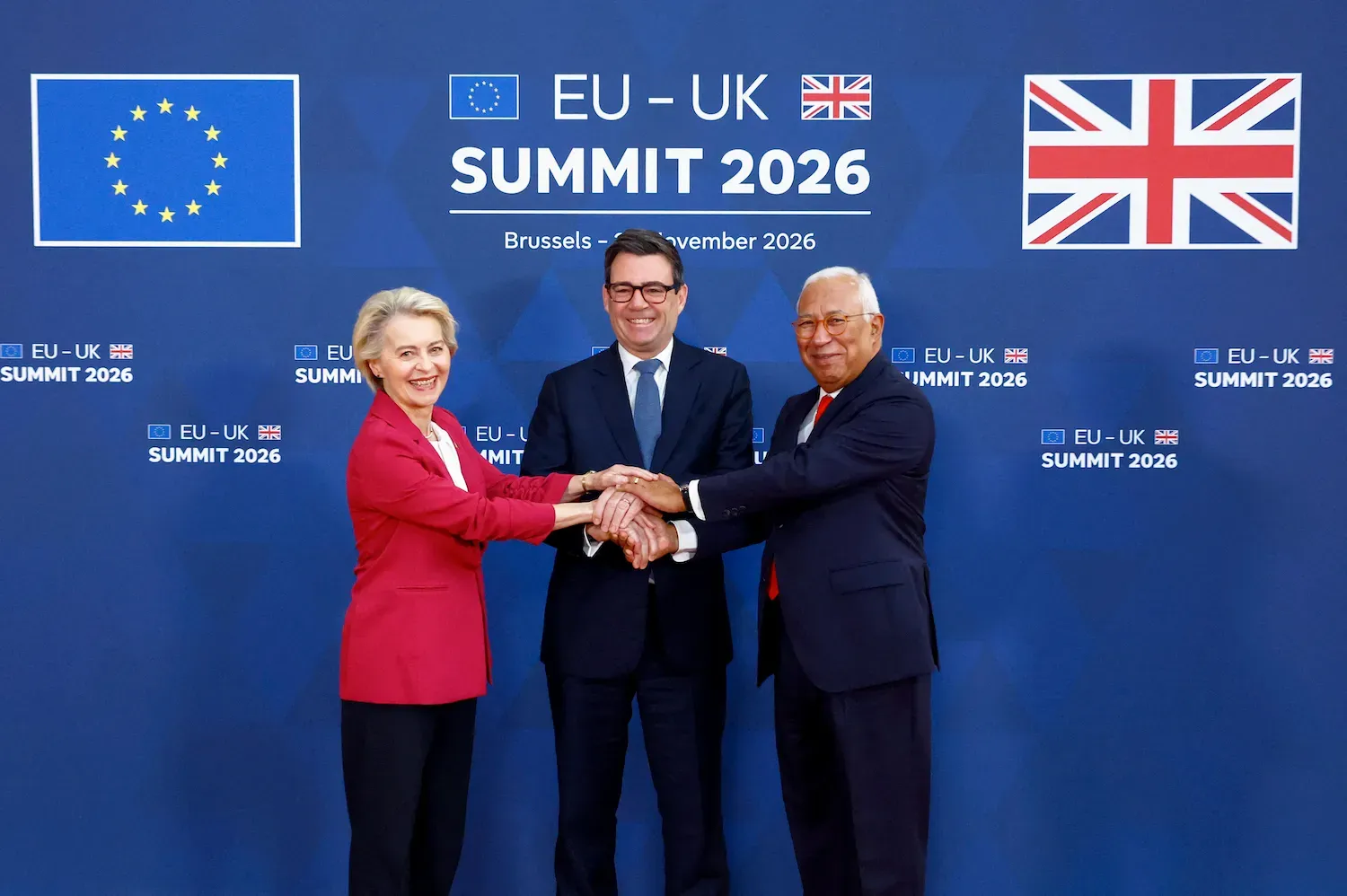
The European Union and the United Kingdom have agreed to a Brexit reset, with Greater Manchester Mayor Andy Burnham drawing some opposition back home. For executives, the agreement changes the direction of regulatory travel long before it changes the paperwork, making scenario planning more valuable than optimism.
The European Union and the United Kingdom have agreed to a Brexit reset, reopening the terms of a relationship that has been running on the bare-bones Trade and Cooperation Agreement since Britain left the bloc's single market at the end of 2020. That is the deal. The other half of the story is domestic, and it is the half that will decide how much of the deal survives contact with reality: Greater Manchester Mayor Andy Burnham faces some opposition back home.
Those two facts belong in the same breath because a reset is never a technical exercise. Every adjustment to the EU-UK relationship, whether it touches border checks, professional qualifications, or data flows, has to clear the politics of a country where the word "Brexit" still works as a loyalty test. Burnham's exposure to that pressure is an early signal that the benefits of any agreement will be argued over long before they are felt by the exporters, hauliers, and founders who actually pay the compliance bills.
For context on what a reset means in practice: since 2021, UK-EU trade has run under the TCA, which removed tariffs but left customs declarations, rules-of-origin paperwork, and separate regulatory approvals in place. Historically, the hardest frictions have clustered around three things. First, sanitary and phytosanitary rules, the food-safety standards that govern everything from chilled meat to seed potatoes. Second, mobility, meaning how easily people can work, tour, or transfer between the two markets. Third, fishing access, which is small in economic terms and enormous in political ones. Any serious reset has to move at least one of those.
The last structural fix was the Windsor Framework in 2023, which reworked the Northern Ireland trading arrangements that had threatened to derail the entire relationship. That deal showed the pattern: Brussels will be flexible on mechanics, and London pays for it in domestic argument. A broader reset typically follows the same shape. It would mean mutual recognition where the EU is willing, a smoother route for touring artists and professionals, and closer cooperation on security and defence, an area where the two sides have an obvious shared interest and where the politics are friendlier than they are on agriculture.
The catch is alignment. Almost every mechanism that reduces friction for a British exporter requires the UK to accept some form of EU rule, or at least to promise not to diverge from it. That is the point where domestic opposition hardens, and it is the terrain Burnham is now standing on. Opposition at home rarely arrives as a single organised bloc. It shows up as local employers worried about one specific sector, as political rivals framing any concession as a surrender, and as a media environment that treats complexity as evasion.
What does that mean for the people who run things? Start with the compliance stack. A genuine reset would not delete customs paperwork overnight, and no company should plan headcount or systems around a deal that has not been ratified and implemented. But it does change the direction of travel. Regulatory affairs teams that spent five years building for divergence now have a reason to build for partial convergence, which is a different set of skills, systems, and vendor relationships. For small and mid-sized exporters, the practical prize is not a dramatic cost cut but a reduction in the number of times the same product has to be approved, labelled, and inspected.
Then there is the labour question. Mobility provisions are the part of any reset that founders feel fastest, because they determine how easily a company can move engineers, chefs, nurses, or session musicians across a border. Historically these have been the most politically radioactive items on the table, which is exactly why they tend to be traded last and watered down most.
And there is the timing problem. Trade agreements are negotiated by governments, ratified by parliaments, and then implemented by customs agencies that need months to rewrite systems. The gap between a political announcement and a change in the paperwork at Dover or Rotterdam is usually measured in years, not quarters. Executives who treat the headline as an operating instruction will be disappointed; executives who treat it as a signal to start scenario planning will be ahead of their competitors.
The strategic read for peers in similar roles is straightforward. When a major trading relationship shifts direction, the winners are rarely the companies with the loudest opinions. They are the ones who mapped their exposure early, priced the optionality, and stayed flexible enough to move when the rules finally land. A reset between the EU and the UK is a large piece of news. The opposition Burnham is facing is the reminder that large pieces of news get rewritten on the way to implementation.
This story's Key Insights and Take-aways are locked.
Create a free account to unlock Executive Actions for one credit.
Register to UnlockAlways free for Executives Club members. Join the Club
More in Politics

Fifth Circuit Kills Pregnant Workers' Law Over Pandemic Proxy Votes
A procedural ruling, not a policy one, has blocked a federal pregnancy-accommodation law and put every pandemic-era statute in the crosshairs ahead of an expected Supreme Court appeal.

Measles kills a Virginia child under 5, the state's first death of 2026
Virginia's health department confirmed the death but withheld the child's vaccination status, leaving schools, clinics and employers to plan around the one detail that would explain the most.

Former Brazilian President Bolsonaro Hospitalized with Intestinal Obstruction
The health status of the former far-right leader raises immediate questions about political stability and the trajectory of Brazil's conservative movement.