
EU Commission Confirms AI Cyberattack: The New Frontier of Digital Threat
This marks the first public report of an AI-generated campaign against the bloc, signaling a major shift in geopolitical cyber warfare.
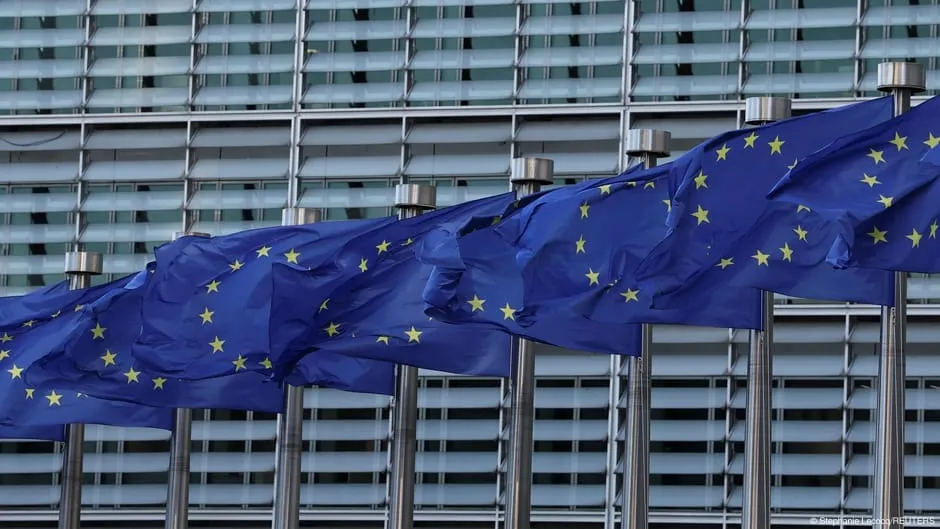
The European Commission has publicly reported being targeted by an "AI-generated cybercampaign," according to a spokesperson. This incident forces decision-makers to immediately re-evaluate defensive postures against automated, highly sophisticated digital threats.
The European Commission has confirmed that it was the target of an "AI-generated cybercampaign." This is not a minor security hiccup; it is the first time the European Union has publicly reported an attack leveraging artificial intelligence to execute its malicious code. This single report is a seismic event in the global threat landscape, signaling that the era of human-scripted cyberattacks is rapidly giving way to an age of automated, adaptive, and scalable digital warfare.
For founders, operators, and investors, this is a critical inflection point. The European Commission, as the regulatory heart of the continent, is now a victim of a threat that mirrors the sophistication of the AI technologies it seeks to govern. This isn't just about data theft; it's about the integrity of governance itself. When the institutions designed to manage the digital future are targeted by the very tools of that future, the stakes become existential. The attack confirms that AI is no longer a theoretical vulnerability; it is an active, deployed weapon in the geopolitical arena.
What does an "AI-generated cybercampaign" actually mean in practice? It means the attacker is not relying on a single, static script. They are likely using AI to perform reconnaissance, identify zero-day vulnerabilities, and then dynamically adapt their attack vectors in real time based on the target's defensive responses. Traditional security measures, which rely on signature detection and predictable attack patterns, are fundamentally inadequate against this level of automation. The AI-generated campaign can probe, learn, and pivot faster than human defenders can react, effectively creating a self-optimizing threat.
This development carries profound implications for the EU's digital sovereignty. The bloc has spent years building a regulatory framework, most notably the AI Act, designed to govern the ethical and safe deployment of artificial intelligence. Yet, this attack demonstrates that the technology itself is being weaponized against the very regulators meant to control it. This creates a dangerous feedback loop: regulators are trying to build guardrails for a technology that is simultaneously being used to dismantle their infrastructure. The defensive posture of the EU must now evolve from merely regulating AI to actively defending against AI-driven threats.
For the private sector, this is a clear warning. If the European Commission, one of the most heavily guarded and technologically advanced governmental bodies in the world, is susceptible to AI-driven campaigns, then no critical infrastructure, no major financial institution, and no large enterprise is safe. The threat is not limited to state actors; it is a technological capability that can be deployed by sophisticated criminal syndicates or rogue groups. The speed and efficiency of AI-driven attacks mean that the window for detection and mitigation is shrinking to near zero. Security teams must shift their focus from perimeter defense to resilience and rapid incident response.
Furthermore, this incident will undoubtedly accelerate the legislative push for enhanced cybersecurity mandates across the EU. Regulations like NIS2, which already mandate higher security standards for critical entities, will likely face immediate pressure for expansion. The conversation is moving beyond simple data protection to encompass systemic digital resilience against autonomous threats. Companies operating within the EU must prepare for a higher baseline of security requirements, as the regulatory environment tightens around the concept of AI-driven risk.
Ultimately, the European Commission's public acknowledgment is a crucial piece of intelligence for the global market. It is a clear signal that the technological arms race is intensifying. The ability to harness AI for offensive cyber operations is now a defining characteristic of modern state and non-state power. The response will not just be technical; it will be strategic, forcing governments and corporations alike to treat AI security as a matter of national and economic survival.
This story's Key Insights and Take-aways are locked.
Create a free account to unlock Executive Actions for one credit.
Register to UnlockAlways free for Executives Club members. Join the Club
More in Technology

Anthropic mathematician claims Claude helped crack the Riemann hypothesis
If the proof holds, AI has toppled math's most famous open problem; if it does not, it is a case study in announcing breakthroughs before anyone verifies them.

AI's $4 Trillion Wipeout Erases Nasdaq's Gains for the Year
A brutal week took roughly $4 trillion off the AI sector and left the Nasdaq flat for the year, and the damage ran the full length of the supply chain.

Anthropic mathematician says AI proved the Riemann hypothesis. Verification will take time.
A single unverified claim from inside Anthropic now sits against more than 160 years of open mathematics, and the gap between asserting a proof and surviving peer review is the entire story.